Best 5 KW Solar Kit for Off-Grid Home Power
Choosing a 5 kW solar kit provides a robust off-grid power foundation for homes, cabins, and remote outposts. The following selections from ECO-WORTHY, SUNGOLDPOWER, and related brands focus on reliable inverters, scalable battery storage, and high-efficiency panels. This guide compares practical features, compatibility, and setup considerations to help you select a system that fits daily energy needs, climate, and space constraints.
Buying Table
| Product | Brand | Main Benefit | Category |
|---|---|---|---|
| ECO-WORTHY 5KW Off Grid Solar System Complete Kit | ECO-WORTHY | All-in-one 5KW system with series-connected panels and built-in inverter/charger | Complete Kit |
| SUNGOLDPOWER Off-Grid Solar Kit SGM-5K5E | SGPWATT | 6×200W panels, 48V battery, WiFi monitoring | All-in-One Kit |
| ECO-WORTHY 10KW Output Kit | ECO-WORTHY | Higher capacity with parallel options up to 60kW | High Output |
| ECO-WORTHY Complete Off-Grid Solar Kit | ECO-WORTHY | Integrated 2 batteries and 24×195W panels, 5kW inverter | Large System |
| Dawnice 5kW Solar System | Dawnice | Complete off-grid kit with 10×550W panels and 6kW inverter | Complete Kit |
ECO-WORTHY 5KW Off Grid Solar System Complete Kit

The ECO-WORTHY 5KW Off Grid Kit combines twelve 195W N-Type bifacial panels (2340W) with a 48V 5KW split-phase inverter and a 51.2V 100Ah LiFePO4 battery bank. The system is designed for independent, off-grid operation, with the capability to output 120V in single-unit mode or 120/208/240V when multiple inverters are paralleled. An all-in-one inverter with built-in charge controller simplifies wiring and installation. The battery pack supports series connections for large capacity, and the kit includes the necessary cables to streamline setup.
Key considerations include safety certifications such as UL 1973 and UL 9540A compliance, and the battery design emphasizes long-term reliability. The system aims to provide stable power for homes or small businesses while reducing dependence on public grids. The setup is well-suited for users seeking straightforward, scalable off-grid electricity with structured monitoring and maintenance pathways.
SUNGOLDPOWER Off-Grid Solar Kit SGM-5K5E

This all-in-one SUNGOLDPOWER system bundles a UL1741-certified 5000W 48V hybrid inverter with six 200W monocrystalline panels, a 51.2V 100Ah LiFePO4 battery, and full mounting hardware. Its parallel-ready design supports up to six units, enabling expanded capacity to meet higher loads. WiFi monitoring provides real-time insight into energy production, usage, and battery status, making it practical for homeowners who want remote oversight and optimization of energy flow. The included 6×200W panels deliver reliable daytime generation, while the LiFePO4 battery offers durable storage for off-grid or backup power needs.
For users weighing expansion potential, this kit’s modular approach allows growth as energy demand grows or as climate patterns shift. The WiFi feature adds convenience for energy management, and the 48V system aligns well with common residential electrical design standards. While included components cover essential needs, buyers may consider adding extra monitoring devices or expanding to additional panels for higher winter output.
ECO-WORTHY 10KW Output Off-Grid Kit

This ECO-WORTHY kit targets higher demand with a 9.36KWh daily output expectation under optimal sun, driven by 12×195W panels and a 10KW inverter capable of 60KW in parallel configurations. The system supports 120V/240V split-phase outputs to run major household appliances and is designed for expansion up to 60kW with additional inverters. Real-time monitoring via a wifi-enabled inverter helps users track performance and adjust settings remotely. The included UL certifications and battery management protections are essential for safety and compliance across North American markets.
Compared with smaller kits, this option suits larger homes, workshops, or properties with higher energy demands. Prospective buyers should assess available space for panel installation, potential shading, and local solar irradiance to ensure the projected daily output aligns with actual use. The parallel capability provides flexibility for future growth without a complete system replacement.
ECO-WORTHY Complete Off-Grid Solar Kit
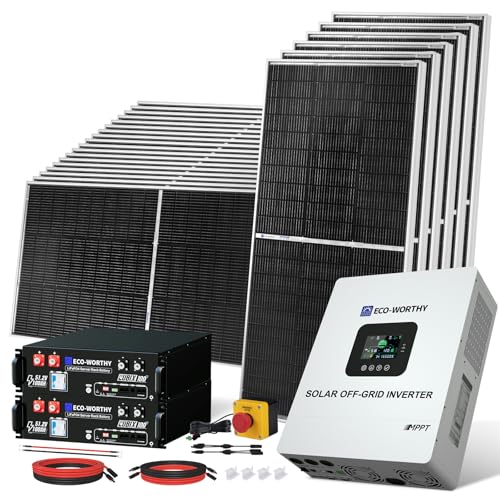
This comprehensive kit offers a robust off-grid solution featuring two 48V 100Ah LiFePO4 communication batteries, 24×195W panels, and a 5KW inverter with a 100A MPPT solar charge controller. The integrated battery communication system supports CAN/RS485 for real-time status monitoring via Bluetooth or WiFi. It also supports parallel expansion to reach higher storage capacity, with the flexibility of single-phase or dual-unit 240V outputs. The system is designed to deliver reliable daytime generation and nighttime storage for essential loads, regularly tested to align with North American safety standards.
Potential buyers should evaluate cabinet and mounting options, cable lengths, and any regional permitting requirements. The integrated design reduces wiring complexity, but field wiring practices should still adhere to local electrical codes. With its focus on reliability and scalability, this kit is suitable for homeowners planning a resilient energy backbone with room to grow.
ECO-WORTHY 4.68KWH Solar Power Complete Kit

This 4.68KWh/day kit uses six 195W N-Type bifacial panels along with a 3500W inverter, designed for homes, cabins, or sheds needing reliable AC 110/120V power. The N-Type panels offer improved high-temperature efficiency and a solid 18–21% conversion range, with a compact panel footprint. The included 3500W inverter provides 20ms UPS switching and an 80A MPPT controller, offering stable power for typical household appliances. The kit supports parallel connections for multiple units, extending capacity for growing energy requirements.
Considerations include climate impact on daily yield and the need for parallel units to reach desired total capacity. For users with limited roof space, this kit delivers a feasible balance of performance and footprint, while still enabling future expansion to meet higher daytime loads or longer storage durations.
Dawnice 5kW Solar System

The Dawnice 5kW configuration combines 10×550W bifacial panels with a 6000W hybrid split-phase inverter and a 51.2V 100Ah LiFePO4 battery. The bifacial panels can improve output by leveraging albedo gains, increasing daily energy production. The system supports off-grid operation and provides storage via the LiFePO4 battery, allowing power use during nighttime hours. With a focus on independence from the grid, the Dawnice kit offers a practical option for remote properties or backup power scenarios.
Key considerations include site layout for panel placement to optimize sun exposure, and ensuring appropriate electrical safety clearances. Buyers should verify compatibility with local electrical codes and confirm the availability of mounting hardware that suits roof or ground configurations. The system’s modular approach supports scaling as energy needs evolve while maintaining a straightforward installation path.
KEJNYT 5 Pcs Small Solar Panels Kit
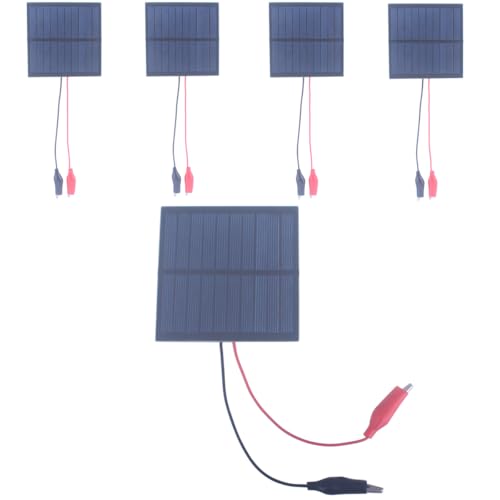
This kit includes five small 5V, 200mA panels with clip leads, designed for DIY projects, small upgrades, or charging low-power devices. While not a full home solar solution, these panels demonstrate versatility for educational use, hobbyist projects, and compact charging setups. The modules support simple wiring in parallel or series to adjust current or voltage, and their portability makes them suitable for temporary installations or experimental builds.
Potential users should consider their energy needs and safety practices, especially when integrating small panels into larger power systems. This kit is best viewed as a supplementary or educational component rather than a primary home power solution, but it can complement larger configurations by providing localized, low-power charging options.
Buying Guide: Key Purchase Considerations and Comparisons
- System size and scalability: Identify current energy consumption and plan for growth. All-in-one kits with parallel capability offer easier expansion for larger homes or increasing loads.
- Inverter type and compatibility: Hybrid inverters with MPPT support and WiFi monitoring provide efficient charging and better control. Consider whether single-unit or multiple inverters are needed for higher power output or split-phase operation.
- Battery technology and capacity: LiFePO4 batteries offer durability and safety for long-term storage. Check voltage, capacity (Ah), BMS protections, and communication interfaces (CAN/RS485, Bluetooth/WiFi).
- Panel technology and arrangement: N-Type bifacial panels deliver higher efficiency, especially in reflective environments. Panel count and wiring (series vs parallel) affect voltage, current, and system stability.
- Safety standards and certifications: Look for UL 1973, UL 9540A, and local regulatory compliance. Safety certifications reinforce reliability and ease permitting.
- Monitoring and maintenance: WiFi or app-based monitoring helps track production, consumption, and battery status. Regular checks on wiring, connectors, and BMS health are advised.
- Space and installation: Roof area or ground space requirements matter. Ensure proper shading assessment, mounting hardware compatibility, and weather protection for outdoor equipment.
- Parallel and multi-unit configurations: If higher AC output is needed, confirm the ability to parallel multiple inverters and the required interconnection procedures.
Across these 5 kW kits, buyers should balance upfront kit completeness with future growth potential. Consider whether you need an all-in-one solution for easier installation or a modular design that accommodates expanding capacity, especially in areas with strong solar potential or growing energy needs. Evaluating local sun exposure, climate patterns, and practical installation constraints will help align product selection with reliable, long-term off-grid performance.