Best Electric Radiant Baseboard Heaters for Warmth and Comfort in Any Room
Looking for efficient electric radiant baseboard heaters? This guide highlights five solid options that balance cost, safety, and steady heat for American homes. Each pick suits different spaces and needs, from compact rooms to larger living areas. Whether you want easy DIY installation, quiet operation, or simple thermostat control, there’s a model here designed to deliver reliable warmth without clutter or noise. The table below compares the five selections to help you decide quickly.
| Product | Best For | Wattage / Voltage | Key Benefit |
|---|---|---|---|
| Cadet F Series 36″ 3F750W | Medium rooms, simple installs | 750W @ 240/208V | Multi-watt with easy universal wiring |
| Cadet F Series 24″ 2F350W | Small spaces, budget-friendly | 350W @ 240/208V | Compact, clean white finish |
| Comfort Zone CZ600 | Home office or bedroom zones | 1500W (2 heat settings) | Adjustable thermostat, safety features |
| Stelpro Brava AB0501W | Quiet, zone heating | 500W @ 120V | Quiet convection with optional thermostat kits |
| Cadet Ul 120V/30″ 500W | Living rooms, easy floor mounting | 500W @ 120V | Two-unit kit included, remote control option |
Cadet F Series 36″ Electric Baseboard Heater
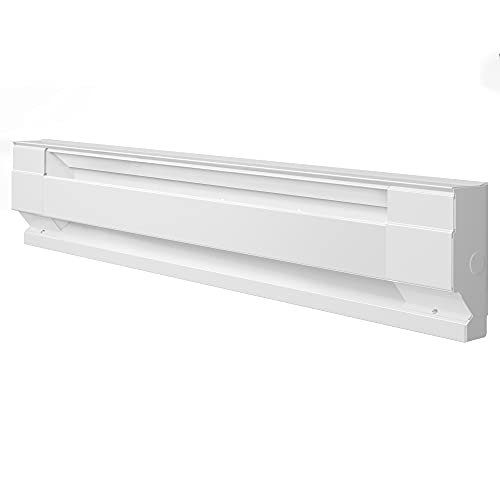
Model 3F750W combines 750W and 563W options at 240/208V. Its universal wiring and pre-punched knockouts simplify installation, making it a strong choice for rooms that need quick warmth with straightforward wiring. It uses convection to circulate warm air, helping maintain even room temperature. This Cadet heater is best for medium-sized rooms where you want reliable heat without noisy fans. A caution: high-wattage options may require proper electrical planning and adherence to local codes.
Cadet F Series 24″ Electric Baseboard Heater
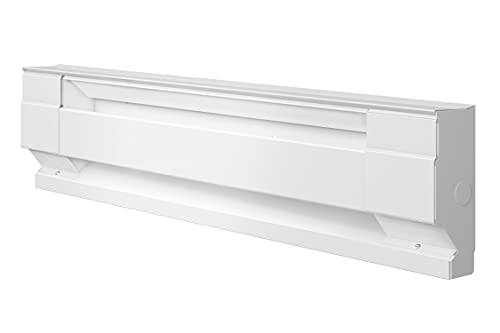
This 24″ model (2F350W) provides a compact, clean white finish with essential electric heating features. It suits smaller bedrooms or offices where space is at a premium. Best for: small rooms needing steady heat without occupying floor space. Best paired with a simple wall thermostat if you want adjustable control. Limitation: lower wattage means it may take longer to heat larger areas.
Comfort Zone CZ600 Electric Baseboard Heater

With 1,500W total and adjustable two-heat settings, this convection baseboard provides robust warmth for medium rooms or home offices. Safety features like overheat protection, tip-over switch, and stay-cool surfaces reduce risk during operation. It’s a practical choice for spaces where you want reliable, customizable heat without fan noise. Better for: rooms needing higher heat output. Caution: higher wattage means increased electricity use if left on long periods.
Stelpro Brava Electric Baseboard Heater
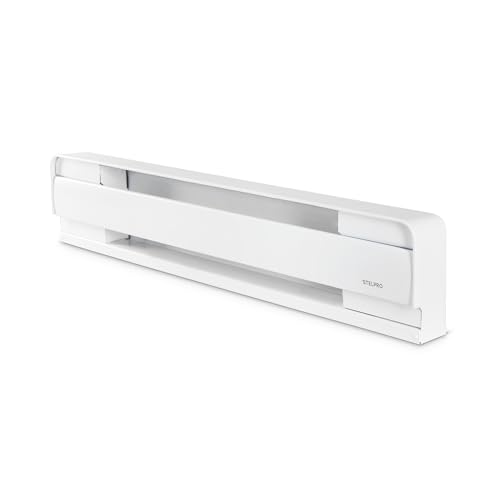
The Brava AB0501W delivers 500W at 120V with a high-performance convection design. It’s designed for quiet operation and even heat distribution, with a long cabinet that minimizes end caps for a clean look. Control options include wall thermostat connections or optional built-in thermostat kits purchased separately. Best for: quiet, unobtrusive heating in bedrooms or study spaces. Limitation: hardwired installation is required, not plug-in.
Cadet UL 120V / 30″ 500W Baseboard Heater

This Cadet unit delivers 500W of convection heat suitable for spaces up to about 1,710 sq ft in plan. It’s designed for simple floor mounting and includes two units in the package for versatile placement. A remote control option is available, enabling temperature adjustments without leaving your seat. Choose this if you want a straightforward, scalable pairing for larger rooms. Caution: ensure the remote version is compatible with your wiring and thermostat setup.
Buying Guide: Key Considerations For Electric Radiant Baseboard Heaters
What room size should guide your wattage choice? As a rule, plan around 10-15 watts per square foot for moderate insulation. For poorly insulated spaces, consider higher wattage or additional panels. Do you need quiet operation? Convection baseboard heaters like these typically run quietly, making them suitable for bedrooms and studies. Is thermostat control important? A wall or built-in thermostat improves energy efficiency and comfort, especially in frequently used rooms. Do you prefer plug-in or hardwired? Some models are designed for easy plug-in use in 120V outlets, while others require hardwiring for 240V or higher and may support integrated thermostats. How important are safety features? Look for tip-over shutoffs, overheat protection, and stay-cool surfaces to reduce burns and accidents. For larger spaces, consider multiple units or higher-wattage models that can be zoned independently. What installation considerations should you plan for? Check clearances, mounting options, and electrical codes in your area. If you’re unsure, consult a licensed electrician to ensure proper wiring and safe operation.
Frequently Asked Questions
- What wattage is best for a medium-sized living room? Aiming for 600-900W for a typical medium living room is common, depending on insulation and climate. Multiple smaller units can offer better heat distribution than a single high-wattage panel.
- Are baseboard heaters expensive to run? Running costs depend on usage and thermostat settings. Using a programmable or smart thermostat can reduce energy use by heating only when needed.
- Can I mix different brands in the same room? Yes, but ensure compatible control methods and wiring. Uniform temperature control across devices is easier with a single thermostat system.
- Do these heaters require professional installation? Some models install easily with basic electrical work, but hardwired 240V units or thermostats often benefit from a licensed electrician.
- Is remote control or smart control available? Several models offer remote or thermostat options. For muting energy waste, pair with a smart thermostat that supports your ecosystem (Alexa, HomeKit, Google).
- What maintenance do baseboard heaters need? Periodic dusting and checking for loose fittings help maintain efficiency and safety.