Best MIG Welding Wire for Mild Steel: Top Picks for Home Shops and Pros
When choosing a MIG welding wire for mild steel, look for consistent feed, clean weld beads, and low spatters. These five options are well-suited for hobbyists, auto repair shops, and small fabrication projects. They cover common diameters (.030 and .035 inches) and include both solid and flux-core varieties. The right choice depends on your setup, shielding gas preferences, and typical welding positions.
| Product | Diameter | Best For | Notes |
|---|---|---|---|
| ARCCAPTAIN ER70S-6 .035″ | .035″ | Heavy penetrations, thicker mild steel, stable arc | Low spatter, TÜV certified |
| ARCCAPTAIN ER70S-6 .030″ | .030″ | Balanced welding for thinner mild steel | Stable arc, smooth weld bead |
| YESWELDER E71T-GS Flux Core | 0.030″ | Outdoor or windy conditions, no shielding gas | Self-shielding, easy handling |
| ARCPEX ER70S-6 .030″ | .030″ | General purpose, auto body, DIY | Low spatter, smooth beads |
| PGN ER70S-6 .035″ | .035″ | Professional-grade beads, multiple welds | High deoxidizers |
ARCCAPTAIN ER70S-6 .035″ 10LB MIG Wire

The ARCCAPTAIN ER70S-6 .035″ MIG welding wire is designed for smooth wire feeding and a stable arc. With a 10-pound net weight, it supports consistent deposition and strong welds on mild steel fabrications. This wire is TÜV tested and approved, reflecting a reliable deoxidization approach that reduces impurities in the weld pool. It yields a smooth bead and minimal post-weld cleanup, making it suitable for beginners and seasoned welders alike.
Best for: Welders working on thicker or multiple-pass mild steel projects where stable arc and strong penetration are critical. Ideal for fabrications and repair work that demand clean, robust beads.
Limitations: Requires proper shielding gas for optimal results; compatibility with gas types should be confirmed for specific setups.
ARCCAPTAIN ER70S-6 .030″ 10LB MIG Wire

This ARCCAPTAIN ER70S-6 .030″ wire balances ease of use with good penetration for thinner sections of mild steel. It features smooth feeding and a stable welding parameter set, supporting high deposition rates and reliable performance. TÜV certification confirms robust deoxidization of the weld pool, contributing to high-quality welds with fewer impurities.
Best for: Beginners and hobbyists welding thinner gauges or auto patches where a lighter wire helps manage heat input and control bead shape.
Limitations: Lower current capacity per pass compared to .035″ wires, which may require adjustments for thicker parts.
YESWELDER Flux Core MIG Wire E71T-GS 0.030″
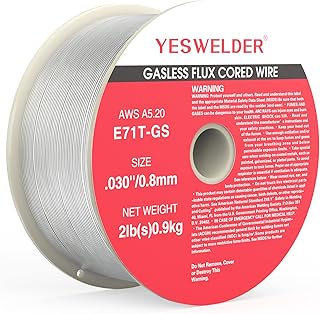
The YESWELDER E71T-GS flux-core wire is a self-shielding option, designed to provide arc stability and reliable feeding without external shielding gas. It forms full slag and produces low spatter, with a bead appearance that typically requires modest post-cleanup. Its wind-friendly design makes it suitable for outdoor projects where gas shielding is impractical.
Best for: Outdoor welding, windy environments, and all-position welding where shielding gas is hard to manage. Ideal for auto body repairs where portability and simplicity matter.
Limitations: Flux-core can leave slag that must be removed; welds may require more cleanup in tight tolerances.
ARCPEX MIG Wire ER70S-6 .030″ 2-Pound

The ARCPEX ER70S-6 .030″ welding wire emphasizes low spatter and easy cleanup, producing smooth beads suitable for a variety of mild steel projects. It specifies a standard MIG setup with compatible shielding gases (100% CO2 or 80/20 Argon/CO2), offering flexibility for indoor shops and garages. The wire is positioned as beginner-friendly thanks to smooth feeding and stable arc.
Best for: Hobbyists and DIYers seeking consistent beads with minimal post-weld cleanup in typical shop environments.
Limitations: Requires correct shielding gas mix for optimal results; using alternative gas blends can affect weld quality.
PGN ER70S-6 .035″ Solid MIG Welding Wire
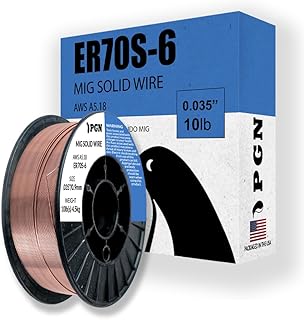
The PGN ER70S-6 .035″ wire is designed for precision and arc control, delivering impressive beads across T-joints, butt welds, and lap welds. It emphasizes low spatter and high deposition with a robust silicon and manganese deoxidizer blend to promote clean welds. This wire suits professional work and metalworking hobbyists who need consistent, high-quality results over longer runs.
Best for: Professional welders and serious DIYers who require strong, uniform beads and the ability to tackle multiple weld types in one project.
Limitations: The heavier gauge requires appropriate machine settings and may demand more heat input on thick sections.
Buying Guide: MIG Welding Wire For Mild Steel
What diameter should I choose?
Diameter affects heat input and penetration. Use .030″ for thinner stock and detailed work; .035″ is a common choice for thicker mild steel or where deeper penetration is needed. If your machine struggles with feeding or you’re new to MIG welding, start with .030″ and adjust as you gain control.
Solid wire vs flux-core?
Solid wires require shielding gas and deliver cleaner welds with less slag. Flux-core wires work well outdoors or when shielding gas isn’t practical, but they produce more slag and can require more cleanup. Choose based on your environment and machine capability.
Shielding gas considerations
For solid ER70S-6 wires, typical shielding gas blends are 100% CO2 or 75–25 to 80–20 argon/CO2. Gas choice influences bead appearance, penetration, and spatter. Outdoor use often benefits from flux-core or self-shielding options.
Bead quality and cleanup
Look for wires with smooth wetting characteristics and stable arc, which reduce post-weld grinding. A well-deoxidized weld pool helps prevent impurities and improves bead shape, especially on thicker or dirty steel.
Machine compatibility and safety
Ensure your welder supports the chosen diameter and wire type. Verify spool size, feed consistency, and drive rollers match your equipment. Always wear appropriate PPE and operate in a well-ventilated area.
Who should buy these wires?
Hobbyists and DIYers should favor easier handling, low spatter, and forgiving beads. Auto body or small repair shops benefit from reliable, stable deposition and clean welds. Professionals may prioritize lower slag, precise control, and the ability to weld through light rust or scale with flux-core options.
Quick comparison by use case
- Best for beginners: ARCCAPTAIN .030″ and ARCPEX .030″ wires for their smooth feeding and forgiving beads.
- Best for outdoor or windy conditions: YESWELDER E71T-GS flux-core wire.
- Best for thicker mild steel: ARCCAPTAIN .035″ and PGN .035″ wires.
- Best all-around for auto body or general fabrication: ARCPEX .030″ in a standard gas setup.
Frequently asked questions
- What MIG wire is best for mild steel?
- ER70S-6 is a common choice for its balance of penetration and bead appearance on mild steel.
- When should I use flux-core wire?
- Flux-core is advantageous outdoors or without shielding gas, though cleanup may be more involved.
- What shielding gas is recommended for ER70S-6 .030″ or .035″ wires?
- Common options are 100% CO2 or 75–80% Argon with CO2; check your welder compatibility.
- How do I reduce spatter?
- Use clean, rust-free metal, correct wire diameter, proper voltage and wire feed settings, and ensure solid shielding gas coverage where applicable.
- Is a larger diameter wire better for beginners?
- Not necessarily; .030″ can be easier to control for beginners, while .035″ provides stronger penetration for thicker stock.
By considering diameter, shielding gas needs, and environment, you can select the MIG welding wire that best fits your mild steel projects. The five options above provide a range of diameters, gas requirements, and wind- or outdoor-friendly capabilities to match common American shop needs.