Best 30 Gallon Natural Gas Water Heaters and Tankless Options for Your Home
Answering buyer intent: This guide compares top natural gas water heaters and tankless models to fit homes needing reliable hot water with varying demands. The list covers 30-gallon capacity, mid-size tank heaters, and efficient tankless options. Best for small-to-mid homes, families with 1–2 bathrooms, and budget-conscious upgrades.
| Product | Best For | Key Benefit |
|---|---|---|
| Rheem PROG50-36P RH62 | Small homes or replacement for 30-gallon tank | Low emissions and sediment control |
| NOVIEEX On Demand | Shower and sink harmony for compact spaces | High GPM for a tankless unit |
| Rheem RTG-70DVLN-3 | Two bathrooms, energy-efficient tankless | Indoor installation with high GPM |
| forimo Natural Gas Tankless | 2–3 fixture loads with digital control | Digital display and steady temperature |
| APUS 140,000 BTU | Medium home with smart control | Zero cold water technology |
Overview: The following sections highlight five products that align with a 30-gallon natural gas goal or comparable on-demand performance. Each entry explains who benefits most, why it was chosen, and any notable limitations to consider.
Rheem PROG50-36P RH62 Professional Classic 50-Gallon
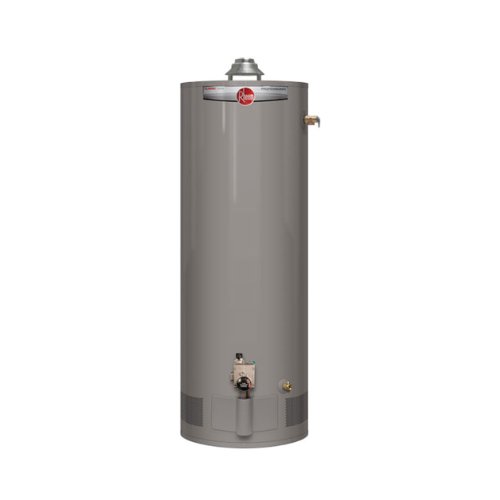
- Features: Low emissions Eco-friendly burner, Knox design, meets Knox requirements, R-Tech anode protection, EverKleen system to fight sediment.
- Best for: Homeowners upgrading a traditional 30–50 gallon tank where durability and low maintenance matter.
- Why selected: Established Rheem reliability with improved tank protection and reduced sediment buildup.
- Caution: This model is listed as a 50-gallon unit; ensure it fits the intended space and hot-water demand profile of your household.
Novieex On Demand Water Heater Natural Gas

- Features: 100,000 BTU input, up to 4.3 GPM; digital thermostat with ±1°F accuracy; supports 2–4 point use for family bathroom and kitchen.
- Best for: Families needing on-demand hot water with responsive temperature control in compact or retrofit spaces.
- Why selected: High flow for a tankless unit, good for simultaneous use without noticeable temperature drop.
- Caution: Requires proper installation clearances and venting; ensure compatibility with existing gas supply and electrical needs.
Rheem RTG-70DVLN-3 Indoor Tankless Natural Gas

- Features: High efficiency, 7.0 GPM, 160,000 BTUs; indoor installation; compact cabinet with easy wall mounting.
- Best for: Homes needing multiple simultaneous hot-water points with space for indoor installation.
- Why selected: Strong balance of flow capacity and indoor suitability for medium households.
- Caution: Tankless units require proper venting and professional sizing to avoid short-cycling in very cold climates.
forimo Natural Gas Tankless 4.21 GPM

- Features: 4.21 GPM, stainless steel, LED smart digital display; adjustable temperature range 38–75°C; 81,888 BTU/h input; single-circulation technology for instant hot water.
- Best for: Homes with two showers and two sinks running at once; those seeking smart control and energy efficiency.
- Why selected: Combines practical flow with modern digital controls and energy-saving features.
- Caution: Ensure gas supply and venting meet local codes; higher BTU models can require professional installation.
MIZUDO Outdoor Tankless Natural Gas 5.1 GPM

- Features: Outdoor installation, up to 5.1 GPM, 120,000 BTU; black-out protection and weather-resistant design; UL listed and CSA certified; 2-year unit support and 5-year copper heat exchanger support.
- Best for: Large households or homes prioritizing outdoor installation and energy-conscious operation.
- Why selected: High flow for outdoor use with safety protections and compliance certifications.
- Caution: Outdoor units require proper weatherproofing and venting considerations; installation location is critical for efficiency.
ThermoMate CZ422NG Indoor 5 GPM Tankless

- Features: Up to 5 GPM, 113,000 BTU; smart flow sensor; multiple protections including flame-out and overheating; precise ±1°F control.
- Best for: Busy homes needing stable temperature across two showers or more with smart protections.
- Why selected: High efficiency with advanced safety features and precise temperature control.
- Caution: Like other tankless models, venting and proper sizing are essential for consistent performance in colder climates.
Buying Guide: Key Considerations For Natural Gas Water Heaters
What is the difference between a 30-gallon tank and a tankless unit?
A 30-gallon tank provides a steady reservoir of hot water, suitable for small to mid-sized homes. Tankless models heat water on demand, saving space and often energy, but require correct sizing to meet peak demand and proper venting.
How do I choose the right BTU and GPM rating?
BTU measures heating capacity; higher numbers mean faster heating for more simultaneous draws. GPM, or gallons per minute, indicates how much hot water is available at a given flow. For two bathrooms with simultaneous use, aim for a unit that delivers 3–7 GPM combined, depending on climate and usage.
Indoor vs outdoor installation considerations
Indoor units typically require venting and mounting clearance but may offer easier service access. Outdoor models simplify venting but need weather protection and correct placement to prevent heat loss and freezing in cold months.
Energy efficiency and emissions
Look for low-emission burners and efficient heat exchangers, such as copper or enhanced surfaces. Tankless units generally offer higher energy efficiency, while high-quality tank models emphasize long-term reliability and sediment management.
Installation requirements and safety features
Ensure gas supply adequacy, venting, clearance, and electrical compatibility where required. Favor units with flame failure protection, overheating safeguards, anti-freeze features, and leak detection readiness for safer operation.
Maintenance and service life
Tank heaters with anti-sediment features, easy-to-inspect anodes, and corrosion-resistant tanks extend service life. Tankless units require periodic descaling in hard-water areas and regular vent inspection after installation.
Frequently Asked Questions
- What size natural gas water heater do I need for a 2-bath home?
Consider a unit with 4–7 GPM capacity if using multiple fixtures simultaneously; tankless options may fit space well but must be sized appropriately for peak demand. - Are tankless water heaters more expensive to install?
Initial installation costs can be higher due to venting and space requirements, but long-term energy savings may offset the cost. - Do natural gas water heaters require venting?
Most gas units require venting to safely exhaust combustion byproducts; check local codes and installation requirements. - How important is the water heater’s efficiency rating?
Higher efficiency reduces fuel use and operating costs over time. Look for energy factor (EF) or uniform energy factor (UEF) ratings and protective features. - Can I install a tankless water heater myself?
Due to gas, venting, electrical, and safety concerns, installation is typically best handled by a licensed professional. - What maintenance is needed for a 30-gallon or larger gas water heater?
Tank units benefit from periodic sediment flushing and anode rod inspection; tankless units require occasional descaling and vent checks.