Best Solar System for Van — Top Off-Grid Solutions for Mobile Living
Choosing the right solar setup for a van involves balancing space, weight, and reliability. This guide highlights five strong options tailored to Class B vans, campers, and mobile living. Each entry includes an overview, key features, and practical considerations for installation and use on the road.
| Product | Brand | Type | Notes |
|---|---|---|---|
| Renogy 200W N-Type Panel | Renogy | Solar Panel | Compact 24V capable, 25% efficiency |
| Renogy Adventurer Kit | Renogy | Panel + PWM Controller | All-in-one RV-ready kit |
| GRNOE 12V 100Ah LiFePO4 | GRNOE | Battery | Low-temp protection, long life |
| GRNOE 12V 100Ah 4-Pack | GRNOE | Battery Pack | Multi-unit energy storage |
| ECO-WORTHY 9.36KWH Kit | ECO-WORTHY | All-in-one System | Hybrid inverter, high output |
Renogy 200W N-Type Panel

The Renogy 200W N-Type solar panel is designed for compact spaces, making it suitable for Class B vans where space is at a premium. At 7.5% smaller and 11.7% lighter than earlier models, this 24V capable module preserves power output while fitting tighter roof lines. The 25% cell efficiency and advanced 16BB cell technology improve energy conversion and resilience against microcracking, especially in high temperatures. It is compatible with both 12V and 24V battery configurations, which provides flexible installation options for on-the-go energy systems. For van setups, this panel can be mounted on curved or flat roof sections with mounting hardware designed for travel durability.
Key factors to consider: weight and size are crucial in small vans, and this panel’s compact footprint helps maximize usable roof space. Its higher efficiency helps offset shade and partial-cloud conditions common on road trips. While installation is straightforward for DIY enthusiasts, ensure proper wiring polarity, weatherproof connections, and secure mounting to withstand wind loads during travel.
Renogy Adventurer Kit
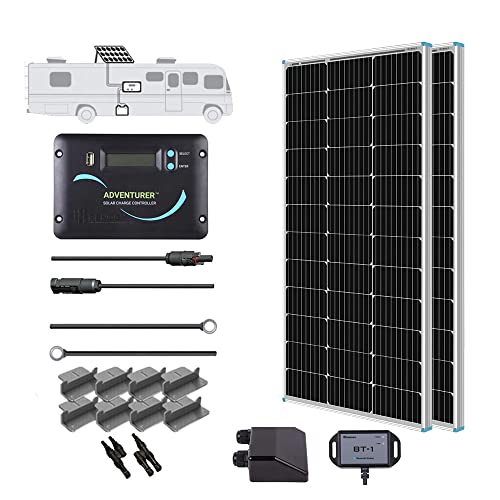
The Renogy Adventurer kit combines a 200W solar panel with a 30A PWM charge controller and mounting brackets, offering a clean, ready-to-install solution for RVs, vans, and boats. The kit’s 800Wh daily output estimate assumes typical driving or daylight hours and provides robust performance for common van electrical loads, including lights, fans, and small appliances. The corrosion-resistant frame ensures longevity in outdoor conditions, while the PWM controller protects the battery from overcharge and short circuits. This option is especially appealing for builders who want an all-in-one package with simple integration into existing van electrical systems.
Considerations include the fixed charging profile of PWM controllers, which may be less efficient than MPPT in varying sunlight. If your energy demand grows, you might later upgrade to an MPPT controller for improved efficiency in partial shade or marginal sunlight. Ensure compatibility with your existing battery bank and consider a matching voltage (12V vs 24V) for best results.
GRNOE 12V 100Ah LiFePO4

This 12V 100Ah LiFePO4 battery from GRNOE emphasizes long life and cold-weather capability. The built-in 100A BMS provides protection against overcurrent, overcharge, over-discharge, and short circuits, improving system reliability when used in off-grid van setups. A notable feature is the low-temperature cut-off, which prevents damage in freezing conditions by stopping charging around 32°F. The compact dimensions and light weight (about 22.5 pounds) compare favorably to traditional lead-acid batteries, delivering higher energy density and a longer service life. For van installations, ensure you use appropriate charging profiles and a compatible charger voltage, as a standard 12V charger may not fully utilize the battery’s capabilities.
Practical use notes include monitoring BMS status and timing different charging sources (solar, alternator, or shore power) to maximize cycles and longevity. Pairing this with a suitable solar array and management system can create a robust, go-anywhere energy solution for daily van living.
GRNOE 12V 100Ah 4-Pack LiFePO4

The 4-pack of GRNOE 12V 100Ah LiFePO4 batteries provides scalable energy storage for van systems that require elevated capacity or future expansion. Each module features a built-in 100A BMS and low-temperature protection, ensuring safe operation in diverse climates. The compact size and overall energy density enable flexible packaging around a van’s interior or under-seat storage. As with any multi-battery configuration, plan for balanced charging and discharging across units to optimize longevity. This setup is especially suitable for owners seeking higher total amp-hours without resorting to heavier, traditional lead-acid options.
Key considerations include wiring all units in parallel or series according to your inverter and controller capabilities. Confirm the charging profile compatibility with solar controllers and ensure space for proper venting and thermal management within the vehicle.
ECO-WORTHY 9.36KWH Solar Kit

The ECO-WORTHY kit aims at higher off-grid capacity, delivering about 9.36KWh per day under four hours of peak sun. It includes a 2300W solar panel system, a 5000W 48V all-in-one inverter, and a 100A MPPT controller, with multiple charging modes for solar or mains input. This setup is best suited for larger van configurations or those who plan long off-grid episodes with higher energy demands (refrigeration, AC, or multiple appliances) and a need for robust, uninterrupted power. The pre-drilled mounting provisions and aluminum frame support outdoor durability, while the hybrid inverter design enhances reliability in varied weather conditions.
Key buying considerations for this option include installation complexity, weight, and space requirements. The 48V inverter and higher PV input can demand more advanced electrical configuration and space planning. If you’re only running light loads, a smaller, modular system may be more cost-effective and easier to manage on a van build.
Buying Guide: Key Purchase Considerations
- Power needs and daily usage: List essential devices and estimate daily watt-hours to size the solar array and battery capacity.
- Space, weight, and roof layout: Vans have limited roof area and weight limits; prioritize compact panels and lightweight battery options.
- Voltage compatibility: Ensure panels, controllers, and batteries share compatible voltages (12V vs 24V) for optimal charging and efficiency.
- Charge controller type: MPPT controllers offer higher efficiency in mixed sun and partial shading, while PWM controllers are simpler and cost-effective for smaller setups.
- Battery chemistry and lifecycle: LiFePO4 offers longer cycle life and lower weight than lead-acid but at higher upfront cost. Consider BMS features for cold-weather protection and safety.
- Expansion plans: If you anticipate higher energy needs, choose modular systems that allow adding panels or batteries without a complete redesign.
- Installation and maintenance: Evaluate roof weatherproofing, cable routing, and secure mounting to withstand road conditions. Plan for periodic checks of connections and BMS status.
- Durability and warranty: Look for corrosion-resistant frames, protective coatings, and manufacturer warranties that cover outdoor enclosures and components.