Best Solar Panel on Camper: Top Off‑Grid Power Picks for RV Living
Choosing the right solar panel setup for an RV, camper, or caravan can dramatically boost off‑grid living. This guide highlights five reliable options that balance efficiency, durability, and ease of installation for American travelers. Each product is suitable for powering essentials on the road, from lights and fans to small appliances. Read on to compare key features and find a solution that fits your vehicle, climate, and travel style.
| Product | Wattage / Type | Controller Type | |
|---|---|---|---|
| ECO-WORTHY 200W Kit | 200W Monocrystalline | 30A PWM Controller | RV, Camper, Off‑grid sites |
| Renogy Adventurer 200W Kit | 200W Monocrystalline | 30A PWM Controller | RVs, Boats, Cabins |
| SOLPERK 20W Kit | 20W Monocrystalline | Smart MPPT Controller | Battery maintenance for 12V systems |
| DOKIO 100W Flexible Panel | 100W Flexible Mono | MC4 Compatible (no built‑in controller) | Temporary or curved surfaces on campers |
| Renogy 100W N‑Type Panel | 100W N‑Type, 25%+ efficiency | Wired system (controller not included) | Compact RV rooftops, trailers |
ECO-WORTHY 200W Solar Panel Kit

The ECO-WORTHY kit uses high‑efficiency monocrystalline cells to deliver strong output for RVs and campers. With up to 21.5% higher efficiency under good sunlight, it targets daily outputs around 800Wh in four peak sun hours. The panel features a corrosion‑resistant aluminum frame and is built to withstand wind and snow loads, making it a durable choice for varied climates. A sealed, IP65 rated junction box adds weather protection, helping the system endure outdoor use on the road.
Key features include a 35.2 by 23.1 by 1.37 inch footprint, a robust frame, and compatibility with a 30A PWM charge controller. The kit’s all‑in‑one design supports RVs, caravans, boats, and other off‑grid needs, providing a straightforward path to steady 12/24V power for essential devices.
Renogy Adventurer 200W Panel Kit
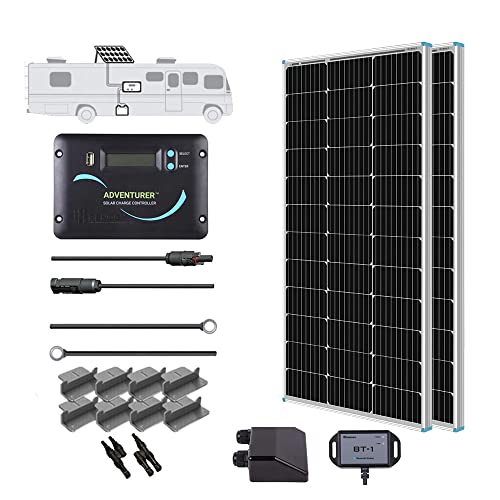
Renogy’s 200W Adventurer kit pairs solid monocrystalline panels with a 30A PWM charge controller, designed for RVs, boats, and off‑grid campers. The footprint is optimized for installations with limited space, while the elevated corrosion‑resistant aluminum frame stands up to outdoor exposure. The controller provides essential protections against overcharging, overload, and short circuits, ensuring a safe, reliable charging experience on longer trips. This kit is well suited for small to mid‑sized RV setups seeking a balance between performance and ease of use.
With 800Wh daily output potential under ideal sun, owners can run lighting, fans, small appliances, and battery charging routines. The kit’s mounting hardware is designed for RV walls, trailers, and boats, giving a clean look and dependable operation in seasonal or year‑round travel.
SOLPERK 20W Solar Kit With MPPT Controller
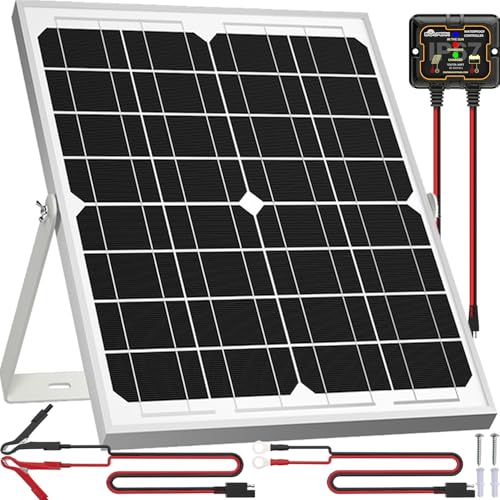
The SOLPERK 20W kit focuses on reliability and simplicity for 12V systems. It uses monocrystalline A+ cells with a high conversion efficiency of 21–30%, delivering solid performance for battery charging and trickle maintenance. The 8A smart MPPT controller improves charging efficiency by 20–30% compared with basic PWM controllers, and its three‑stage charging profile helps prevent overcharging and short‑circuit events. The kit is designed to operate in diverse weather, with a durable, waterproof build and an ability to withstand wind and snow loads up to 2400Pa and 5400Pa respectively.
Ideal for keeping RV, boat, or trailer batteries topped up during trips or long winters parked at a site, this kit emphasizes intelligent charging, small footprint, and low maintenance needs.
DOKIO 100W Flexible Solar Panel Kit

The DOKIO 100W flexible panel is designed for lightness and flexibility, weighing around 2.3 pounds with a slim 0.03 inch profile. It’s ideal for travel and seasonal use where mounting space or shape constraints exist. The panel can bend up to 30 degrees to fit curved surfaces on vans, campers, or boats, making it a strong option for non‑standard rooflines. It is not intended as a permanent roof replacement, but it offers an easy way to supplement power on irregular surfaces. Ensure proper ventilation and avoid mounting on combustible materials for safety.
This panel is best used where portability and versatility matter most, and where a separate battery charging solution accompanies the system to store energy efficiently.
Renogy 100W N-Type Panel

Renogy’s 100W N‑Type solar panel emphasizes high conversion efficiency with N‑type technology and 16BB cell architecture, boosting performance and lifespan. The panel’s 25%+ efficiency translates into more usable power for RV rooftops in the same space as traditional panels. The N‑type design also reduces the risk of hot spots, helping reliability in hot climates. A robust aluminum frame supports outdoor use and endurance against wind and snow loads. This panel shines on compact roof spaces where every watt matters, especially when paired with a dependable controller and battery system.
Note that this is a panel only; pairing with an appropriate charge controller and battery bank is essential for a complete RV charging solution.
Buying Guide: Key Purchase Considerations
- Power needs and lifestyle: Map your typical daily energy usage, including lighting, fans, mobile devices, and minor appliances. Larger RV setups benefit from higher wattage kits (100–200W+) with robust controllers.
- Panel type and efficiency: Monocrystalline cells offer high efficiency and space efficiency, helpful on limited RV roof space. Consider premium N‑type technology if hot climates are common.
- Charge controller: PWM controllers are reliable and affordable for larger panels in simple setups; MPPT controllers harvest more energy, especially when panels experience shading or variable sun. For small kits, an MPPT option can improve charging efficiency significantly.
- Durability and weatherproofing: Look for corrosion‑resistant frames and IP ratings. RV environments demand panels that withstand wind, rain, dust, and temperature swings.
- Physical fit and mounting: Measure roof space, curvature, mounting hardware compatibility, and weight. Some kits are optimized for flush mounting, others for portable setups.
- System integration: Ensure compatibility with your battery bank (12V vs 24V) and plan for wiring lengths, fuse sizing, and safety disconnects. A well‑designed kit reduces installation time and risk.
- Maintenance: Consider ease of cleaning, potential snow shedding, and warranty terms. Durable panels with protective coatings tend to require less upkeep.
- Portability vs permanence: Flexible panels offer curved or non‑standard surfaces but may require extra mounting attention. Rigid panels are sturdy for rooftop installations.
By balancing wattage, efficiency, and installation constraints, you can select a solar panel system that reliably powers an RV or camper without compromising space or safety. Always prioritize weatherproofing, proper controller choice, and compatibility with your battery setup to maximize reliability on the road.