Best 4′ Electric Baseboard Heaters for Even Room Warmth
For steady, zone-specific heat in rooms sized around four feet, 4′ electric baseboard heaters offer a simple, unobtrusive solution. This guide highlights five reliable options across popular brands, focusing on performance, safety, and installation flexibility. Read on to compare features and find the best fit for your home.
| <strong product category | 4-foot electric baseboard heaters |
| <strong installation | Wall-mount or floor-mounted options; hard-wired or plug-in where applicable |
| <strong safety features | Overheat protection, tip-over protection, stay-cool enclosures on select models |
| <strong power options | Typically 750–1500 Watts; 120V or 240V variants |
Cadet F Series 4 Foot Electric Baseboard Heater
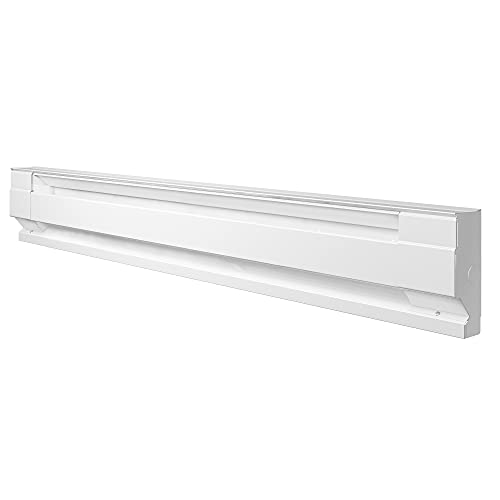
The Cadet F Series 4-foot baseboard heater provides robust heating for small to mid-sized rooms, rated at 1000/750 watts and designed for 240/208 volt availability. Its universal wiring and pre-punched knockouts at 1-inch intervals make installation straightforward for floor or wall mounting. A high-temperature safety shutoff adds a reliable layer of protection to keep spaces safe. Ideal for bedrooms or living areas needing even, unobtrusive warmth.
KING 4K1210BW K Series Baseboard Heater, 4′ / 1000W / 120V

This 4-foot KING baseboard heater is a hard-wired 1000W unit designed for 120V operation with an aluminum ribbon fin element and a full-length safety cutout. It’s built for durable, permanent installation in living spaces where a steady heat source is required. It is not a plug-in model, which can assist with clean aesthetics and safety in finished spaces.
King 4K2410BW 1,000-750-Watt 240/208-Volt 4 Baseboard Heater
Designed for 240V or 208V operation, this 4-foot heater provides 1000W at 240V or 750W at other configurations, supported by an aluminum ribbon fin element and a full-length safety cutout. As a hard-wired model, it offers consistent, quiet convection heating suitable for living rooms, dens, or home offices where a low-profile heat source is beneficial.
King 4K1210A K Series Baseboard Heater, 4′ / 1000W / 120V

This almond-finish, 4-foot baseboard heater is a hard-wired unit rated at 1000W at 120V. It features an aluminum ribbon fin element and a full-length safety cutout for protection and reliability. Suitable for spaces requiring a consistent heat output with a clean, unobtrusive profile.
Comfort Zone 1500W Convection Baseboard Heater with Built-In Thermostat

Providing 1500W of heating via convection, this Comfort Zone unit is designed for rapid room warming in medium spaces. It includes a built-in adjustable thermostat and two heat settings to optimize comfort and energy efficiency. It also features safety protections such as tip-over and overheat sensors, and ETL-listed construction for safe indoor use.
Buying Guide
When choosing a 4′ electric baseboard heater, consider the following factors to ensure the best fit for your space and budget:
- <strongElectrical requirements: Determine whether your installation will be plug-in or hard-wired. Many 4-foot baseboards are designed for hard-wiring at 120V or 240V. Verify the voltage, amperage, and circuit capacity to avoid tripping breakers.
- <strongHeat output and room size: Baseboard heaters typically range from 750W to 1500W. For small rooms, 750–1000W is often sufficient; larger or poorly insulated spaces may require 1500W. Use a room-by-room heat requirement calculation to size correctly.
- <strongThermal protection and safety: Look for overheat protection, tip-over switches for portable units, and insulated housings that stay cool to the touch. These features reduce risk in family spaces and bedrooms.
- <strongInstallation considerations: Wall-mounted vs. floor-mounted, and the availability of pre-punched knockouts for wiring. Consider clearance around furniture and baseboard profiles to keep the heater unobtrusive.
- <strongAirflow and noise: Most baseboard heaters are quiet, but convection models can produce subtle fanless airflow. If noise sensitivity is a concern, verify that the model is designed for silent operation.
- <strongAesthetics and finish: Choose a finish (white, almond, or ivory) that blends with trim and walls. A slim, unobtrusive profile tends to work well in living rooms and bedrooms.
- <strongEnergy efficiency: Compare thermostat controls, preset comfort modes, and the presence of programmable or smart-enabled thermostats. Efficient models help maintain steady temperatures with minimal energy use.
- <strongDurability and warranty: Favor brands with robust build quality, metal fins, and solid warranty terms, especially for hard-wired installations in high-use areas.