Best Residential Wind Power Kits for Home Energy Independence
Answering the question “which wind power kit is right for a home?” this guide picks five residential wind power kits that balance performance, reliability, and ease of use for American homeowners. The top picks target different buyer profiles: compact retrofits for small cabins, higher-output kits for off-grid homes, STEM-friendly projects for education, and versatile, all-weather units for rural properties. The table below helps compare core options at a glance.
| Product | Best For | Output (approx.) | Notes |
|---|---|---|---|
| Fablestoryem 14000W Wind Turbine Kit | Homes seeking high-capacity off-grid power | Up to 14 kW | Vertical design; low-noise; wide voltage range |
| Automaxx Windmill 1500W Kit | Mid-sized off-grid setups | Up to 1.5 kW | MPPT controller; app braking; strong safety features |
| Thames & Kosmos Wind Power V5.0 | Educational projects and outdoor/indoor exploration | Model turbine, low power | STEM kit; durable build; indoor/outdoor versatility |
| 20000W Vertical Wind Turbine Generator Kit (Generic) | High-output residential or small commercial use | Up to 20 kW | Nylon blades; no yaw; wide environmental range |
| 600W Vertical Wind Turbine Generator Kit (Mocuceom) | Small homes, cabins, and off-grid pilots | Up to 0.6 kW | 5-blade lantern design; 24V system |
Fablestoryem 14000W Wind Turbine Kit
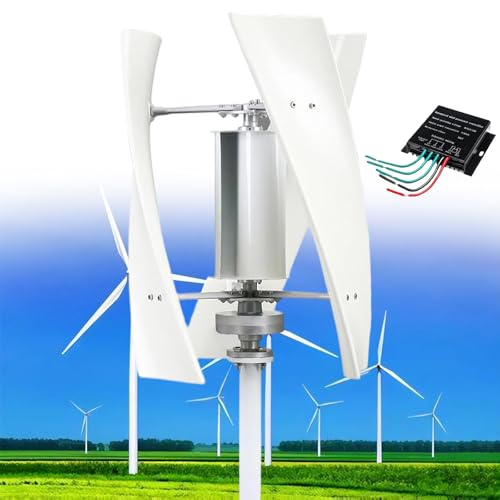
The Fablestoryem kit uses a vertical wind turbine design with reinforced nylon fiber blades. It starts generating power at very light winds and can capture wind from all directions without a yaw system. This makes it suitable for properties where wind direction is variable or unobstructed access is limited. The unit is designed for year-round operation in temperatures from -40℃ to 80℃.
Best for households seeking high output in a residential setting, especially where space is available for a taller vertical turbine. It is a good match for off-grid cabins or homes needing substantial energy capacity. A potential limitation is the need for a suitable mounting location and balance with local wind resources to maximize output.
Key considerations:
- Output potential up to 14 kW; verify site wind speed data beforehand.
- Vertical design reduces noise and avoids yaw control complexity.
- Operating temperature range supports year-round use.
Automaxx Windmill 1500W Kit
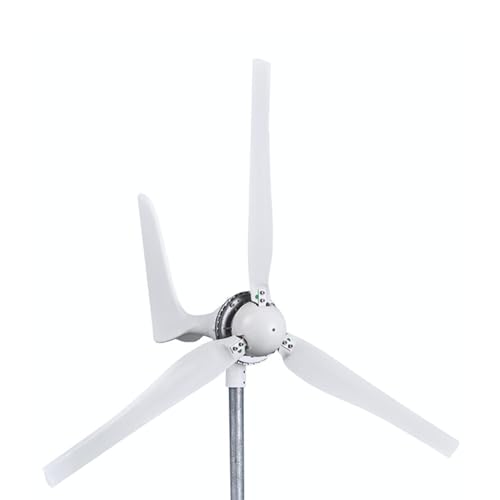
This kit features a 1500W maximum output and a 24V system, suited for residential off-grid storage banks and small farms. It includes an MPPT controller with Bluetooth capability, and a dual braking setup (digital braking and manual stop) for enhanced safety during storms or maintenance. The design supports future storage expansion without replacing the turbine.
Best for homeowners planning to scale up storage or integrate into mixed-renewable setups. It’s a strong choice when reliability in low-wind conditions matters, thanks to a low cut-in wind speed around 2.5 m/s. The main caveat is that the higher power rating requires adequate mounting and wiring considerations to fully leverage its capacity.
Key considerations:
- Low cut-in wind speed improves generation in modest winds.
- MPPT controller optimizes performance across wind conditions.
- Security features support safe operation in variable weather.
Thames & Kosmos Wind Power V5.0 STEM Kit

The V5.0 STEM kit is designed for education and exploration. It allows building a 3-foot-tall wind turbine to demonstrate wind energy concepts, with optimized components for indoor or outdoor experiments. While it provides hands-on learning, it emphasizes understanding renewable energy technology rather than supplying significant household power.
Best for students, teachers, or hobbyists seeking a clear, safe wind-energy demonstration. Choose this if you want a tangible learning tool that complements basic energy concepts. A limitation is its lower power output, which is not intended for home electricity needs.
Key considerations:
- Ideal for learning and demonstrations rather than primary power supply.
- Outdoor and indoor versatility with redesigned blade hub and gear ratio.
- Low-risk, durable materials suitable for classrooms or home experiments.
Thames & Kosmos Wind Power V4.0 STEM Kit
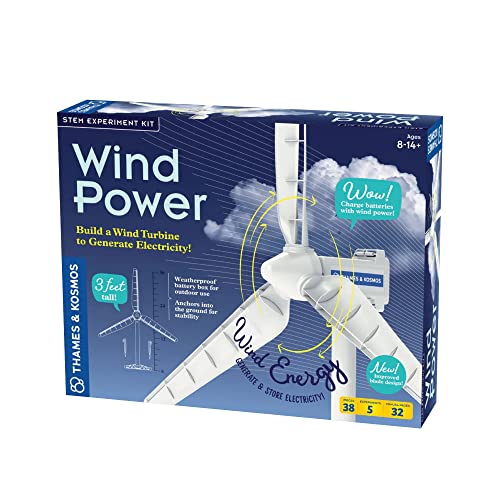
The V4.0 kit builds a 3-foot wind turbine to generate electricity for small-scale experiments. It emphasizes straightforward assembly with single-piece blade construction to improve aerodynamics and durability. The kit demonstrates how wind energy can charge a battery and power a small model car, making it useful for hands-on projects or education outreach.
Best for learning basics of wind energy and small-scale demonstrations. It’s a solid complement to larger home-energy projects. A limitation is that it’s not designed for real-world residential power supply, but it provides strong foundational knowledge.
Key considerations:
- Focused on education with real-world energy generation demonstrations.
- Durable blade design for longer classroom or home use.
- Good entry point before upgrading to higher-output systems.
20000W Vertical Wind Turbine Generator Kit (Generic)
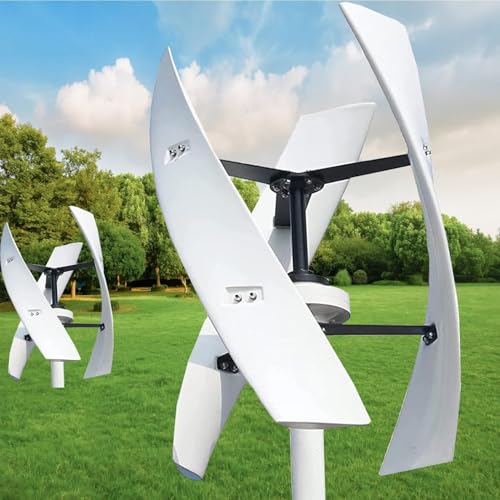
This high-output kit uses nylon fiber blades with an optimized aerodynamic shape to maximize wind energy capture. It starts in light breezes and does not require yaw adjustments, making it suitable for a wide range of sites. The vertical blade design helps minimize noise and is described as adaptable for residential, commercial, and industrial energy applications.
Best for homeowners who have substantial wind resources or who want a robust backup or primary power source. Choose this if you need significant energy generation in a residential setting. A potential limitation is the size and installation requirements typical of higher-output turbines.
Key considerations:
- High output potential up to 20 kW, depending on wind resource.
- Vertical design reduces noise and simplifies orientation.
- Durable materials intended for long-term outdoor use.
600W Vertical Wind Turbine Kit (Mocuceom)

This 600W kit uses a 24V system with a five-blade lantern-style vertical turbine. It targets home, cabin, and off-grid applications, offering a compact, space-efficient option for smaller properties. It includes automatic regulation to adjust for wind direction and wind speed, supporting stable energy generation in varying conditions.
Best for small households or seasonal cabins looking to augment power with a modest wind installation. It’s a practical entry point into off-grid wind energy. A limitation is that 0.6 kW may be insufficient in very light wind regions without additional energy sources.
Key considerations:
- Compact footprint with vertical axis design for easy placement.
- Automatic regulation supports stable operation in changing winds.
- 24V system aligns with common residential storage options.
Buying Guide
What to evaluate when selecting a residential wind power kit:
- Wind resources at your site: Measure average wind speeds and turbulence. Higher-output kits perform best where sustained winds are common.
- Voltage and storage compatibility: Match the kit’s voltage with your battery bank or inverter system (e.g., 12V, 24V, or higher). Higher-capacity kits may require more robust storage.
- Noise and footprint: Vertical-axis designs typically run quieter and fit better in residential settings. Consider mounting height and space requirements.
- Control systems and safety: MPPT controllers optimize energy capture. Look for features like over-speed protection, over-voltage protection, and manual or app-based braking for maintenance.
- Durability and climate tolerance: Temperature ranges and weather resistance matter for year-round use in varied climates.
- Maintenance and installation: Some kits are plug-and-play, while others require more complex wiring and structural mounting. Assess your DIY readiness or availability of professional install.
FAQ
- What is the best wind turbine for a small cabin?
- Do vertical wind turbines really reduce noise?
- Can I run a wind turbine in off-grid mode alone?
- Is 20 kW worth it for a single-family home?
- What maintenance does a wind turbine require?
For a small cabin, consider a higher-efficiency, lower-profile kit with a low cut-in wind speed, reliable MPPT control, and quiet operation. A mid-range option like a 600W to 1500W kit with good wind availability is often suitable.
Yes. Vertical-axis designs generally produce less noise than traditional horizontal turbines due to different blade mechanics and reduced rotor speed in typical residential wind ranges.
Yes, provided you have sufficient battery storage and an appropriate inverter. Most kits are designed to feed a storage system and supply household loads as needed.
Only if your site regularly experiences strong wind resources. A system of that size may be overkill in moderate wind areas and should be matched to energy needs and storage capacity.
Routine inspections, blade cleaning, electrical connections checks, and controller/charger battery maintenance are typical. Safety protocols should be followed during maintenance windows.