Best Visual Fire Alarm Solutions for Deaf and Hard of Hearing Households
For individuals who are deaf or hard of hearing, a reliable visual alert system is essential for early smoke detection and rapid evacuation. This guide highlights five top visual fire alarm products that integrate strobe lights, bed shakers, and wireless alerts to ensure comprehensive coverage across the home. Each option emphasizes visibility, reliability, and compatibility with existing alert networks. Read on to compare features, installation needs, and how these devices fit into a multi-sensory safety plan.
| Product | Brand | Key Feature | URL |
|---|---|---|---|
| First Alert BRK 7020BSL | First Alert | Hardwired with LED strobe | https://www.amazon.com/dp/B079MD58PL?tag=infinitepower06-20 |
| Kidde Smoke Detector With Safety Light | Kidde | 10-year battery, safety light | https://www.amazon.com/dp/B086S3KPQV?tag=infinitepower06-20 |
| Bellman & Symfon Safe Fire Alerting Solution | Bellman & Symfon | Wireless smoke detector + alarm clock receiver | https://www.amazon.com/dp/B07ZTM5NQ7?tag=infinitepower06-20 |
| Bellman & Symfon Alarm Clock With Bed Shaker | Bellman & Symfon | Bed shaker + 100dB alert | https://www.amazon.com/dp/B08BX1QWRV?tag=infinitepower06-20 |
| VAUNO Extra Loud Alarm Clock | VAUNO | Powerful shaker, flashing wake-up light | https://www.amazon.com/dp/B0CW9LZ7X4?tag=infinitepower06-20 |
First Alert BRK 7020BSL Hardwired Smoke Alarm

The First Alert BRK 7020BSL combines a conventional hardwired smoke detector with an integrated LED strobe to deliver both auditory and visual alerts. It operates on AC power with a 10-year sealed battery backup, ensuring continued operation during power outages. The d esign emphasizes a compact front cover, though the function remains the same across variants. This model is compatible with standard junction box installations and is suitable for rooms where visual notification is critical for safe evacuation.
Kidde Smoke Detector With Safety Light

Designed for the needs of hearing-impaired users, this Kidde smoke detector features photoelectric sensor technology that excels at detecting smoldering fires. It runs on a 10-year lithium battery, removing the need for regular battery changes and providing dependable operation during power failures. The end-of-life chirp helps signal when the unit should be replaced, ensuring ongoing reliability for households that rely on visual and audible alerts.
Bellman & Symfon Safe Fire Alerting Solution

This wireless fire safety system includes a smoke detector, alarm clock receiver, and bed shaker. It provides multiple alert modes—sound, vibration, and flashing light—to suit hard-of-hearing users. The 650-foot wireless coverage makes it suitable for larger homes or multi-story layouts, and it integrates with smart home safety setups to ensure comprehensive awareness in different rooms or zones.
Bellman & Symfon Alarm Clock With Bed Shaker

The bed shaker alarm clock is designed for deep sleepers and those with hearing loss, using strong vibrations and a 100 dB alert. Four ultra-bright LEDs provide visual alerts for calls, doorbells, and fire alarms. It wires into a Visit Receiver or smart alert system, offering a reliable, wireless alert network that remains functional even during power or Wi-Fi interruptions thanks to its battery backup and 520-foot range.
VAUNO Extra Loud Alarm Clock
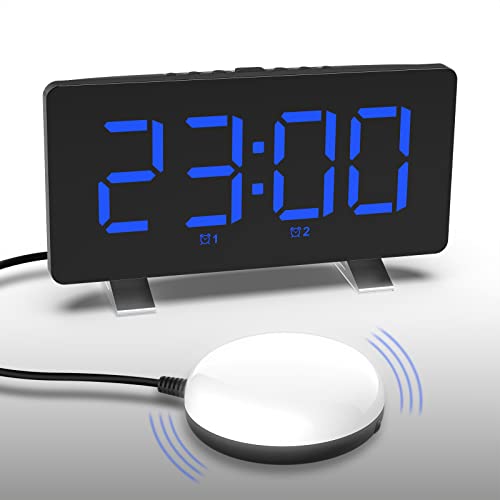
The VAUNO alarm clock integrates a high-power speaker, a bed shaker, and a flashing wake-up light to stimulate hearing, vision, and touch. It supports dual alarms with multiple chord sounds and adjustable volumes up to 15 levels, making it suitable for households that require flexible alert options. The device is designed to wake deep sleepers and can serve as a versatile component within a broader Deaf-friendly safety ecosystem.
Buying Guide: Key Purchase Considerations
When selecting a visual fire alarm system for deaf or hard-of-hearing individuals, consider the following factors to ensure effective coverage and reliable performance across scenarios:
- Emergency alert modalities: Look for devices offering a combination of loud alerts, flashing visual signals, and bed shakers to maximize wakefulness in different sleeping patterns and room layouts.
- Power and backup: Prioritize units with hardwired power plus long-lasting battery backups or 10-year batteries to maintain operation during outages.
- Interoperability: If you already use a smart home or assistive alert network, choose devices that integrate with your existing ecosystem (wireless transmitters, receivers, and hubs).
- Alert range and coverage: Wireless systems vary in signal range; larger homes may benefit from systems with extended coverage to reach distant rooms, basements, and upstairs areas.
- Ease of installation: Consider units designed for simple mounting in hallways, bedrooms, or near living areas, especially if wiring or complex integration is a concern.
- Maintenance and replacement: Check battery life, sensor reliability, and end-of-life indicators to minimize maintenance surprises and ensure continuous safety.
- Redundancy and multi-sensor setup: A layered approach—smoke detectors with LED strobes plus a dedicated alert hub and bed shaker—offers the strongest protection for deaf users.
- Security and privacy: If wireless devices communicate over radio signals, verify privacy protections and avoid overly exposed networks in sensitive environments.
- Cost of ownership: Factor in initial installation, component compatibility, and ongoing replacement costs when comparing systems.
How to Combine These Devices Into a Safety Plan
For optimal safety, deploy a combination of the selected devices to ensure visibility, audibility, and rapid response. Place hardwired detectors with visual strobes in bedrooms and hallways, supplement with wireless alert transmitters to extend coverage to living spaces, and add bed shakers in the primary sleeping areas. Regularly test the system and review wake-time performance with household members to identify any gaps in notification or response.