Best Power Inverter DC 12V to AC 220V for Cars, RVs and Home Backup
Answering the search query, this guide highlights the best DC 12V to AC 220V power inverters for vehicles, RVs, and portable home backup. These units convert 12V battery power to standard 220V AC outlets, with options ranging from compact 200W models to heavy-duty 5000W units. Each pick suits different use cases: mobile charging and light appliances, mid-range tools and electronics, or high-demand tools and appliances during trips or emergencies. The following table summarizes five strong options and their ideal scenarios to help you decide quickly.
| Product | Best For | Key Feature |
|---|---|---|
| 5000 Watt Pure Sine Wave Inverter | Heavy-duty RVs, work sites, and home backup | Pure sine wave, 2 outlets, dual fans |
| 4000W Peak DC to AC Inverter (110V/220V) | Vehicles needing higher power, USB charging | Dual USB ports, LED display |
| 4000W Inverter with 220V Boost | Vehicles and small shops | Dual outlets, USB, LED display |
| VariCore 1800W Pure Sine Wave Inverter | Home/RV/off-grid setups | Pure sine wave, LCD status, protection |
| Surakey 3000W DC 12V to 220V Inverter | Camping and travel with multiple devices | Multiple protections, USB port |
5000 Watt Power Inverter 12V DC to 220V AC Converter
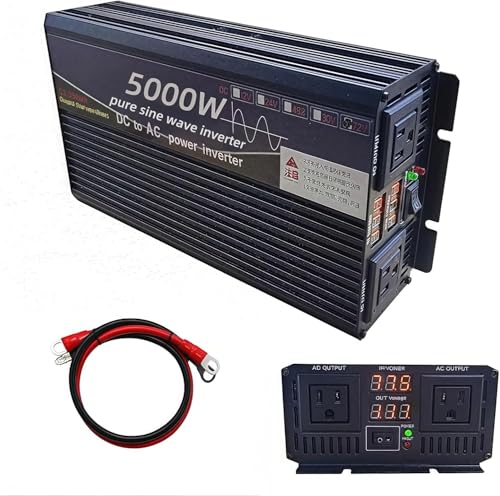
This pure sine wave inverter delivers 5000W continuous power with 220V output, suitable for RVs, workshops, or emergency home backup. It supports two standard 220V outlets and operates with dual cooling fans to manage heat. The design includes a grounded PCB board and a sturdy aviation aluminum shell for durability. Best for heavy appliances and tools that require stable, clean power. A potential limitation is the higher heat and noise when running at peak loads for extended periods.
Best for: Large RV setups, carpenters or campers needing robust power for motors, air compressors, or power tools. Choose this if you regularly run high-wattage equipment off a 12V battery bank.
Limitations: Heavier and may consume more energy overall; ensure your battery bank and wiring are rated for sustained 5000W operation.
High-Power Peak 4000W DC to AC Power Inverter

This inverter provides a peak of 4000W with 110V/220V output, plus dual USB ports and an LED display for monitoring voltage and battery status. It’s well-suited for vehicles, trucks, and RVs where you need reliable, high-capacity power on demand. Best for powering laptops, small appliances, and power tools during trips. A caution: peak capability can strain wiring if used with multiple high-watt devices simultaneously.
Best for: Road trips and mobile work sites where quick, high bursts of power are needed for devices and tools. Use this when you require both USB charging and a couple of AC outlets.
Limitations: Peak power is transient; avoid running several high-wattage devices at once for long periods.
High Power Car Inverter 12V/24V to 220V with QC3.0 and Type-C

This car inverter offers 2 AC outlets plus a QC3.0 port and dual Type-C interfaces with independent switches. It is designed for comprehensive protection against short circuits, undervoltage and overheat. The compact design enhances portability for road trips or daily commuting. Best for travelers who need fast charging alongside multiple devices. Caution: it requires careful wiring in vehicles with sensitive electronics to avoid interference.
Best for: Road warriors who want multiple charging options and real-time monitoring in one compact unit. Choose this if you need QC and Type-C charging for devices on the go.
Limitations: Some devices may experience USB bottlenecks if used with high-power draws simultaneously.
High Power 4000W DC to AC Inverter – 12V to 110V/220V
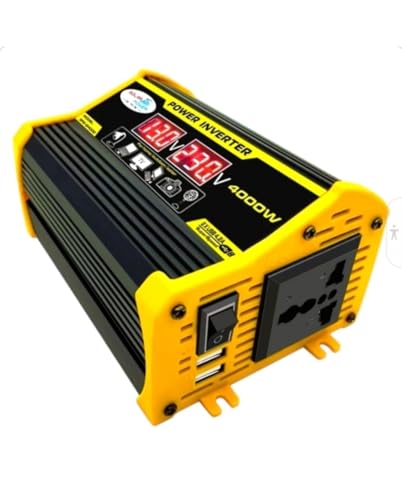
This unit converts 12V DC to 220V AC with 4000W peak capacity and includes dual USB ports and a bright LED display. It’s well-suited for vehicles, RVs, and as a home backup when mains power is unavailable. The LED display makes it easy to track battery status and output. Considerations include heat management during extended use at higher loads.
Best for: Users needing strong 12V-to-220V conversion with straightforward monitoring and USB charging on the go. Opt for this when you want a robust, all-around inverter in a single unit.
Limitations: Extended high-load operation may require enhanced cooling and larger battery capacity.
200W Car Power Inverter (Keenso)
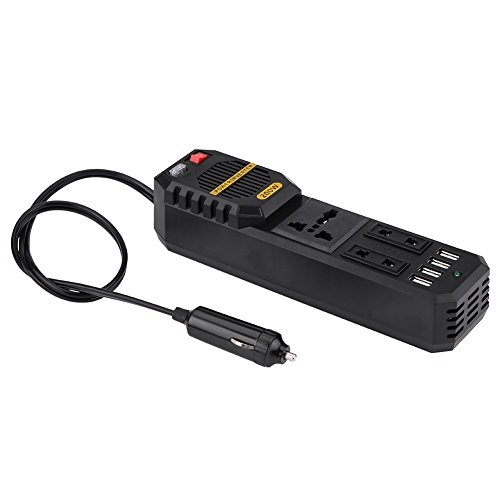
Keenso’s 200W inverter converts 12V to 220V with a built-in cooling fan for longer life and safer operation. It supports a single AC outlet and multiple USB ports. Best for minimal power needs in cars or small campsites. The main limitation is lower wattage, making it unsuitable for heating devices or high-power tools.
Best for: Light loads in small vehicles or when traveling with few essential devices. Choose this if your power needs are modest and you want quiet operation.
Buying Guide
What to consider when choosing a power inverter:
- Power demand: Align inverter wattage with your appliances’ total load. Choose a unit with a wattage ceiling above expected usage.
- Pure sine wave vs modified sine wave: Pure sine wave protects sensitive electronics and provides stable performance; it’s the preferred choice for most devices.
- Outlets and ports: Look for the number and type of outlets, plus USB ports, to match your devices.
- Protection features: Prioritize models with overload, short-circuit, overvoltage, undervoltage, and thermal protections.
- Cooling: Adequate cooling reduces heat buildup; consider units with dual fans or enclosed heatsinks.
- Portability vs. durability: Heavier units offer more power; lighter units suit travel. Consider enclosure material for rugged use.
- Installation considerations: Ensure your vehicle’s wiring and battery capacity support the inverter’s load for safe operation.
Frequently Asked Questions
- What is the difference between pure sine wave and modified sine wave inverters?
Pure sine wave inverters produce cleaner, more stable power suitable for sensitive electronics; modified sine wave inverters are cheaper but can cause motors and electronics to run noisier or less efficiently. - Can I run a microwave or air conditioner from a 12V inverter?
Most microwaves and AC units require very high wattage and surge power; many 12V inverters can’t safely run them for long. Check the continuous and peak wattage ratings and your appliance specs. - How long will a car battery last with an inverter running?
Runtime depends on inverter efficiency and load. Higher wattage drains the battery quickly; plan with a larger battery bank for extended use. - Is a 12V inverter safe for use in an RV?
Yes, when properly installed with appropriate fusing and grounding, but ensure the inverter is rated for continuous duty and equipped with protection features. - Do I need a separate transfer switch for inverter power?
For home backup or critical circuits, a transfer switch or proper integration with a battery system is recommended to prevent backfeeding and ensure safety.