Best 4/0 URD Cable for Underground Power Distribution
Whether you’re planning a residential underground feed or a commercial power distribution line, the 4/0 URD (Underground Residential Distribution) cable is designed for direct burial or conduit use. This article highlights five top options from BreezeHug and Nassau Electrical Supply, explaining who they’re best for and why each choice matters. The focus is on durability, conductor size, and installation flexibility to help buyers select the right cable for underground installations, transformers, meters, and outdoor lighting. The table below summarizes the featured products to aid quick comparisons.
| Product | Length | Conductor Size | Key Benefit |
|---|---|---|---|
| BreezeHug 150Ft 4/0-4/0-2/0 URD | 150 ft | 4/0-4/0-2/0 | High flexibility and direct burial versatility |
| BreezeHug 125Ft 4/0-4/0-2/0 URD | 125 ft | 4/0-4/0-2/0 | Balanced length for shorter runs |
| BreezeHug 100Ft 4/0-4/0-2/0 URD | 100 ft | 4/0-4/0-2/0 | Compact option with robust insulation |
| Nassau Electrical Supply 200′ Monmouth 4/0-4/0-4/0 | 200 ft | 4/0-4/0-4/0 | Quadruplex design for larger feeders |
| Nassau Electrical Supply 250′ Monmouth 4/0-4/0-4/0 | 250 ft | 4/0-4/0-4/0 | Longer run with strong direct burial suitability |
BreezeHug 150Ft 4/0-4/0-2/0 URD Direct Burial Cable

The BreezeHug 150Ft URD cable is designed for both direct burial and conduit installations. It features 19-strand aluminum conductors, offering improved flexibility over traditional 7-strand designs. The dual installation capability supports diverse projects, such as supplying power from transformers to meters or outdoor lighting systems. The standard rating reaches 205 Amps at 75°C and up to 235 Amps at 90°C for direct burial, making this option suitable for moderate-to-high load applications. Best for medium-length runs where flexibility matters and direct burial is anticipated.
Best for: Outdoor installations with potential conduit routing and needs for easy pulling in trenches. Avoid this if you require a higher voltage rating or specialized armor—this model emphasizes flexibility and general direct burial use.
Caution: While direct burial is supported, verify local buried conduit requirements and regional soil conditions that could affect trench depth and protection.
BreezeHug 125Ft 4/0-4/0-2/0 URD Direct Burial Cable

This 125-foot BreezeHug cable mirrors the same 4/0-4/0-2/0 configuration and 19-strand aluminum design, optimized for a slightly shorter run. It supports direct burial or conduit installation, making it a solid choice for residential underground feeders or commercial outdoor lighting circuits that require reliable underground installation. The power rating remains 205 Amps at 75°C and up to 235 Amps at 90°C for direct burial. Better for shorter, cleaner runs where installation speed matters without compromising capacity.
Best for: Short to mid-length underground feeds with a need for straightforward installation. Choose this if you want a balanced option between distance and performance.
Caution: Shorter length may require splicing or additional sections for longer projects; plan routing accordingly.
BreezeHug 100Ft 4/0-4/0-2/0 URD Direct Burial Cable

The 100-foot BreezeHug option provides a compact solution for smaller projects while preserving the 4/0-4/0-2/0 conductor setup. It remains suitable for direct burial or conduit use, with a 205 Amps at 75°C and 235 Amps at 90°C rating for burial. This model is best for tight spaces, shorter runs from transformer to meter, or retrofit updates where space and ease of installation are key.
Best for: Smaller or tighter sites where a compact, robust URD cable is needed. Avoid this if longer conduit paths are required in one continuous run.
Caution: Ensure the trench and conduit pathways meet underground electrical code requirements to minimize pulling resistance during installation.
Nassau Electrical Supply 200′ Monmouth 4/0-4/0-4/0 Triplex Cable
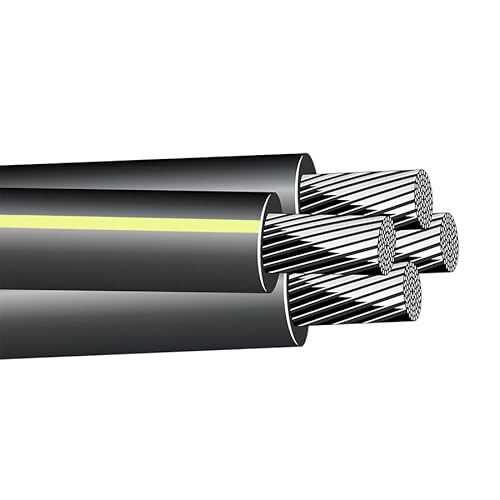
This 200-foot Monmouth triplex URD cable uses three 4/0 conductors plus a 4/0 neutral, designed for higher-capacity underground feeds. The quadruplex arrangement supports multi-conductor layouts commonly used for larger residential or small commercial projects. It is specified for direct burial, with substantial weight per 1000 feet indicating durability and protection for long underground runs. Best for:Fence-to-meter feeder installations or larger underground circuits requiring 4/0 conductors in a triplex format.
Caution: Quadruplex designs may complicate splicing or termination in restricted spaces; plan connector hardware and conduit entries accordingly.
Nassau Electrical Supply 40′ 4/0-4/0-4/0-2/0 Wake Forest Quadruplex Cable
This 40-foot Wake Forest quadruplex URD cable provides a shorter option with three 4/0 conductors and a 2/0 neutral. It is suitable for direct burial and is appropriate for patching in a small-scale underground run or for testing layouts before longer installations. Best for: Short, temporary, or commissioning runs where verification of system layout is needed. Limitation: Immediate use is limited to short distances; plan longer sections as required for final installation.
Nassau Electrical Supply 250′ Monmouth 4/0-4/0-4/0 Aluminum URD Triplex Cable
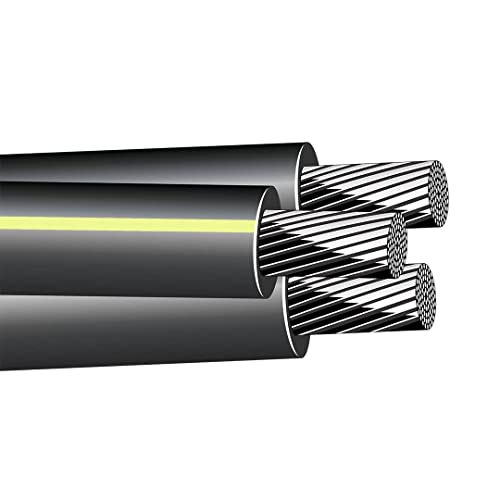
This 250-foot Monmouth triplex URD cable uses three 4/0 conductors plus a 4/0 neutral, designed for long underground runs with direct burial capability. The quadruplex layout supports substantial feeder circuits with reliable underground transmission. Best for: Long underground feeders requiring robustness and extended reach. Caution: Longer splices or transitions require careful planning to ensure consistent conductor alignment and burial protection.
Buying Guide
What should you consider when choosing a 4/0 URD cable?
- Conductor configuration: Triplex versus quadruplex affects how many conductors and neutrals you need for your installation. Triplex is common for three-conductor needs; quadruplex adds a larger neutral or extra conductor where required.
- Direct burial versus conduit: If you plan direct burial, verify insulation class and burial ratings. If routing through conduits, consider flexibility and pulling tensions.
- Ampacity and temperature rating: Look for sheets showing Amps at 75°C and 90°C, which indicate how much load the cable can carry in typical underground conditions.
- Length and installation context: Choose length that minimizes splices while fitting trenching or duct layouts. Longer runs reduce joints but may increase initial trenching effort.
- Material and flexibility: 19-strand aluminum conductors offer better flexibility than multi-strand or 7-strand designs, aiding installation in tight spaces.
FAQ
- What is URD cable used for? It is designed for underground residential distribution, including feeders from transformers to meters and outdoor power distribution.
- Can URD cable be buried directly? Yes, many models are rated for direct burial, but always follow local codes and burial depth requirements.
- What is the typical ampacity range for 4/0 URD cables? Ratings commonly range around 205 Amps at 75°C and up to 235 Amps at 90°C in direct burial, depending on insulation and construction.
- Triplex vs quadruplex: what’s the difference? Triplex includes three conductors (with a neutral in some configurations), while quadruplex adds an extra conductor or larger neutral, affecting capacity and layout.
- Is 4/0 larger than 3/0 or 2/0? Yes, 4/0 is larger in cross-sectional area, permitting higher voltage and current-carrying capacity for underground feeds.
- What should I check before purchasing? Verify length, conductor configuration, burial ratings, and compatibility with conduit or direct burial plans.