Best Portable Solar Energy Systems for Off-Grid Power and Travel
If you’re searching for reliable portable solar energy systems, these five options stand out for off-grid living, camping, RV use, and emergency readiness. Each product is suitable for different user needs—from compact charging to high-wattage backup power. The list prioritizes systems with built-in solar panels, durable LiFePO4 batteries, and practical output options to cover common devices.
| Product | Best For | Key Benefit |
|---|---|---|
| Jackery Solar Generator 1000 V2 | Outdoor enthusiasts and emergency prep | High 1500W continuous AC output with fast charge |
| STARYLINE Solar Generator 1800W | Heavy-duty home backup and RV use | Large continuous power with efficient 200W solar panel |
| MARBERO 237Wh Solar Generator | Compact travel and overnight trips | Lightweight kit with foldable solar panel |
| powkey 200W Portable Generator | Backpacking and small device charging | Very portable with multiple outlets |
| EF ECOFLOW Delta 3 Classic | Home backup and RV extended use | Expandable and fast charging with solid 1800W output |
Jackery Solar Generator 1000 V2 with 200W Panel

The Jackery Solar Generator 1000 V2 combines a 1,070Wh LiFePO4 battery with a 1,500W AC output and a 3,000W surge peak. It weighs 23.8 lbs and includes a foldable handle for portability. Best for campers, weekend travelers, and emergency kits where strong, reliable power is needed on the go.
Why choose this: It supports powering refrigerators, air conditioners, and kitchen appliances, making it a robust all-purpose unit. The One Hour Fast Charging feature via emergency charging in the Jackery App supports rapid replenishment during outages. A caution: solar recharging times depend on sunlight and panel efficiency, so plan for multiple charging options if you rely on it for regular use.
STARYLINE Solar Generator 1800W Kit
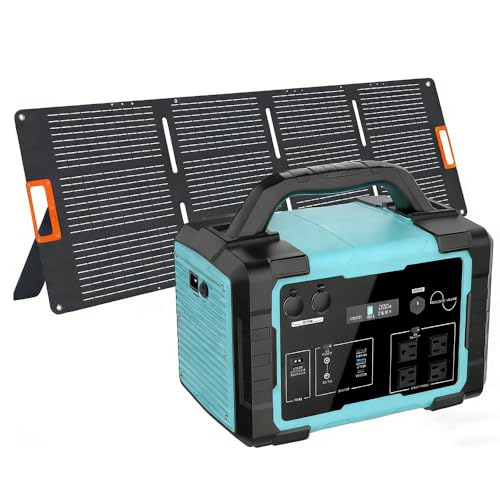
This system delivers 1800W continuous AC output with a 3600W surge and includes a 1024Wh LiFePO4 battery plus a 200W solar panel. It’s ideal for heavier loads like microwaves, refrigerators, and power tools during outages or off-grid living. The LiFePO4 chemistry provides long cycle life and safer thermal performance.
Best for: long-duration power needs and RV camping where higher wattage is required. Limitation: the unit’s bulkier footprint makes it less portable than compact options, so it’s better suited for vehicle-based setups or stationary campsites.
MARBERO 237Wh Solar Generator with Panel

The MARBERO M823 offers a compact 237Wh Li-ion battery with a built-in folding solar panel. It provides multiple outputs, including two AC outlets with pure sine wave, USB-A, USB-C, and DC ports, suitable for charging phones, tablets, laptops, and small devices. This kit suits overnight hikes, festivals, or light camping trips where a small, reliable energy source is needed.
Best for: travelers who want a lightweight, all-in-one charging kit. Caution: the 237Wh capacity limits running high-wattage devices for extended periods; avoid using devices that exceed 300W continuously.
powkey Solar Powered Generator Kit

The Powkey system showcases a 200W portable power station with 146Wh capacity, plus a 40W panel. It features multiple outlets—two 110V AC outlets (Pure Sine Wave), several USB ports, and a DC output—while weighing about 3.0 lbs. It’s designed for backpacking, camping, or quick-charging scenarios where ultra-lightweight gear matters.
Best for: ultralight travelers who need basic device charging and small electronics. Choose this if you prioritize portability over high-wattage appliances. Limitation: not suitable for running larger appliances for long periods despite multiple outlets.
EF ECOFLOW Delta 3 Classic with 220W Panel

The Delta 3 Classic provides up to 1800W output with a 3600W surge and 1024Wh LiFePO4 battery, plus an included 220W solar panel. It supports fast charging, with X-Stream AC charging capable of reaching 0–80% quickly, and can expand to higher power when needed. This option suits home backup users and RV owners who want reliable power with flexible charging options.
Best for: home backup and mobile power needs where fast charging and expansion potential are important. Caution: expansion may require compatible modules and monitoring, so verify compatibility with your setup before purchase.
Buying Guide: Key Considerations for Portable Solar Systems
Power needs. Estimate wattage for essential devices (fridge, laptop, lights) and plan for surge requirements. If you run heavy devices, prioritize higher continuous wattage and a robust surge capacity.
Battery chemistry and lifespan. LiFePO4 offers longer cycle life and stable performance in varying temperatures. Consider units rated for thousands of cycles to maximize long-term value.
Portability vs. capacity. A lighter unit with modest capacity is easier to carry on trips, but larger capacities suit extended off-grid use. Balance weight, size, and daily energy requirements.
Solar charging efficiency. Panel wattage and conversion efficiency impact how quickly you top up the battery. Near-term charging depends on sun exposure and panel quality; plan for supplemental charging methods if possible.
Outlets and versatility. Look for a mix of AC, USB-C, USB-A, and DC outputs to charge a broad set of devices. Consider a unit with pure sine wave for sensitive electronics.
Safety features. Battery management systems (BMS), temperature protection, short-circuit protection, and over-voltage safeguards reduce risk during charging and discharging.
Frequently Asked Questions
- What is a portable solar generator?
A portable device that combines a rechargeable battery, power conversion electronics, and often solar panels, enabling off-grid electrical power for devices and appliances. - Do LiFePO4 batteries last longer than lithium-ion?
Yes. LiFePO4 cells typically offer longer cycle life and better thermal stability, making them suitable for frequent charging and extreme conditions. - Can solar panels fully recharge a power station on a cloudy day?
Solar charging efficiency decreases in cloud cover, so recharging may take longer. Multiple charging methods or higher panel wattage help mitigate this. - Which system is best for camping?
A compact unit with sufficient USB-C/USB-A outputs and a reasonable battery capacity, like the MARBERO 237Wh or Powkey 146Wh, balances portability with practical device charging. - Is fast charging always better?
Fast charging is useful for rapid replenishment during outages, but it can generate more heat. Choose a system with a balanced charging approach and battery protection features. - Can I expand these systems later?
Some models support expansion via additional batteries or modular add-ons. Check compatibility with your chosen brand if expansion matters.