Best Off the Grid Battery Solutions for RVs and Cabins
For off-grid living, choosing the right battery system is essential to maintain power reliability in RVs, cabins, boats, and solar setups. This article highlights five high-quality options that balance safety, longevity, and performance. Each product section provides a concise overview, key features, and how it fits into typical off-grid configurations. You’ll find a mix of AGM and LiFePO4 chemistries to suit different maintenance preferences and climate conditions.
| Product | Chemistry | Capacity | Best For |
|---|---|---|---|
| Renogy 12V 100Ah AGM | AGM | 100Ah | Maintenance-free, safe for RVs and cabins |
| Battle Born 100Ah LiFePO4 | LiFePO4 | 100Ah | Durable, modular, flexible wiring |
| ECO-WORTHY 280Ah LiFePO4 (2-Pack) | LiFePO4 | 560Wh per pack (1120Wh total) | High capacity, Bluetooth monitoring |
| DUMFUME 600Ah LiFePO4 | LiFePO4 | 600Ah | High capacity, long cycle life |
| VATTER POWER 300Ah LiFePO4 | LiFePO4 | 300Ah | Self-heating, low-temp charging |
Renogy 12V 100Ah AGM Deep Cycle Battery

Brand: Renogy. This maintenance-free AGM battery is designed for RVs, camping, cabins, marine use, and off-grid systems. It supports series connections without a limitation and can be paralleled up to four packs, enabling scalable power for growing systems. The chemistry emphasizes safety and stability, reducing the need for extensive troubleshooting compared with some other chemistries.
Key considerations: Ideal for users seeking a reliable, low-maintenance option with proven AGM performance. In moderate climates, its sealed design helps prevent leaks and minimizes upkeep, making it a common choice for starter off-grid setups.
Renogy 12V 200Ah AGM Deep Cycle Battery

Brand: Renogy. This larger AGM option emphasizes long shelf life and low self-discharge, which helps when batteries sit unused between trips. It uses thick AGM separators and advanced valve-regulated technology to minimize maintenance needs and acid leakage risk. High-discharge performance supports activities that require stronger startup currents or extended off-grid use.
Key considerations: Suitable when you want more capacity in a single battery bank without stepping into lithium chemistry. Best for users who value robustness and straightforward setup in RVs or cabins without frequent cycling.
Battle Born 12V 100Ah LiFePO4 RV Battery

Brand: Battle Born Batteries. This 12V 100Ah LiFePO4 battery includes an internal BMS and is designed for off-grid living. Its drop-in compatibility with standard RV and marine configurations makes it easy to wire in series or parallel. LiFePO4 chemistry provides high cycle life, stable voltage, and safety, with resistance to deep discharge.
Key considerations: A practical choice for those prioritizing long life, safe chemistry, and versatile array configurations. Particularly suitable for users who want reliable performance over many cycles and in varying weather conditions.
ECO-WORTHY 280Ah LiFePO4 2-Pack with Bluetooth

Brand: ECO-WORTHY. A two-pack LiFePO4 system offering a combined 560Ah capacity, with built-in 200A BMS and Bluetooth monitoring via a mobile app. Features include low-temp protection and a rugged internal frame for durability. The Bluetooth app allows real-time monitoring of voltage, current, and remaining capacity, aiding remote maintenance.
Key considerations: Choose this option when you need substantial capacity with remote monitoring. Bluetooth connectivity adds convenience for off-grid installations where physical access may be limited.
DUMFUME 600Ah LiFePO4 Deep Cycle Battery
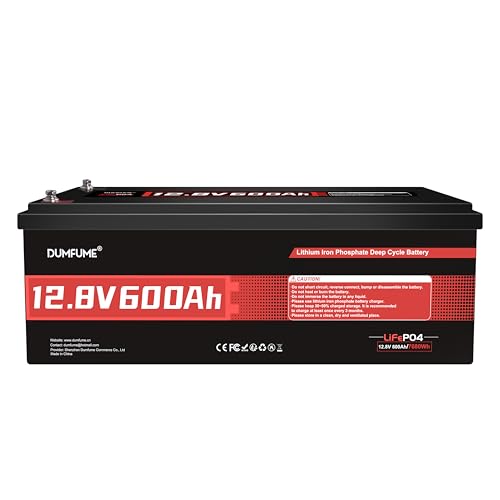
Brand: dumfume. This high-capacity LiFePO4 option delivers about 7200Wh of energy storage with a robust 200A BMS. It is designed for extended off-grid use, including power shortages, RVs, solar systems, and camping. The battery emphasizes long life with deep-cycle performance and a compact footprint for its capacity.
Key considerations: Best suited for users who require substantial energy storage in a single unit. The higher capacity supports longer off-grid periods between recharges, but overall system sizing should account for balance with charge sources and load.
12V 300Ah Bluetooth LiFePO4 Battery with Self-Heating

Brand: VATTER POWER. This 300Ah LiFePO4 battery features an automatic self-heating function to assist charging in cold environments. It includes a built-in 200A BMS and is designed for low-temperature charging and high cycle life, making it well-suited for off-grid setups where winter conditions pose a challenge. The battery is lighter than comparable lead-acid options and supports long-term use.
Key considerations: Excellent for users in colder climates or those who need reliable charging capability at low temperatures. Self-heating adds a layer of practicality for year-round off-grid operations.
Weize Deep Cycle AGM 12V 100Ah
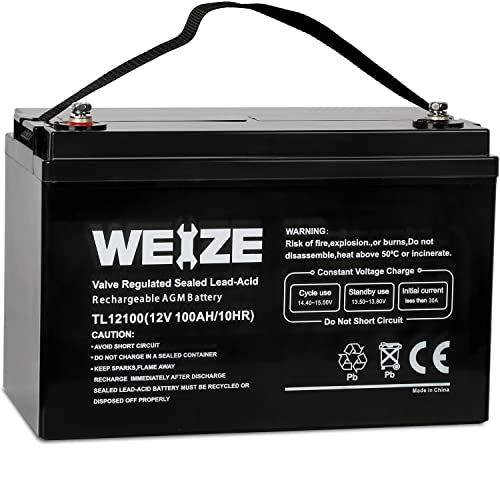
Brand: WEIZE. This maintenance-free AGM battery is compact and versatile for RVs, solar setups, trolling motors, and off-grid systems. It emphasizes a low self-discharge and broad operating temperature range, with a strong 1100A max discharge current to accommodate higher startup demands in certain appliances.
Key considerations: A balanced option for those who want a cost-effective AGM with reliable discharge performance and easy integration into existing systems.
Buying Guide: Off-Grid Battery Considerations
Chemistry and safety
AGM offers maintenance-free operation, simple installation, and strong safety profiles, making them a solid choice for beginners or where low upkeep is valued. LiFePO4 delivers longer cycle life, higher energy density, and safer chemistry, though at a higher upfront cost. Consider climate, maintenance tolerance, and long-term ownership costs when choosing between AGM and LiFePO4.
Capacity, depth of discharge, and cycles
Battery capacity should align with typical daily loads and solar or generator charging availability. LiFePO4 packs often tolerate deeper cycles with less degradation, whereas AGM batteries may have higher self-discharge rates if left idle. Plan for essential loads, reserve capacity, and seasonality in your off-grid project.
Temperature and charging
Low-temperature performance matters in northern climates. Some LiFePO4 options include BMS protections and self-heating features to maintain charging efficiency. Ensure your charger is compatible with the battery’s chemistry and temperature range to avoid performance loss.
Monitoring and system integration
Bluetooth or app-based monitoring enhances maintenance and planning, particularly for remote off-grid sites. Sizable battery banks benefit from modular designs that allow incremental expansion and easier troubleshooting. Look for compatibility with existing inverters, solar controllers, and charging sources.
Physical dimensions and installation
Evaluate the available space, weight, and mounting orientation. LiFePO4 batteries are typically lighter for comparable capacity and support flexible installation, while AGM packs may be heavier but are straightforward to Install in standard enclosures.