Best Off Grid Hybrid Inverter: Top Hybrid Inverter Solutions for Independent Power
Off grid living relies on reliable power solutions that combine solar charging with battery storage. Hybrid inverters are the central technology, intelligently managing solar input, grid or generator connection, and battery charging to deliver clean, stable power for homes, RVs, cabins, and remote sheds. Below is a curated selection of five capable off grid hybrid inverters, each designed to maximize solar harvest, support various battery chemistries, and scale for growing power needs. Use the buying guide to compare key features and make an informed choice.
Summary of chosen products
| Product | Brand | Key Feature | Battery Compatibility |
|---|---|---|---|
| SUMRY Hybrid Solar Inverter | SRGFTS | 4000W continuous, 8000W surge; built-in 140A MPPT | Lead-acid, AGM, LiFePO4, lithium |
| Xijia 3600W Hybrid Inverter | xijia | 3600W with 120A MPPT; multiple charging modes | Lead-acid, AGM, Gel, Lithium |
| Aninerel 12000W Solar Hybrid Inverter | Aninerel | 12000W continuous; 2 MPPT; parallel up to 6 units | Lead-acid, Li-ion, LiFePO4 |
| POWLAND 4000W Hybrid Solar Inverter | POWLAND | 4000W output; 140A MPPT; glass LCD | Lead-acid, LiFePO4, lithium |
| Ampinvt 5000W Off Grid Inverter | AMPINVT | 5500W PV input; 100A MPPT; 4 charging modes | Lead-acid, LiFePO4 |
SUMRY Hybrid Solar Inverter Overview

The SUMRY Hybrid Solar Inverter offers a robust combination of power, efficiency, and control. It provides 4000W of continuous output with an 8000W peak, suitable for running multiple appliances at once. A glass-top design houses a large 6.25-inch LCD display and touch buttons, delivering clear visibility of real-time data. Its built-in 140A MPPT charge controller supports PV inputs up to 5600W at 350VDC and claims up to 98% conversion efficiency, making it a strong choice for off-grid or battery-assisted setups. The device supports both battery-less operation and AGM or lithium battery configurations, appealing to varied install scenarios.
Key considerations: verify your loads to stay within continuous and surge ratings, and ensure your solar array and battery bank meet the MPPT and voltage requirements. The glass top provides a premium look while offering practical data visibility in shaded or bright environments. Overall, SUMRY blends stylish design with solid performance for home and remote installations.
Xijia 3600W Hybrid Inverter Overview

The Xijia 3600W Hybrid Inverter integrates a 3600W AC output with a 120A MPPT solar charger. It supports 24V lead-acid and lithium batteries, including AGM and LiFePO4 options. With an efficiency rating around 98% and a maximum PV input range that accommodates substantial solar arrays, this unit is suitable for compact off-grid homes, RVs, or cabins. It includes multiple charging modes—Only Solar, Mains First, Solar First, and Mains & Solar Hybrid—along with output modes that adapt to solar-first or utility-first usage, improving reliability when grid power fluctuates. Auto-restart after AC recovery adds resilience for periodic outages.
Practical notes: check the wind-down and thermal management based on your climate, and ensure proper venting for indoor installations. The included MPPT configuration helps maximize daily solar harvest, particularly in well-ventilated spaces with consistent sun exposure.
Aninerel 12000W Solar Hybrid Inverter

The Aninerel 12000W inverter is designed for high-demand off-grid or backup systems. It delivers 12,000W continuous output with a peak of 24,000W and includes two MPPT controllers, enabling flexible solar charging from multiple strings. The unit supports parallel connection up to six units, which can scale output considerably for larger residences or workshops. It is compatible with 48V battery configurations including AGM, GEL, Lead-Acid, Li-ion, and LiFePO4, and supports no-battery operation for direct solar-to-load use. This makes it a compelling option for builders seeking a scalable, modular solar-plus-storage solution.
Performance notes: ensure your PV array and wiring meet the 500VDC input limit and plan for proper heat dissipation in hot climates. Parallel operation multiplies capacity but requires careful balance and monitoring to maintain safe operation across units.
POWLAND 4000W Hybrid Solar Inverter Overview

The POWLAND 4000W unit emphasizes a glass-top LCD with a 6.25-inch display and a built-in 140A MPPT controller capable of handling up to 5600W (350VDC) solar input at high efficiency. It supports 24V LiFePO4, lithium, lead-acid, AGM, and gel batteries, and can operate in solar-only mode without batteries, which can be advantageous in sunny conditions. The inverter is designed for off-grid and backup deployments, delivering clean, utility-grade power with responsiveness to solar input fluctuations. The compact form factor and real-time monitoring appeal to hobbyists and small-scale remote installations.
Design note: plan for adequate air circulation around the unit to sustain peak performance, and verify compatibility with any existing battery bank as you plan upgrades or expansions.
Ampinvt 5000W Off Grid Inverter Overview
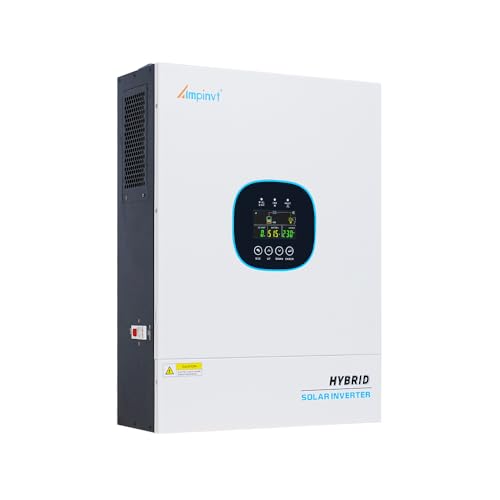
The Ampinvt 5000W inverter is an all-in-one solution combining an inverter, AC battery charger, MPPT solar controller, and automatic transfer switch. It supports single-phase, split-phase, and three-phase outputs (120/208/240Vac). The unit advertises high transfer efficiency (over 92%) and a 100A MPPT controller with up to 98% tracking efficiency. It accommodates 48V lead-acid and lithium batteries and specifies a max PV input of 5500W with PV input voltage up to 500VDC. Four charging modes—Only Solar, Mains Priority, Solar Priority, and Mains & Solar Hybrid—provide flexible operation across diverse power sources.
Operational guidance: verify generator compatibility if used, ensure proper fusing and ventilation, and consider a larger battery bank to fully utilize the 5000W inverter rating for peak loads.
Buying Guide: Key Considerations for Off Grid Hybrid Inverters
- Power rating and surge capacity: Compare continuous (rated) output and surge (peak) capacity to match your largest loads. Off-grid systems often power HVAC, appliances, and tools; ensure the inverter can handle peak demand without tripping.
- MPPT charging and PV input: A higher MPPT current and PV input range maximize daily solar harvest. Look for models with multiple MPPTs for flexibility with series or parallel solar strings and higher voltage arrays.
- Battery compatibility and modes: Confirm compatibility with your battery chemistry (lead-acid, AGM, LiFePO4, Li-ion) and whether the unit supports battery-less operation or No-Battery mode for solar-to-load operation. Assess charging modes to align with your daily usage pattern and rate structures.
- Grid-tie and backup capabilities: Some inverters offer grid-tie features, auto-transfer, and the ability to sell excess power back to the grid. If you rely on grid power, ensure local codes permit grid export and that the inverter supports reliable islanding and recovery.
- Expandability and modularity: If future loads or solar capacity are expected to grow, choose models that allow parallel operation (adding more units) or hybrid expansions to scale to higher wattage or three-phase outputs.
- Monitoring and display: A clear LCD or app-based monitoring helps manage battery state, solar input, and loads. Glass-top displays can improve readability in bright outdoor settings.
- Environmental and installation considerations: Check operating temperature range, ventilation requirements, noise, and cabinet dimensions. Outdoor-rated units may require appropriate enclosure or housing.
- Safety and standards: Ensure compliance with UL/IEEE standards and certified grid-tie safety features if you plan to export energy or connect to other electrical systems.
- Cost and total cost of ownership: While upfront price matters, factor in battery bank size, solar panel array, maintenance, and potential incentives or net-metering policies when evaluating total cost of ownership.
These aspects help compare the five featured inverters against common off-grid requirements: continuous power for daily appliances, reliability in low-sun days, compatibility with preferred battery types, and scalability for future expansion. A well-chosen hybrid inverter delivers smooth power delivery, protects sensitive electronics, and enables flexible, resilient off-grid living.