Best Long-Life CO Detectors for Home Safety
When choosing a carbon monoxide detector with a long life, look for units with a 10-year sensor or sealed battery design, clear alarm indicators, and reliable electrochemical sensing. These features reduce maintenance and provide dependable protection for homes, offices, and travelers. Ideal buyers include homeowners seeking low-maintenance safety, renters and landlords needing durable units, and travelers or remote workers who require portable, long-lasting CO monitoring.
| Product | Who It’s Best For | Reason It Stands Out |
|---|---|---|
| SITERWELL 10 Year CO Detector | Homeowners, small offices | 10-year life with LCD and loud alarm |
| X-Sense SC06 10-Year Battery Alarm | Families, apartments | 10-year sealed battery, UL certified |
| Heiman C1-S Mini CO Detector | Renters, landlords | UL 2034 5th, compact, long battery life |
| Kidde AA Battery Powered CO Alarm | Travelers, campers, renters | Worry-free portable operation on AA cells |
| X-Sense SC07 10-Year Battery Combo | Single-family homes | 10-year power, dual smoke & CO |
SITERWELL 10 Year CO Detector

The SITERWELL CO detector features a long-lasting 10-year product life with built-in AA batteries and an LCD display that shows real-time CO levels. It uses a high-accuracy electrochemical sensor and emits a powerful alarm (no less than 85 dB at 3 meters). Best for households that want a reliable, low-maintenance CO detector that clearly communicates levels and status. A potential limitation is reliance on battery replacement for ongoing readiness during large temperature swings or extended outages unless batteries are kept fresh.
TopTes Guard-101 Four-Gas Monitor
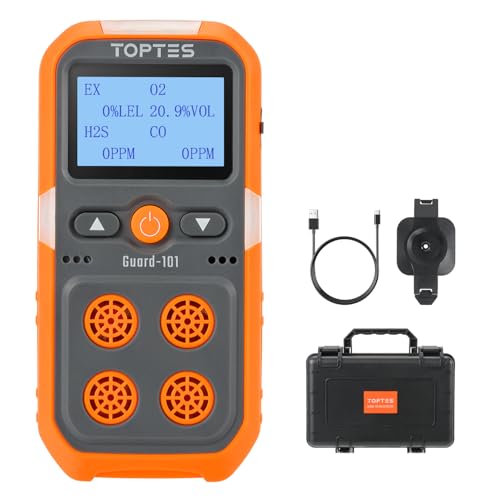
The Guard-101 offers four-gas detection, including CO, with rapid response and multiple alarm modes (LED, vibration, sound). Its long-life battery (up to 14 hours) supports extended monitoring in work environments. Best for professionals who need multi-gas awareness in industrial or home-workshop settings. Note that it’s a multi-gas device; if you only need CO monitoring, a dedicated CO detector may be simpler to manage.
SITERWELL Plug-In 10-Year CO Detector

This plug-in CO detector provides 10-year battery life with an electrochemical sensor and audible alert over 85 dB. It’s ideal for travelers, hotel rooms, RVs, or home offices where a portable, easy-to-place detector is helpful. A potential limitation is its reliance on 120V outlets; in some off-grid or bunking scenarios it may require backup power planning.
Heiman C1-S Mini CO Detector
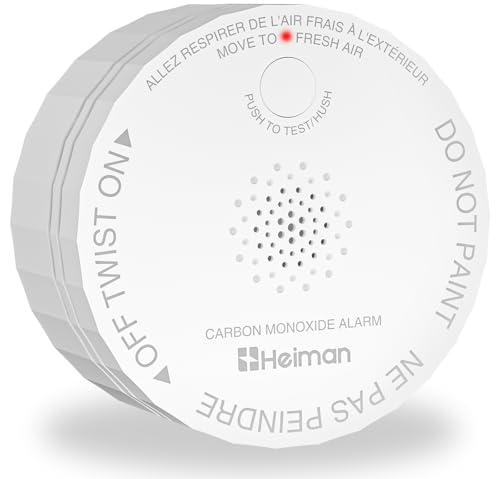
The Heiman C1-S is a compact, long-battery detector meeting UL 2034 standards with a Figaro sensor for accurate CO detection. Best for smaller living spaces or rental units where discreet placement matters. It’s especially suitable for properties requiring landlord compliance and CSFM approval. A downside could be its smaller form factor, which may affect visibility in some layouts.
Kidde CO Alarm with AA Batteries
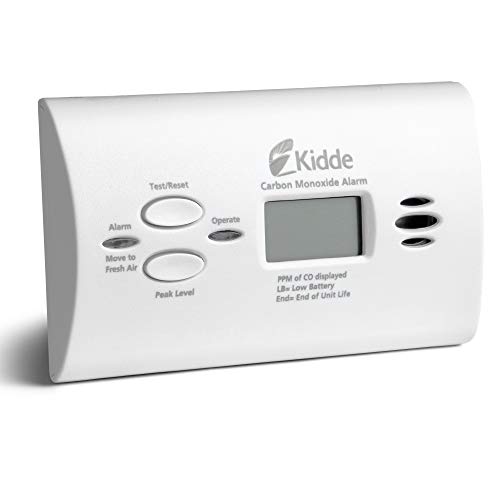
The Kidde detector runs on 2 AA batteries and provides a portable CO alarm with an audible alert. It’s best for people who need a simple, easily movable CO detector or who require a backup option when mains power is not available. It does not state a long-life sealed battery, so ongoing maintenance is needed in battery replacement cycles.
X-Sense SC07 10-Year Battery Alarm

The SC07 combines smoke and CO detection in a single unit with a 10-year sealed battery. It’s a strong choice for single-family homes needing dual protection without frequent battery changes. A consideration is that it’s a standalone unit and lacks interconnection features found in some newer smart detectors.
Buying Guide
- Detector type: Choose electrochemical sensors for CO accuracy and reliability. Avoid detectors that rely on thermoelectric or less precise sensing unless needed for cost reasons.
- Power source: Sealed 10-year batteries minimize maintenance. Plug-in units offer convenience but require outlet access and backup planning for outages.
- Coverage and placement: Place CO detectors on every level, near sleeping areas, and away from cooking appliances to reduce false alerts. Interconnectivity can provide whole-home coverage in some models.
- Audibility and indicators: Look for alarms of 85 dB or higher and clear visual/status indicators (LCD, LED colors) for quick assessment during an alert.
- Certifications: UL 2034 (CO) and UL 217 (smoke) certifications indicate compliance with safety standards. CSFM or ETL listings add credibility for installations in rental properties or regulated environments.
FAQ
- What does a 10-year CO detector mean?
It indicates the sensor and device are designed to last about 10 years before replacement, simplifying maintenance and ensuring consistent performance.
- Do these detectors require professional installation?
Most can be installed by homeowners with basic tools. Plug-in and battery-powered units are typically straightforward, but hardwired interconnect options may require an electrician.
- Can I rely on a CO alarm for all rooms?
Use one detector per sleeping area and on each level of the home for better coverage. Multi-gas detectors are helpful in workshops but may be more complex than needed for CO-only monitoring.
- What’s the difference between a 4-gas detector and a CO-specific unit?
A 4-gas detector monitors multiple gases (e.g., CO, H2S, O2, LEL), which is useful in industrial spaces. A CO-specific unit focuses solely on carbon monoxide for home safety.
- How important is a digital display?
An LCD display helps users monitor CO levels in real time and assess danger quickly. It complements audible alarms with a clear readout.
- Are wireless interconnected detectors necessary?
Interconnection is beneficial for larger homes or multi-story layouts, ensuring the alarm sounds throughout the building when one unit detects CO.