Best 7500 Watt Inverter Generators for Home Backup and RV on the Go
Looking for a reliable 7500-watt inverter generator to power home essentials, RV setups, or job sites during outages? This guide spotlights five capable models around the 7500–8000 watt range. Each product is evaluated for clean power, runtime, portability, and safety features to help you choose the best fit for your needs—from sensitive electronics to heavy-duty appliances.
Summary of selected products
| Product | Inverter Watts | Fuel Type | Best For | Notes |
|---|---|---|---|---|
| PowerSmart 7000-Watt Open Frame | 6000 Running / 7000 Surge | Gas | Home backup and RVs needing clean power | Open-frame; electric start; 120/240V dual voltage |
| A-iPower 7600W Dual Fuel Inverter (SUA7600iED) | 6100 Running / 7600 Peak (Gas) | Gas/Propane | Quiet operation with dual fuel | CO sensor; electric start |
| AIVOLT 7500W Dual Fuel Portable | 6300 Running / 7500 Peak (Gas) | Gas/Propane | High power with strong safety features | CO Watch-Guard; 50A RV outlet |
| Pulsar 7250-Watt Dual Fuel | 6000 Running / 7250 Peak | Gas/Propane | Budget-friendly dual fuel option | Remote start capability |
| Genkins 8000W Inverter | 6500 Running / 8000 Peak | Gas | Quiet, portable power for camping and backup | Ultra-quiet; CO safety features |
PowerSmart 7000-Watt Open Frame Inverter Generator

Best for: Home backup and RV users who need robust power with clean sine wave output. This model delivers 7000W surge and 6000W running power with <3% THD, making it safe for laptops, TVs, and other electronics. Start-up requires a short warm-up to stabilize high-wattage loads, ensuring reliable operation for fridges or AC units during outages.
Key reasons to choose: Electric push-button start for quick power, 322cc engine for steady runtime, and 120/240V dual voltage for transfer switch readiness. The 6-hour runtime at 50% load on a 3.2-gallon tank is suitable for overnight use. Caution: allow a 10-minute stabilization period before connecting heavy appliances to avoid nuisance overloads.
What to watch: This generator is an open-frame design, which can be less weather-proof than fully enclosed units. Consider a protective canopy if located outdoors.
A-iPower 7600W Dual Fuel Inverter (SUA7600iED)
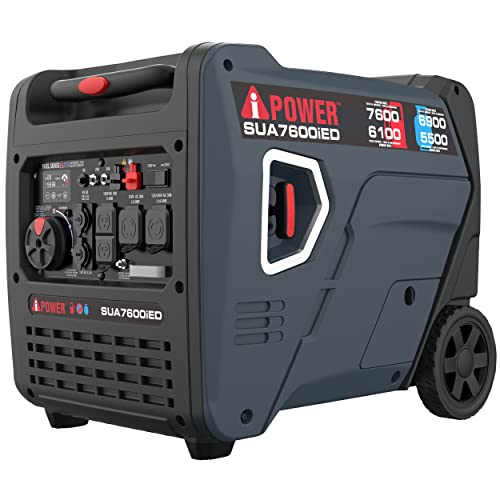
Best for: Quiet operation with flexibility. This inverter offers 7,600 starting watts and 6,100 running watts on gas, with propane support. It features a CO sensor and a telescopic handle for easy transport, making it ideal for tailgating, camping, or home backup where low noise is valued.
Strengths: Clean power with approximately 3% THD, suitable for sensitive electronics, plus dual-fuel capability adds versatility. Limitation: Propane supply or tank size may limit runtime compared to gasoline in high-demand scenarios.
AIVOLT Generator 7500 Watt Dual Fuel

Best for: Home backup and outdoor use where strong, stable power is needed. The dual-fuel engine delivers 7500 peak watts and 6300 running watts on gasoline, with propane performance at 6800 peak and 5800 running watts. A 50A RV-ready outlet and CO sensor add safety and compatibility for larger rigs.
Why it stands out: 360° safety guard with CO watch, USDA-spark arrester, low-oil shutdown, and multi-circuit protection. Caution: Dual-fuel operation increases complexity and maintenance compared to single-fuel models.
Pulsar 7,250-Watt Dual Fuel Inverter

Best for: Those needing a strong dual-fuel option with remote start. The model provides 7,250 peak watts and 6,000 running watts on gasoline, with 6,500 peak and 5,500 running watts on propane, and supports both 120V and 240V outputs. It is suitable for RVs or home backup where remote starting is convenient.
Pro: Dual-fuel flexibility and relatively quiet operation. Cons: Slightly higher noise than some ultra-quiet units; ensure proper ventilation when operating indoors or in enclosed spaces.
Genkins 8000W Inverter Generator
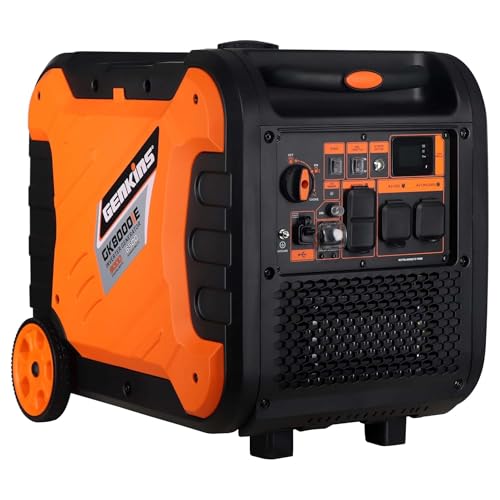
Best for: Campers and homeowners who want a robust, quiet power source with strong startup capability. The 8000W peak and 6500W running power come from a 327cc OHV engine with pure sine wave output (≤2% THD), protecting electronics like laptops and TVs while delivering dependable power for appliances.
Why pick this: Ultra-quiet operation (approximately 62 dBA at a distance) and portable design with a telescoping handle. Caution: Weight around 129 lbs—consider assistance or a cart for mobility.
Buying Guide: How to Choose the Right 7500-Watt Inverter Generator
What power needs do you have? List essential appliances and their wattage, then choose a model that provides a comfortable margin above peak needs to prevent overloads.
- Power quality matters. Look for less than 3% THD for safe powering of sensitive electronics. Inverter generators often meet this threshold.
- Fuel options. Dual-fuel units offer flexibility, but gasoline usually provides the most consistent runtime. Propane is convenient for long-term storage.
- Portability vs. capacity. A larger unit with wheels and a shorter runtime per gallon may still be preferable if you need mobility for camping or job sites.
- Safety features. CO sensors, auto shutoff, and transfer-switch readiness are essential for home backup and RV use.
- Output configuration. Ensure the unit can support your RV or home transfer switch with the correct outlets (including 50A if needed).
Frequently Asked Questions
- What is the difference between peak and running watts?
Peak watts indicate maximum surge power, while running watts reflect continuous output. Choose a model whose running watts meet or exceed your critical loads plus a margin for startup. - Why is THD important for inverter generators?
Lower THD means cleaner power, which reduces risk to electronics and improves performance of sensitive devices. - Are dual-fuel generators better for emergencies?
They offer flexibility and extended runtime when one fuel source runs low, but can be heavier and more costly. - What is a transfer switch, and do I need one?
A transfer switch isolates household circuits from the grid during outages. It’s recommended for whole-house backup to safely power essential circuits. - How loud are inverter generators?
Most models measure around 60–62 dBA at a moderate distance; quieter units are preferable for campgrounds and residential areas.