Best 96,000-Grain Water Softeners for Uninterrupted Soft Water
When shopping for a 96,000-grain water softener, the goal is continuous, high-capacity soft water with efficient salt and water use. This guide highlights five top options that balance reliability, maintenance needs, and performance for average to larger homes. Each product section explains who it’s best for and why it’s a strong pick, plus a practical caveat. The buying table below helps you compare core specs at a glance.
| Product | Brand | Capacity | Best For |
|---|---|---|---|
| AFWFilters Premium Purolite C100E Resin Twin Tank | AFWFilters | 96,000 total (48k per tank) | Households needing uninterrupted soft water |
| Genesis 96,000 Grain High Efficiency | Discount Water Softeners | 96,000 | Salt savings and efficient regeneration |
| AFWFilters 96k With Fleck 2510SXT | AFWFilters | 96,000 | Reliable, high-flow softening |
| Aquasure Harmony 48k + 72k Options | Aquasure | 48k or 72k | Smaller to mid-size homes, upgrade path |
| Fleck 80k On Demand | AFWFilters | 80,000 | Higher flow for larger homes |
AFWFilters Premium Purolite C100E Twin Tank 96,000 Grain System
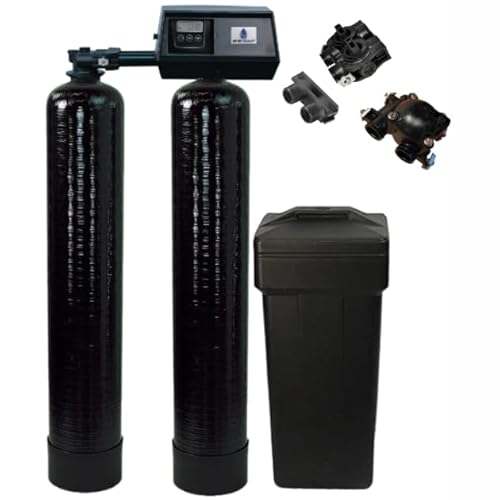
The AFWFilters Complete Twin Tank Water Softener provides continuous soft water by using one tank while the other regenerates. This design is ideal for households with high water usage or those who won’t tolerate downtime. It includes premium Purolite C100E resin, manufactured in the USA, designed to remove calcium and magnesium ions effectively, improving both appliance efficiency and soap performance.
Best for: Homes that need non-stop soft water and high reliability. Why chosen: Twin-tank operation minimizes downtime, ensuring consistent soft water flow. Caution: Setup and maintenance might be more complex than single-tank models.
Discount Water Softeners Genesis 2 96,000 Grain

The Genesis 2 upflow, on-demand control valve uses electronic sensors and a compact, efficient design. It features reduced salt use through selective backwashing and an upflow regeneration that helps preserve the softening bed. With a large brine tank and a lifetime warranty on internal components, this model aims to minimize salt and water waste while delivering strong hardness reduction.
Best for: Families seeking efficient salt use and a durable control system. Why chosen: Advanced upflow design and smart regeneration can save salt and water. Caution: Some users may prefer simpler maintenance on traditional downflow systems.
AFWFilters 96k With Fleck 2510SXT Metered Valve

This system uses a 1.5 ft3 premium resin per tank in a twin-tank arrangement, delivering a total 96,000 grain capacity. The 2510SXT meter valve provides efficient, on-demand regeneration with a high-flow distribution network. It is suited for larger households with higher water demands and seeks to minimize downtime during regeneration.
Best for: Homes needing dependable on-demand regeneration and strong flow. Why chosen: Reliable Fleck valve and dual-tank setup reduce downtime. Caution: Ensure compatibility with existing plumbing and bypass configurations.
Aquasure Harmony 72,000 Grain Bundle

This Harmony bundle targets larger homes with up to 6+ bathrooms, delivering 72,000 grains of hardness removal. It includes a triple-purpose sediment, carbon, and zinc pre-filter to reduce contaminants and improve taste and odor. The digital control head provides precise regeneration and easy operation.
Best for: 6+ bathroom homes seeking integrated pre-filtration and reliable softening. Why chosen: Strong filtration and user-friendly controls. Caution: Capacity is 72k, not 96k, so consider future expansion if needed.
Fleck 80k On Demand Water Softener

Although rated at 80,000 grains, this model is included for its high flow and metered on-demand controller, making it a solid option for larger homes with significant water demand. The system uses upgraded resin to improve durability and efficiency during regeneration.
Best for: Large homes needing strong flow with metered efficiency. Why chosen: Meted control enhances salt and water efficiency. Caution: It’s below 96k capacity, so evaluate if you truly need 96k or higher uptime is the priority.
Buying Guide: Key Purchase Considerations
- Capacity vs. demand: For households with high water usage, twin-tank or higher-capacity models reduce downtime and ensure continuous soft water.
- Regeneration control: Metered, on-demand systems optimize salt use and water waste. Look for electronic sensors and adjustable cycles.
- Tank design: Twin-tank configurations provide uninterrupted service but may require more space and installation planning.
- Resin quality: Premium resins (like Purolite C100E) improve hardness removal and longevity of the system.
- Pre-filtration: Integrated or separate pre-filters (sediment, carbon, zinc) help remove chlorine and contaminants that can damage resin or affect water taste.
- Installation considerations: Check compatibility with current plumbing, bypass options, and whether the system requires professional setup.
- Maintenance: Regular resin and brine tank checks, salt replenishment, and periodic regeneration adjustments extend system life.
Frequently Asked Questions
- What does 96,000 grain capacity mean for my home?
It indicates the total hardness removal before resin regeneration; higher capacity suits bigger households or hard water areas. - Should I choose a twin-tank system?
Twin tanks minimize downtime by regenerating one tank while the other provides soft water, ideal for busy households. - Is salt usage a concern with these systems?
Metered, on-demand controls generally reduce salt consumption by regenerating only as needed. - Can I install these myself?
Some models include straightforward installation guides, but professional installation is recommended for complex plumbing or large homes. - Do these units reduce contaminants beyond hardness?
Many include pre-filters or claim filtration benefits; verify each model’s filtration features if contaminant removal is a priority. - What maintenance is required?
Regular resin health checks, brine tank cleaning, and monitoring regeneration schedules are typical maintenance tasks.