Best Heat Pump Water Heaters for Efficient Home Hot Water
Finding a heat pump water heater that fits your home and budget starts with understanding the best-rated options and how they save energy. This guide highlights five top picks that maximize efficiency, help lower energy bills, and suit different household needs. Ideal buyers include: high-demand households needing substantial first-hour hot water delivery; small apartments seeking compact, efficient units; and homes where quiet operation and indoor installation matter. A quick summary table follows the intro to help you compare at a glance.
| Product | Best For | ||
|---|---|---|---|
| Rinnai REHP50 | Medium-to-large households | High first-hour delivery, Energy Star, Demand-Response | 50 gallons |
| Senville 50 Gallon Hybrid | Homes seeking big hot water reserve | Very high efficiency, 3.75 UEF | 50 gallons |
| ACiQ 50 Gallon Hybrid | Basements or garages | Quiet operation, reliable indoor installation | 50 gallons |
| AQUASTRONG Pool Heat Pump | Pool heating/season extension | All-season heating for pools, high COP | Up to 3,000 gallons pool capacity |
| GE Appliances 30 Gallon Electric | Smaller homes or apartments | Real 30-gallon capacity, strong first-hour rating | 30 gallons |
Note: All products listed are heat-pump or hybrid solutions designed to improve efficiency while providing reliable hot water or pool heating. Review each unit’s installation requirements and local codes before purchasing.
Rinnai REHP50 Electric Heat Pump Water Heater

The Rinnai REHP50 is a 50-gallon electric heat pump water heater designed to extract heat from ambient air, delivering hot water with a high Uniform Energy Factor (UEF) of 3.75. It’s Energy Star certified and supports a robust first-hour delivery of up to 73 gallons, making it well-suited for households of 3–4 people with higher daily hot water needs. It also offers Demand-Response enabled operation to coordinate with local utilities for potential energy savings during peak times. Best for homes that prioritize energy savings and reliable hot water during peak usage, with residential-friendly installation requirements. A potential limitation is that performance can depend on ambient air temperature and indoor space where the unit is installed.
Senville 50 Gallon Hybrid Heat Pump HWH
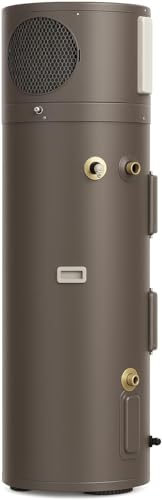
The Senville 50 Gallon Hybrid Water Heater uses heat-pump technology to pull heat from the surrounding air, delivering hot water with a high efficiency profile (3.75 UEF) and a 69-gallon First Hour Rating. This unit is ideal for medium-to-large households that want substantial hot water availability while lowering electricity use by up to 70% compared to standard electric heaters. It is a strong pick for homes with space for a larger unit and where consistent hot water during busy mornings is important. A caveat: performance hinges on adequate air circulation and indoor temperature conditions.
ACiQ Electric Residential Hybrid 50 Gallon

The ACiQ 50 Gallon Residential Hybrid delivers quiet operation and indoor-friendly installation. It’s designed for stable indoor temperatures and can be placed in basements or garages where 700–1,000 cubic feet of air circulation is available. This model is a practical choice for homes needing a compact, energy-saving water heater that fits typical indoor spaces. Limitation to consider: it should not be installed in unheated spaces with freezing temperatures below 37°F, as performance may be affected.
AQUASTRONG Pool Heat Pump

While designed for pools, the AQUASTRONG heat pump uses a 12,000 BTU high-output module to heat water efficiently, extending swimming seasons by up to six months. It features a high COP (energy efficiency), maintaining pool water temperatures within a configurable range (roughly 59–104°F). Best for pool owners seeking year-round comfort and energy savings; not a domestic water heater. A consideration is its applicability to pool-specific heating rather than household hot water needs.
GE Appliances 30 Gallon Electric Water Heater

The GE 30 Gallon Electric Water Heater provides a true 30-gallon capacity with strong first-hour delivery (up to 53 gallons in the first hour per DOE ratings). It’s a compact option suitable for smaller households of 1–3 people or apartments. It’s not a hybrid heat-pump model, so it relies on electric resistance heating. Best for space-constrained homes; consider heat-pump alternatives if energy efficiency is the top priority.
Buying Guide: Key Considerations For Heat Pump Water Heaters
- What is the right capacity for my home? Consider how many people and how many draws of hot water you have during peak hours. Higher First Hour Rating (FHR) and larger gallons-in-tank offer more reliability during busy mornings.
- Where should I install it? Most units require a stable indoor space with adequate air exchange. Basements or garages are common, but you must avoid unheated spaces that drop below freezing.
- What is the energy efficiency rating? Look for Energy Star certification and a high UEF/EF rating. Higher figures translate to more savings over time, especially in homes with long hot-water usage patterns.
- What about utility programs? Some models support Demand-Response or utility-driven savings during peak hours. This may affect installation and wiring but can reduce energy costs.
- Is it suitable for homes with limited space or single bathrooms? Smaller, compact electric or hybrid models may be more appropriate for limited spaces while still delivering reliable hot water.
- What about pool heating needs? If pool use is a priority, a dedicated pool heat pump can extend swimming seasons and improve efficiency, but it is separate from domestic hot water needs.
Frequently Asked Questions
- What is a heat pump water heater? A heat pump water heater uses ambient heat from the air to heat water, improving efficiency compared to standard electric or gas models.
- Do heat pump water heaters work in cold climates? They do better in moderate indoor temperatures. Some models include insulation and installation guidance to maximize performance in cooler spaces.
- How do I know which capacity I need? Base this on your family size, peak usage, and the number of bathrooms. Higher FHR indicates more hot water in the first hour.
- Are heat pump water heaters more expensive upfront? They typically cost more initially, but the energy savings over time can offset the upfront cost.
- Can a heat pump water heater be installed in a condo? Yes, if there is adequate indoor space, venting is not required, and electrical requirements are met.
- Do these units require maintenance? Regular checks for thermostat settings, anode rod inspection, and ensuring proper airflow around the outdoor/indoor components help maintain efficiency.