Best 12V Split Phase Inverter Options for Off-Grid Power
Answering the search intent for a 12V split phase inverter, this guide identifies top systems that convert 12V DC to 120V/240V AC with split-phase output. These are ideal for off-grid homes, workshops, and RV setups where sensitive loads and higher-demand appliances may run on pure sine wave power. The best buyers are those seeking reliable, multi-battery-compatible inverters with robust charging, transfer switching, and expandability. Below are five closely matched models with practical distinctions to help you choose.
Summary table of selected products:
| Product | Split Phase Output | Key Benefit | Best For |
|---|---|---|---|
| SUNGOLDPOWER 4000W 12V Inverter Charger | Yes, 120V/240V | High surge for heavy loads; LCD remote; temperature sensing | |
| 4000W 12V Inverter Charger (Upgraded) | Yes, 120V/240V | Advanced DIP switches; generator start; high efficiency | |
| VEVOR 6400W Hybrid Inverter | Yes, 110–120V/220–240V | MPPT controller; high efficiency; dual-voltage support | |
| Y&H 2200W Solar Hybrid Inverter | Yes, 220-230V | All-in-one hybrid with MPPT; compact | |
| AIMS Power 4000W 12V Inverter Charger | Yes, 120/240 VAC | Multiple protections; a single set of cables; charge control |
SUNGOLDPOWER 4000W 12V Inverter Charger

Best for high-demand off-grid grids where surge capacity is critical. This unit combines a 4000W inverter with a 120A charger and 30A transfer switch, plus split-phase 120V/240V output. A built-in LCD remote and temperature sensing help monitor performance. Suitable for users who need a robust, all-in-one solution with two multi-functional AC outputs. Caution: larger systems require careful wiring and protection matching to your battery bank.
4000W 12V Inverter Charger (Upgraded Version)
Better for users who want advanced control features, including adjustable charge current, DIP switches for priority setup, low voltage cut-off, and automatic generator start. It includes a pure sine wave output with 120V/240V split-phase, a 120A charger, and a 30A transfer switch. Best for flexible off-grid configurations with multiple battery chemistries. Limitation: efficiency and transfer performance depend on wiring and battery compatibility.
VEVOR 6400W Hybrid Solar Inverter
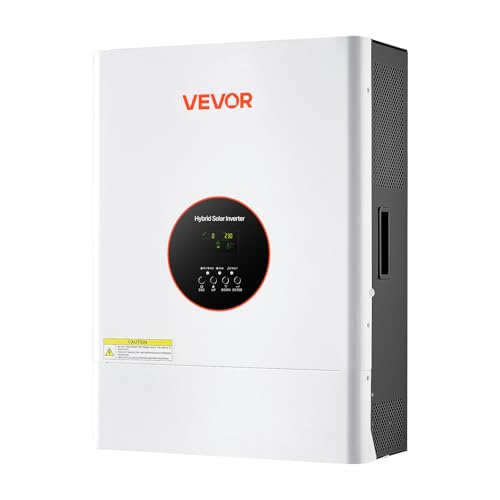
Best for solar-rich setups requiring MPPT charging and high power. The 6400W low-frequency inverter supports 110–120V and 220–240V split-phase outputs and includes a built-in MPPT solar charge controller. It’s optimized for heavy loads and long-term energy harvesting, with high conversion efficiency. Caution: explore compatibility with your specific battery type and PV array size before install.
Y&H 2200W Solar Hybrid Inverter

Best for compact off-grid projects or RV setups needing a single-phase 230V output. This all-in-one unit features an 80A MPPT solar charger and an internal battery, with pure sine wave output. It’s well-suited for lead-acid or lithium systems and is lighter than larger inverters. Limitation: output is lower than mid-range models, so it’s best for smaller loads.
AIMS Power 4000W 12V Inverter Charger
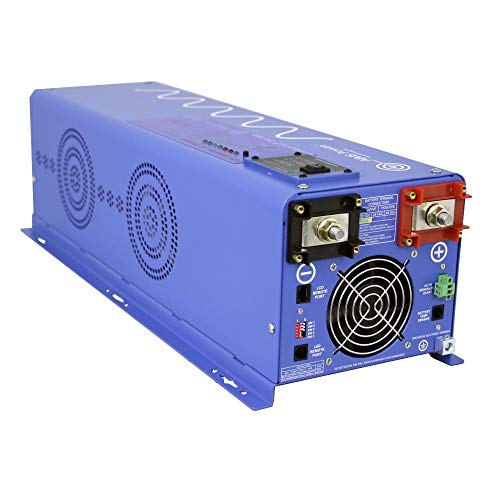
Choose this if you want strong protections and a practical package for mid-sized off-grid systems. It provides 4000W continuous output with 120/240 VAC split phase, a 120A charger, and an integrated transfer switch. It also includes multiple protection features and an auto gen start option. Limitation: setup can be more complex due to multiple protection modes and configuration steps.
Buying Guide: 12V Split Phase Inverter Considerations
What should you prioritize when selecting a 12V split-phase inverter?
- Power needs and surge capability: Match continuous wattage and surge to the highest appliance loads you plan to run.
- Split-phase capability: Confirm 120V/240V output and the smoothness of switching between sources.
- Battery compatibility: Check compatibility with AGM, Gel, Lead-Acid, LiFePO4, and lithium chemistries; ensure adequate charging current for your bank.
- Charging and transfer features: Look for automatic transfer switches, AGS (generator start), and adjustable charge settings for nuanced control.
- MPPT vs. PWM charging: MPPT controllers maximize solar harvest, especially in limited sun; consider dual MPPT for shaded or multi-array setups.
- Expandability: Consider parallel operation or modular designs if you anticipate scaling up.
- Protections and monitoring: Overload, overtemp, low/high voltage, and clear LCD/remote monitoring help maintain system health.
What are practical installation tips?
- Use properly rated cables and a dedicated grounding/bonding scheme to handle split-phase currents.
- Plan for ventilation and heat dissipation in enclosed spaces to prevent thermal shutdowns.
- Maintain a balanced battery bank and monitor voltage at deep discharge thresholds.
What should smaller setups consider?
- Smaller systems may favor 2000–3000W inverters with 80–100A charging for weight and cost efficiency.
- Consider a unit with built-in MPPT if you rely on solar charging as the primary source.
What should larger, grid-tied or hybrid systems consider?
- Look for higher continuous power (4000–6400W) and dual MPPT options for maximum harvest and reliability.
- Check for parallel operation to scale output or support 208V/ Three-phase configurations as needed.
Frequently Asked Questions
- What is split-phase output? Answer: A split-phase inverter provides two 120V lines with a shared neutral, enabling 240V loads to run while supplying standard 120V outlets.
- Can I mix battery chemistries with these inverters? Answer: Many models support multiple chemistries, but always verify compatibility and charging settings for safety and performance.
- Do these inverters require professional installation? Answer: For off-grid systems, professional wiring is recommended to ensure proper grounding, transfer switching, and safety compliance.
- Are parallel inverters safe to connect? Answer: Yes, when the manufacturer specifies parallel capability and proper configuration, parallel units can increase total output and improve surge handling.
- Which features maximize solar charging? Answer: Dual MPPT controllers, high current charging, and a wide PV input range improve energy harvest and performance in variable conditions.
- What is the importance of a pure sine wave output? Answer: Pure sine wave power is gentler on sensitive electronics and ensures stable operation for motors and electronics.