Best Grid Tie Inverter Chargers for Home Solar Systems
Answering the buyer’s search: grid tie inverter chargers are versatile power solutions that blend solar, battery, and grid power for homes and RVs. This guide highlights five top options, explains who each is best for, and notes practical limitations. Ideal buyers include homeowners seeking grid-taware backup, off-grid enthusiasts exploring hybrid setups, and hobbyists needing scalable solar management.
| Product | Output | Battery Compatibility | Best For |
|---|---|---|---|
| SUMRY Solar Inverter Charger | 3600W / 7200W peak | Supports various 24V chemistries | Medium to large homes with hybrid needs |
| POWLAND 12000W Hybrid Solar Inverter | 12,000W | Grid-tied with optional battery/grid | Large homes, grid-backup, high solar harvest |
| Y&H 2000W Grid Tie Inverter | ~2kW | Battery-discharge mode, 60V max input | Smaller systems needing 240V output |
| ECO-WORTHY 10000W Inverter Charger | 10,000W | Dual MPPT, 48V batteries | Off-grid setups with strong parallel expansion |
| PROSOLI 12kW All-in-One | Up to 72kW in parallel | 48V battery compatibility | Scalable home/RV/off-grid systems |
SUMRY Solar Inverter Charger (3600W) With MPPT

Features: All-in-one unit with 3600W inverter, 120A MPPT charge controller, and 100A AC battery charger. PV input 60V-500VDC, max PV input power 4200W. Pure sine wave output is suitable for household appliances and some sensitive devices. It supports battery-free operation with PV power, but grid power may be used if PV input isn’t present. Best for buyers needing a compact, all-in-one solution for 24V battery banks and mixed loads. Caution: operating without a battery may consume grid power if PV input is insufficient.
POWLAND 12000W Hybrid Solar Inverter

Features: 12,000W pure sine wave output with a grid-backup option and a built-in dual MPPT. Battery-free operation can feed excess solar to the grid; supports 48V systems and multiple parallel units. Best for large homes or RV settings seeking maximum solar harvesting and grid interaction. Caution: grid-tied operation may require CT sensor integration for backfeed control.
Y&H 1000W Grid Tie Inverter Power Limiter
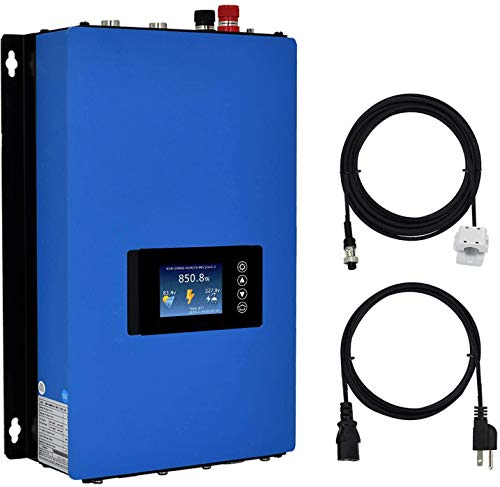
Features: DC input 22-60V, 60V max panel voltage, 200W+ solar panel requirement, battery discharge mode for regulator control. MPPT efficiency up to 99% with peak conversion up to 80%. Best for smaller setups needing safe, regulated grid-tie output with straightforward wiring. Caution: output is limited to about 1 kW, so plan for smaller loads or phase expansion.
Y&H 2000W Grid Tie Inverter with Battery Options

Features: 45-90V DC input, suitable for 240V US systems. Battery support and discharge optimization are built in. MPPT efficiency up to 99% and stackable up to multiple units for higher output. Best for users who want a scalable 240V grid-tie solution with battery-backed capability. Limitation: not designed for 110/120V single-phase systems without appropriate configuration.
3600W Hybrid Solar Inverter With WiFi

Features: 3600W grid-tied/off-grid hybrid with 6 units parallel, built-in 80A MPPT, and WiFi connectivity. Supports multiple charging modes (PV only, utility priority, PV priority, hybrid) and four output modes for flexible energy management. UPS-grade seamless switching and smart BMS communication help protect critical loads. Best for users needing a complete energy management system with rapid transition during outages. Caution: Data indicates high complexity; proper configuration is essential for reliable parallel operation.
PROSOLI 12kW All-in-One Solar Inverter
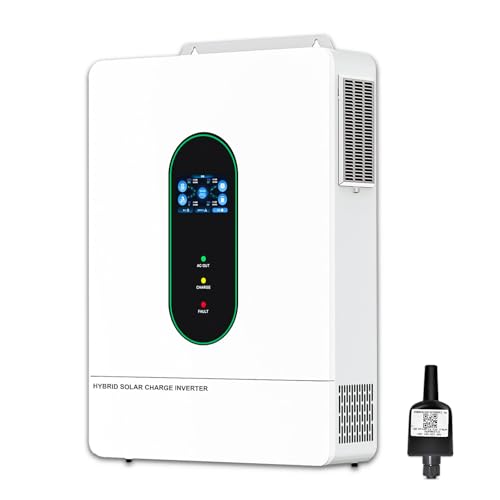
Features: Up to 72 kW in parallel (max) with 48V DC to 120/240V output. Built-in 2 MPPT controllers and supports 4 charging modes plus 4 output modes for flexible energy distribution. Touchscreen interface and dynamic indicators simplify setup and monitoring. Best for scalable home, RV, or off-grid systems requiring high parallel capacity. Caution: Parallel setup requires careful matching of battery type and balanced string design.
Buying Guide
What should you consider when choosing a grid tie inverter charger?
- System voltage and battery type: Ensure the unit supports your battery chemistry (AGM, LiFePO4, Lead-Acid) and voltage (24V, 48V, etc.).
- MPPT performance: Look for high tracking efficiency (90–99% range) and an MPPT range that matches your solar array voltage.
- Paralleling capability: If you anticipate expanding, verify the number of units you can parallel and the required control logic.
- Grid interaction: Confirm backfeed, anti-backflow features, and whether the unit supports grid-first or solar-first operation in your region.
- Output compatibility: Check whether the inverter supports 110/120V or 220/240V as used in your locale and the type of loads you plan to power.
- Monitoring and control: WiFi/RS485/CAN interfaces help with real-time monitoring and BMS communication for lithium batteries.
- Safety features: Overload protection, short-circuit protection, and automatic switch-over in outages are important for sensitive electronics.
Frequently Asked Questions
What is a grid tie inverter charger?
A device that converts DC solar energy to AC while optionally charging batteries and feeding power back to the grid, often with built-in MPPT solar controllers and load management features.
Do grid-tie inverters require batteries?
Some models can operate without batteries using solar input directly, while others are designed to work with battery banks for backup and smoother loads.
Can I run 240V appliances with these inverters?
Yes, many units offer 120V or 240V output configurations; verify the model’s output voltage and phase configuration before installation.
Is parallel operation safe?
Parallel operation is safe when you follow the manufacturer’s guidelines, use compatible units, and ensure proper wiring and bus sizing.
What is MPPT and why does it matter?
MPPT (Maximum Power Point Tracking) optimizes solar energy harvest by adjusting the electrical operating point of the modules, improving efficiency under varying light conditions.
Are these systems eligible for grid connection?
Grid eligibility depends on local regulations, utility requirements, and backfeed controls. Check with your utility and local codes before installation.