Best Rural Solar Power Systems for Remote Homes and Cabins
Answering the search for reliable off-grid power, these rural solar power systems deliver dependable energy for remote homes, cabins, farms, andRV sites. Choose based on storage needs, daily use, and whether you need 120V, 240V, or split-phase output. The top picks below emphasize clear advantages for different use cases, from compact mobile setups to full-home off-grid power. This guide helps buyers compare capacity, inverter power, and battery storage at a glance.
Summary of selected products
| Product | Key Benefit | Best For |
|---|---|---|
| ECO-WORTHY 10KW Complete System | High output, scalable, robust battery and inverter | Full home backup in rural settings |
| ECO-WORTHY 10KW Off-Grid System (30.72kWh) | Massive storage with compact server-rack packaging | Extended outages and larger households |
| ECO-WORTHY 9.36KWH 2340W System | Balanced power, modern 195W panels with strong efficiency | Homes needing reliable 9.36kWh daily |
| ECO-WORTHY 7.168KWH Off-Grid RV Kit | Travel-friendly yet capable for RV or shed | Mobile or small off-grid spaces |
| Dawnice 5500W System | High power with 21kWh daily potential | Farmoutbuildings or larger off-grid needs |
| [Ultra] ECO-WORTHY 1200W System | Compact, easy starter kit with 60A MPPT | Starter off-grid in remote areas |
ECO-WORTHY 10KW Output Complete Off-Grid System

Best for: Homeowners seeking a turnkey, scalable solution with 120V/240V split-phase output. This all-in-one kit includes 5 × 590W panels (2950W PV), a 48V 314Ah LiFePO4 battery (16.1 kWh), and a 10kW AIO inverter with dual MPPTs. It supports up to six parallel units and offers built-in WiFi for monitoring. A strong choice for whole-house resilience in rural settings.
Why selected: Combines high power with integrated storage and monitoring. Its split-phase output covers common household appliances, and the scalable design supports future expansion. The battery system includes safety protections and mobility features for easy relocation if needed.
Caution: Actual daily energy depends on sun exposure and location; extended cloudy seasons reduce output. Ensure proper cooling and ventilation for long-term inverter performance.
ECO-WORTHY 10KW Off-Grid System (30.72kWh)

Best for: Larger rural properties or temporary power needs with long outages. The system features six 48V 100Ah LiFePO4 batteries delivering about 30.72 kWh of storage, plus a 10kW off-grid inverter. It offers CAN/RS485 communication for simple integration with compatible inverters and a monitorable interface via mobile app.
Why selected: Exceptional energy storage capacity supports running essentials through multi-day outages. The compact server-rack battery design helps conserve space, and parallel capability increases total output as needed.
Caution: The higher storage comes with heavier equipment; ensure adequate mounting and ventilation. Installation may require professional wiring for optimal safety and compliance.
ECO-WORTHY 10KW System With 12x 195W Panels

Best for: Homeowners who want a balanced setup with a 12x 195W panel array and parallel-upgradable 10kW inverter. It provides 9.36 kWh daily output under optimal sun and supports 120V/240V split-phase operation, making it suitable for larger appliances and more demanding loads.
Why selected: The system emphasizes robust electrical safety (UL certifications) and WiFi monitoring. The CAN/RS485 communication ensures compatibility with common inverters, simplifying installation in rural homes.
Caution: The stated daily output assumes favorable sun; in northern regions or winter months, production declines. Consider adding more panels if year-round reliability is critical.
[Ultra] ECO-WORTHY 1200W 24V Off-Grid Solar System
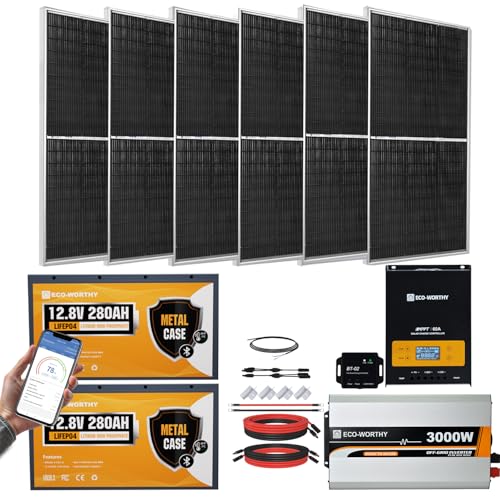
Best for: Small cabins, sheds, or RVs where space or weight limits are critical. This compact kit includes 6 × 195W panels, a 60A MPPT controller, and a 3000W pure sine wave inverter. It delivers about 5.52 kWh daily with efficient power management.
Why selected: The dual-axis tracker option boosts efficiency by more than 40% in some setups, making better use of daily sun. It’s a practical starter for off-grid living or temporary rural setups.
Caution: Lower storage capacity means outages longer than a day require external charging or larger batteries. Not ideal as a standalone home backup without expansion.
ECO-WORTHY 7.168KWH 800W RV Off-Grid Kit

Best for: RV travelers, mobile cabins, or small outbuildings where portability matters. The kit packs 4 × 200W panels, a 3000W UPS inverter charger, and a 12.8V 280Ah battery set, with Bluetooth monitoring for on-the-go power management.
Why selected: Combines travel-friendly design with reliable off-grid performance. The UPS feature helps bridge power during sudden outages, which is especially beneficial for mobile living situations.
Caution: Not designed for full-time home backup; for substantial daily loads, consider a larger system or additional panels and storage.
ECO-WORTHY 9.36KWH 2340W Kit With Mounts
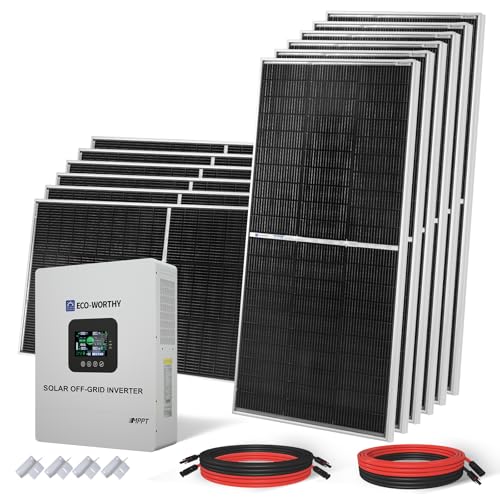
Best for: Rural homes needing a steady 9.36 kWh daily profile with a 2340W panel array and a robust all-in-one inverter. The setup aims to cover essential loads like lighting, refrigeration, and common appliances.
Why selected: The kit’s 5000W inverter with a 12V battery setup and high-efficiency panels provides reliable energy in a compact footprint. Suitable for included spaces in remote properties.
Caution: The system relies on proper mounting and weather sealing; ensure brackets and mounts are rated for local conditions to optimize longevity.
Buying Guide: What to Consider When Choosing a Rural Solar Power System
- Power needs: List essential devices and estimate daily kWh usage to determine required storage and inverter size.
- Storage versus generation: Higher storage capacity helps during multi-day overcast periods; larger PV arrays increase daily generation for faster recharge.
- Voltage and phase: Decide between 120V, 120/240V split-phase, or single-phase setups based on appliance compatibility.
- Expandability: If future growth is likely, choose modular systems that can add panels, inverters, or batteries without major rewiring.
- Portability: For RVs or temporary setups, prioritize lighter, compact kits with easy mounting and monitoring.
- Monitoring and connectivity: Systems with WiFi/BT can simplify remote monitoring and maintenance.
- Safety and certifications: Look for UL or CE marks and compliant battery chemistries (LiFePO4 is common in these kits).
Frequently Asked Questions
- How many days can a rural solar system run without sun? It depends on battery capacity and daily consumption; larger storage extends outage resilience.
- Is split-phase output better for a home backup? Split-phase supports standard 120V and 240V loads, which is common in many homes.
- Do I need professional installation? For high-capacity systems and 240V configurations, professional wiring improves safety and code compliance.
- Can these systems power large appliances like air conditioners? Yes, but ensure the inverter and storage are sized for peak loads and continuous draw.
- Will these work in cold climates? Solar efficiency drops in cold or cloudy conditions; plan for extra panels or storage to maintain reliability.
- Can I expand later? Many kits are designed for parallel connection or adding more batteries and panels; check the manufacturer’s guidelines.