Best 70 Amp Load Center for Indoor Electrical Panels
When selecting a 70 amp load center, the goal is a safe, reliable distribution point for your home or small commercial needs. This guide focuses on indoor main-lug and main-breaker options that fit standard 2-space, 4-circuit configurations and 1-phase 120/240V service. Top picks are suited for homeowners upgrading panels, electricians planning renovations, and small business setups that require compact, compliant distribution. The following sections highlight five suitable models, with straight-forward guidance on who benefits most from each option.
Square D QO24L70SCP QO 70-Amp 2-Space 4-Circuit Indoor Main Lugs Load Center

Best for compact indoor installations where a surface-mounted cover is preferred. This model accepts plug-on secondary surge arrestors (sold separately) and terminates main feeders from the top, with flexibility to enter feeders from any direction. Note that the device cannot be rotated. Best for homeowners replacing a small indoor panel or electricians coordinating a partial upgrade where surface-mount access is advantageous.
Square D QO QO24L70RBCP Main Lug Load Center

Best for indoor installations needing a 70A main-lug panel with rainproof features in a two-space, four-branch configuration. This option is well-suited for spaces exposed to humidity or occasional moisture indoors, where a robust enclosure helps preserve longevity. Choose this if you want a straightforward, weather-protected main-lug arrangement without a main breaker.
Square D HOM24L70FCP Homeline 70 Amp 2-Space 4-Circuit

Best for residential upgrades where Homeline compatibility matters. It is designed for indoor flush mounting with a 70A rating across two spaces and four circuits, and it includes a cover. Best for homeowners aiming to balance space efficiency with a modern breaker family, while maintaining indoor installation aesthetics. A potential limitation is that the bulkier depth may affect tight panel closets in some homes.
ABB TL270SCUP 70A Lug Indoor Load Center
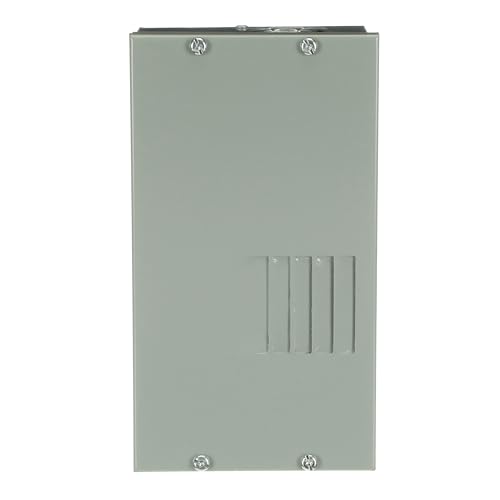
Best for reliable indoor distribution with a rugged, rust-resistant galvanized box and tin-plated copper buss bar for enhanced durability. This 70A, 2-space, 4-circuit main-lug panel supports surface and flush installations, making it flexible for various indoor layouts. Best for small commercial or residential setups needing a sturdy, long-lasting indoor panel. A noted limitation is that some users may prefer a companion enclosure or cover with more extensive accessory options for specific installations.
Eaton BR 70A 2-Space 4-Pole Indoor Main Lug Load Center

Best for American-made reliability in small indoor applications. The model is a 70A, 2-space, 4-pole main-lug center designed for straightforward indoor distribution. It is particularly suitable for contractors prioritizing domestic manufacturing and uncomplicated installation. The main limitation is that some environments may require additional enclosure accessories for specific mounting configurations.
Buying Guide
- Main lug vs main breaker — Main-lug panels distribute power via lugs only, while main-breaker panels integrate a primary disconnect. Decide based on whether you need a built-in disconnect or a separate main breaker elsewhere.
- Indoor vs outdoor use — Indoor panels are for protected spaces; outdoor models require enclosures rated for weather and in some cases NEMA or UL classifications. This affects placement and protection needs.
- Space and circuits — A 2-space, 4-circuit design fits limited layouts. If you anticipate adding circuits, ensure a model supports future expansion or select a larger space now.
- Compatibility — Check breaker compatibility (Homeline vs QO) and whether accessories like surge arrestors are readily available for the model you choose.
- Installation access — Surface-mount and flush-mount options offer different aesthetics and access convenience. Consider existing wall depth and cabinet space when choosing.
- Durability and materials — Galvanized enclosures, copper bus bars, and corrosion resistance matter in humid or industrial environments. They contribute to long-term reliability.
Quick comparison table
| Model | Type | Space | Circuit Count | |
|---|---|---|---|---|
| QO24L70SCP | Main Lugs | Surface Mount | 2 | Indoor, surface-mount installs |
| QO24L70RBCP | Main Lug | Indoor, Rainproof | 2 | Moist environments |
| HOM24L70FCP | Homeline | Flush | 2 | Residential upgrades |
| TL270SCUP | Main Lug | Indoor | 2 | Durable indoor use |
| BR 70A | Main Lug | Indoor | 2 | Domestic reliability |
FAQ
- What does 70A mean in a load center? It refers to the maximum continuous current the panel can safely distribute, typically through its main lugs or main breaker.
- Do I need a main breaker with a 70A panel? Not always. If you choose a main-lug panel, there is no built-in main breaker, and a separate main disconnect may be required.
- Can indoor load centers be used in damp areas? Indoor panels labeled for damp environments are preferred; select rainproof or weather-protected enclosures for moisture-prone spaces.
- Is expansion possible in a 2-space panel? Some models allow limited expansion; check the product specs for available accessory spaces or the option to upgrade to a larger panel.
- What is surge protection compatibility? Certain models support plug-on secondary surge arrestors; verify availability and compatibility for the exact model you choose.
- How do I choose between surface and flush mount? Surface-mount keeps the panel visible and accessible on the wall face, while flush-mount hides the panel for a cleaner look and can save space in tight locations.