Best 60 Amp RV Converters for Reliable Off-Grid Power and Camp Comfort
When shopping for a 60 amp RV converter, you want a unit that delivers steady 12V power, safe charging for both lead-acid and lithium batteries, and smart charging to extend battery life. This guide focuses on five top 60 amp RV converters that balance performance, safety features, and ease of installation. The buyers best suited for these models range from full-time RVers and boaters to weekend campers needing dependable shore-to-battery power. Below is a quick, at-a-glance summary of the five options chosen for this article.
| Product | Best For | Why It Stands Out |
|---|---|---|
| PowerMax PM4 60A RV Converter | RVers needing lithium-ready, adjustable output | Adjustable 13–16.5V, 4-stage smart charging, quiet cooling |
| RecPro RV Converter 65 Amp | RVers who want a high-capacity converter | 4-stage charging, powers lights/appliances, multiple capacities |
| PD9260C 60A RV Inverter Charger (WOUDY) | Those who want auto-adjusting output | Monitors battery/load, float mode, 13.6V to support loads |
| Inteli-Power PD9360V 9300 Series | Brand familiarity and precise charge modes | Dual-mode options for lead-acid and lithium, automatic mode shifts |
| GOMADEIT WF-9860 60 AMP | Quiet operation and broad voltage range | Temperature-controlled fan, reverse polarity protection |
PowerMax PM4 60A RV Converter
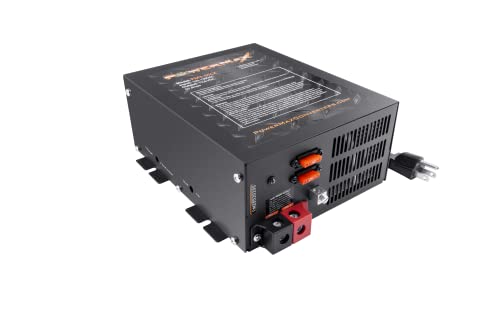
The PowerMax PM4 60A RV converter transforms 110V AC into 12V DC with a steady 60-amp output. It features a 4-stage smart charging system to optimize battery health across lead-acid and lithium chemistries. The unit provides an adjustable output range from 13V to 16.5V, allowing tailored charging for different battery types. Best for RVs, campers, and boats needing robust, reliable power with adaptable voltage for lithium or standard batteries. A potential limitation is setup complexity for first-time installers, though it’s designed for easy 10-minute installs.
RecPro RV Converter 65 Amp

RecPro’s 65 Amp RV converter supplies 120VAC shore power converted to 12VDC, supporting both battery charging and appliance power. It operates with a 4-stage smart charging system and is offered in multiple capacities, including 60 and 75 amp ranges. Suitable for RVers who want a higher-capacity unit with reliable charging performance and compatibility with a variety of RV electrical setups. A limitation to note is that market-specific feature sets can vary by model, so confirm the exact charging stages for your battery type.
PD9260C 60A RV Inverter Charger (WOUDY)

The PD9260C actively monitors battery and load, adjusting output for rapid charging at 14.4V when needed. In float mode, it maintains the battery at 13.6V, and it supports lead acid, AGM, and GEM batteries. Best for campers who value intelligent regulation and a clear float maintenance strategy. Choose this if you want automatic voltage adjustment to support loads while preserving battery life. A potential caveat is that real-world performance can depend on battery type and configuration.
GOMADEIT WF-9860 60 Amp RV Power Converter

GOMADEIT’s WF-9860 60 Amp converter is designed for RVs, boats, and 12V systems with a voltage range of 13V to 16.5V. It features a temperature-controlled cooling fan for quiet operation and reverse battery protection to prevent damage if polarity is reversed. Best for users who prioritize quiet performance and robust protection. A limitation is that some users may seek more advanced 3- or 4-stage charging details beyond basic protection features.
Inteli-Power PD9360V 9300 Series

The PD9360V 9300 Series offers 60 amps with configurable output between 13.6 and 14.7V for different battery chemistries. It supports automatic switching to boost or idle modes depending on battery voltage and load. This model is well-suited for RVers who want familiar “Inteli-Power” branding and precise voltage control to maximize battery life. A limitation is that some users may prefer newer or lithium-specific charging profiles beyond standard lead-acid focus.
Buying Guide: Key Purchase Considerations
- Battery type compatibility: Confirm whether the converter supports lead-acid, AGM, and lithium chemistries, and whether it offers a dedicated lithium charging profile if needed.
- Charging stages: Look for multi-stage charging (3- or 4-stage) to optimize battery health and longevity.
- Output voltage range: An adjustable output (13V–16.5V) helps tailor charging to battery type and state of charge.
- Protection features: Over-voltage, under-voltage, short-circuit protection, and reverse polarity safeguards reduce risk of damage to batteries and electronics.
- Quiet operation: Temperature-controlled fans and smart cooling reduce noise and heat during operation, important for enclosed RV spaces.
- Installation: Consider whether the unit is designed for easy 10-minute installs or requires professional wiring, and verify space and venting needs.
- Brand and support: Reputable brands with well-documented manuals help with integration and future troubleshooting.
Frequently Asked Questions
- What does a 60A RV converter do? It converts 110V AC shore power to 12V DC and provides up to 60 amps to charge RV batteries and power 12V devices.
- Can I use these with lithium batteries? Yes, many models support lithium charging or have a selectable lithium profile; check the product’s specifications for lithium compatibility.
- Is three-stage charging enough? Three-stage or four-stage charging helps optimize charging efficiency and battery life; four-stage is generally preferred for lithium and AGM batteries.
- Do I need air ventilation? Yes, most converters generate heat; ensure proper ventilation or include a fan-equipped unit in enclosed spaces.
- What installation skill is required? Most 60A converters are DIY friendly with basic electrical knowledge, but verify local codes and ensure proper wiring gauges.
- What’s the best choice for lithium-focused RV setups? Look for a model with a dedicated lithium charging profile or a precise voltage setting around 14.4V during bulk charging and 13.6V in float mode.