Best 200 CFM Inline Exhaust Fans for Efficient Ventilation
Answering your search for reliable 200 CFM inline exhaust fans, this guide highlights five strong options and explains who each is best for. These fans are ideal for grow tents, hydroponics rooms, bathrooms, kitchens, and other spaces needing steady airflow. The selections balance airflow, noise, and energy use to fit different setups. The table below compares the five recommended models at a glance.
| Product | Airflow (CFM) | Best For | Notes |
|---|---|---|---|
| VEVOR Inline Duct Fan | 200 | Grow tents and hydroponics rooms | Quiet operation; energy-saving motor |
| Voltset 4 Inch Duct Fan | 280 | High-demand ventilation | High efficiency; quiet for its size |
| LEOKV 4 Inch Inline Bathroom Fan | 200 (High), 130 (Low) | Residential bathrooms and smaller spaces | Two speeds; backflow damper |
| VIVOSUN D4 4 Inch Inline Fan | 195 | Grow tents and basements | Low noise; safety features |
| AC Infinity CLOUDLINE Pro T6 | 200+ (6” model) | Smart control environments | WiFi app; programmable climate control |
These products were selected to cover a range of typical buyers: professional grow operations seeking steady 200 CFM airflow, hobbyists needing quiet operation in living spaces, installers seeking multiple speed options, and tech-savvy users who want smart control.
VEVOR Inline Duct Fan — 200 CFM, Quiet

This 4-inch VEVOR model delivers 200 CFM with a 120V AC motor and a variable speed controller. It is designed for exhaust use in grow tents, hydroponics rooms, electronics enclosures, kitchens, and basements. Best for: small-to-medium spaces where consistent airflow is needed without high noise. Consider this if you want to balance strong ventilation with compact dimensions and silent operation. Limitation: precise noise performance depends on mounting and ducting conditions.
Voltset 4 Inch Duct Fan — 280 CFM

Voltset’s 4-inch model pushes 280 CFM through a 4-inch duct, making it a strong choice for grow tents, bathrooms, or kitchens requiring robust air exchange. Best for: spaces where higher airflow is necessary and a quiet operation at reasonable noise levels matters. This unit uses a copper core motor for durability and heat dissipation. Limitation: higher airflow can produce more noise than smaller, lower-CFM fans in sensitive environments.
LEOKV 4 Inch Inline Bathroom Fan — 200/130 CFM
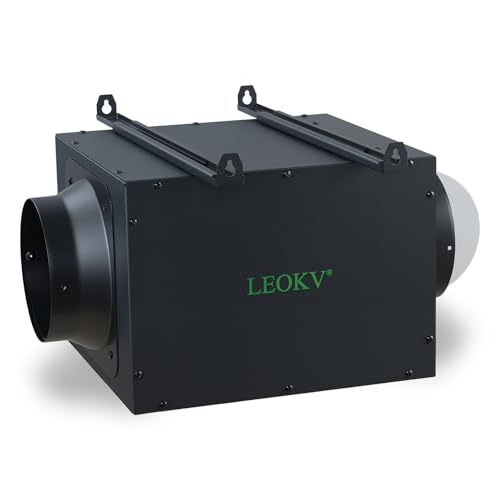
LEOKV’s two-speed inline bathroom fan provides 200 CFM on high and 130 CFM on low. Best for: bathrooms, garages, attics, or kitchens where adjustable air volume is useful to balance noise and airflow. The unit includes a damper to minimize backflow and is designed for easy remote mounting. Limitation: dual speeds require manual switching, which may complicate automatic ventilation setups.
VIVOSUN D4 4 Inch Inline Duct Ventilation Fan — 195 CFM
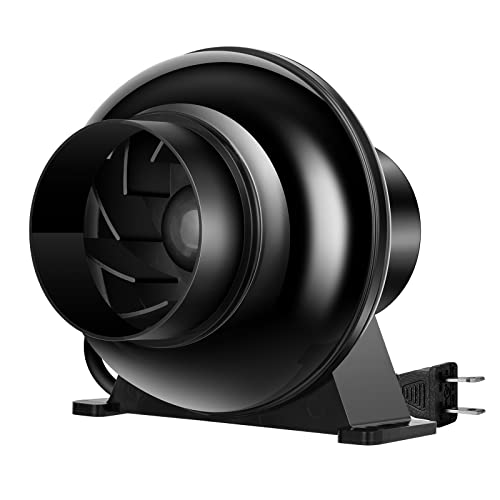
The VIVOSUN D4 delivers 195 CFM with a focus on quiet operation and safety. Best for: grow tents and basements where steady airflow is needed without disturbing work or sleep. Features include a deflector to reduce turbulence and an ETL-listed motor with an automatic reset for overheating protection. Limitation: airflow is slightly below 200 CFM in some real-world setups, which may matter in larger rooms.
AC Infinity CLOUDLINE PRO T6 — 6” Smart Duct Fan
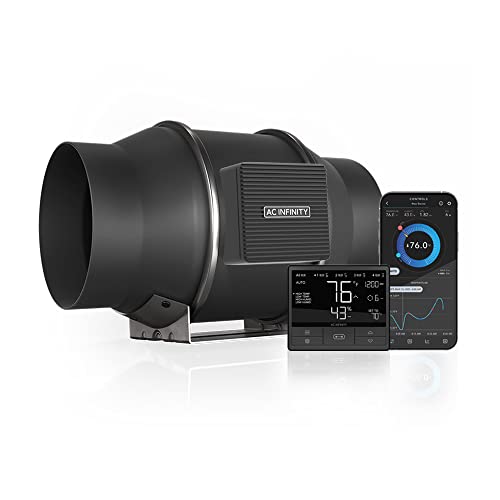
The CLOUDLINE PRO T6 offers advanced control with a WiFi-enabled app, designed for hydroponic grow rooms, heated/cooled spaces, and climate-sensitive setups. Best for: users who want dynamic temperature and humidity programming, automation, and remote monitoring. It supports grow cycles and scheduling with data logging. Limitation: higher initial cost and setup complexity compared to basic inline fans.
Buying Guide
What should you consider when choosing a 200 CFM inline exhaust fan?
- Airflow vs. space size: Match CFM to room volume. Larger rooms need higher air changes per hour, while small tents may require less than max, to avoid over-ventilation.
- Noise level: Look at dB ratings and consider mounting position. For living spaces, a cooler, quieter model is preferable even if airflow is slightly reduced.
- Energy efficiency: Motors with copper windings and energy-saving features can reduce running costs over time.
- Controls and speed: Variable speed or multiple speeds help balance airflow with noise and energy use. Smart controllers add automation benefits for climate control.
- Durability and build: Metal housings and flame-retardant components increase longevity in demanding environments like grow rooms and kitchens.
- Backflow prevention: A damper or backdraft prevention helps keep conditioned air from escaping when the fan is off.
Installation and Compatibility
Inline fans are commonly used with standard 4-inch or 6-inch ducts. Check your duct size and mounting clearance. Some models include easy mount options and simple wiring, while others offer more advanced installations that benefit from proper electrical knowledge and safety practices.
Maintenance Tips
Regularly check for dust buildup, inspect wiring for wear, and replace or clean intake grills. A well-maintained fan runs more efficiently and lasts longer.
FAQ
- What is a typical use case for a 200 CFM inline fan? Home grow tents, hydroponics rooms, and spaces requiring consistent air exchange.
- Is a 200 CFM fan loud? Noise varies by model; some offer quiet operation around 29–30 dB, while higher-CFM models may be louder depending on installation.
- Do smart controls improve ventilation? Yes, smart controls allow automatic temperature, humidity, and timer-based ventilation, improving climate management.
- Should I choose a two-speed fan? Two-speed fans are useful when you need to adjust airflow for different conditions or noise tolerances.
- Can I install these in a bathroom or kitchen? Yes, many are designed for residential ventilation, but always consider backflow dampers and ducting quality to minimize cross-contamination of odors or moisture.
- What maintenance is required? Regular cleaning of grills and periodic inspection of wiring and mounting ensure optimal performance and longevity.