Best 1 in EMT Conduit Bender Choices for Efficient Electrical Installs
The search for a reliable 1 in EMT conduit bender often centers on durability, accuracy, and ease of use. This guide reviews five top-rated options, highlighting how each model handles 1″ EMT and related conduit bends. Use our buying guide to compare features, materials, and practical considerations to choose the right tool for commercial, industrial, or DIY electrical work.
| Product | Brand | Key Feature | Link |
|---|---|---|---|
| IDEAL Electrical 74-028 | Ideal Industries | Ductile iron head; star/degree markings for precision | 1-in EMT |
| Klein Tools 51605 | KLEIN TOOLS | Angle Setter technology; multiple bend angles | 1-Inch EMT |
| Gardner Bender 962 BigBen | Gardner Bender | Aluminum head; embossed sight lines | 1 in EMT / ¾ in Rigid |
| Yuecoom Pipe Bender | Yuecoom | Cast iron body; 90–180° bends | 1-in EMT |
| NSI CB100 | NSI | Aluminum die-cast; 8° inside radius | 1″ EMT |
IDEAL Electrical 74-028 Ductile Iron Bender Conduit
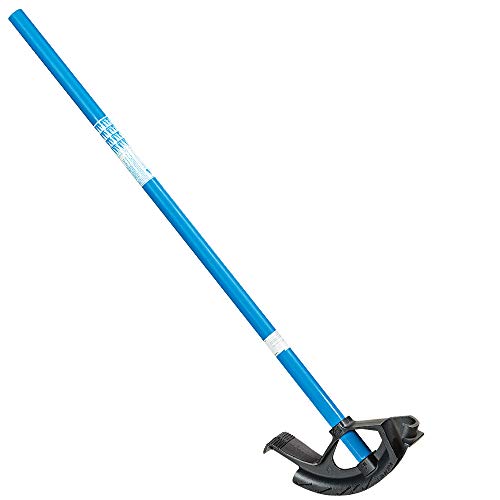
The IDEAL 74-028 uses a ductile iron head designed for heavy-duty performance when bending iron and metal conduits. It includes markings such as a star, arrow, degree scale, and rim notch to guide precise bends. The handle features a baked-on blue enamel finish that resists corrosion, extending tool life in tough job-site conditions. This model is suitable for routing pipes around ceilings, corners, walls, and irregular passages with consistent results.
Klein Tools 51605 Iron Conduit Bender

The Klein Tools 51605 features Klein’s Angle Setter technology for consistent, repeatable bends. It includes a patent-pending Angle Setter accommodating 10°, 22.5°, 30°, and 45° bends, adjusted for conduit spring-back. Built from heavy-duty cast ductile iron, it offers durable performance on job sites. Bold cast markings help with fast navigation and precise alignment, enabling saddle and back-to-back bends as needed.
Gardner Bender 962 BigBen Aluminum Conduit Bender

The BigBen head is aluminum with embossed sight lines for quick angle references at 10°, 22°, 30°, 45°, 60°, and 90°. Its industry-standard markings align with common conduit bends, and the larger hook increases durability. This model supports 1-inch EMT and ¾-inch Rigid use, offering a balance of light weight and strength for portable installations.
Yuecoom 1-Inch Cast Iron Pipe Bender

Yuecoom’s cast iron construction emphasizes durability for demanding environments. This manual EMT pipe bender handles a range of pipes and offers a 90–180° bending capability with solid stability. The tool emphasizes robustness and long service life, suited for diverse industrial tasks and field use.
Otoolling 3 Set Aluminum Conduit Pipe Bender

The Otoolling set includes three aluminum benders for 1/2″, 3/4″, and 1″ EMT, combining lightweight handling with solid construction. Handles are carbon steel, and the design includes serrated gripping to minimize slipping during bends. The kit supports precise bends across common pipe sizes, making it a versatile choice for varied projects.
NSI CB100 Aluminum Die Cast Conduit Bender

The NSI CB100 uses an aluminum die-cast body that remains lightweight while delivering adequate strength for everyday use. It features an 8° inside radius appropriate for standard EMT work, with cast-in angle indicators to guide precise bends and improve consistency across installations.
Buying Guide
- Material and durability: Ductile iron heads favor heavy-duty use, while aluminum designs reduce weight for daily carry. Consider your work environment and whether long-term resistance to corrosion is essential.
- Inside radius and bend angles: Benders vary in default radii (e.g., 8° inner radius) and supported bend angles (10°, 22.5°, 30°, 45°). Choose a model aligned with your typical installations to minimize rework.
- Markings and sight lines: Clear, embossed markings speed setup and improve accuracy, especially on complex runs or saddle bends.
- Adjustment and interchangeability: Some tools offer quick-die changes or integrated angle setters. Evaluate if you need a single-size tool or a multi-size option for 1/2″, 3/4″, and 1″ EMT in one kit.
- Portability vs. rigidity: Heavier tools resist wobble but can be tiring to carry. Lighter aluminum models are easier to maneuver, while steel/iron heads offer durability in tough sites.
- Grip, handle finish, and corrosion resistance: A baked-on finish or coated handles prolongs life in dusty or damp environments. Ensure grips remain comfortable for extended use.
- Accessory compatibility: Some benders work with standard handle lengths, while others support extended handles for greater leverage. Consider whether you’ll need long handles for tight spaces.
- Budget and return policy: While prices vary, prioritize tools with solid warranty or reputable customer support to ensure replacements for any manufacturing defects.
When selecting a 1 in EMT conduit bender, align the tool’s capabilities with your typical bends, worksite conditions, and the required precision. For straightforward runs, aluminum or lighter benders may suffice; for frequent heavy-duty use, a ductile iron or reinforced steel head can offer superior longevity and stability. Orientation toward standard 90° and 45° offsets is common, but options with built-in angle setters or quick-change dies can save time on larger projects.