Best Alarm Clocks That Wake Only One Person for Shared Beds
When one sleeper needs a different wake-up time than a partner, choosing the right alarm clock makes mornings smoother. This guide highlights clocks with features designed to wake only one person or minimize disturbances for others in the room. The top picks include strong bed vibrations, dual alarms, customizable sounds, and brightness controls. They’re ideal for heavy sleepers, hearing-impaired users, and anyone sharing a bed with varying schedules.
Summary of chosen products:
| Product | Best For | Key Feature |
|---|---|---|
| uscce Loud Dual Alarm Clock with Bed Shaker | Heavy sleepers, hearing impaired | 3-level bed shaker + adjustable brightness |
| Odokee Digital Dual Alarm Clock | Shared beds, adjustable wake-ups | 2 alarms, 0-100% dimmer, 5 sounds |
| REACHER Digital Alarm Clock & White Noise | Adults and kids needing ambient sleep aids | White noise options, 9-minute snooze |
| CLOCKY Alarm Clock on Wheels | Deep sleepers seeking movement | Runs away to wake you up |
| Peakeep Loud Alarm Clock | Budget-conscious heavy sleepers | Twin bell design with loud alarm |
uscce Loud Dual Alarm Clock with Bed Shaker
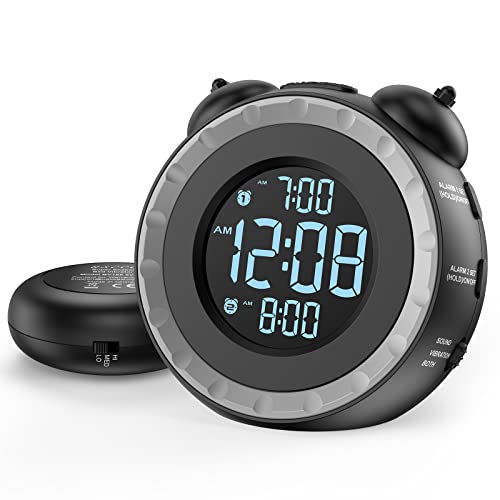
The uscce clock is designed for heavy sleepers or those with hearing impairment. It features a 3-level bed shaker and an option to combine vibration with built‑in alarm sounds like buzzer, birds, or music. This makes it a strong choice when one sleeper needs a tactile wake-up without disturbing a partner who may rise earlier or later. Best for: heavy sleepers and hearing-impaired users who require simultaneous vibration and sound options.
Ease of use is a highlight. Time and alarms are set by turning the two “ears,” with clearly labeled buttons and minimal function overlap. The brightness is dial-controlled and adjustable from 0 to 100%, which helps manage light exposure at night. A built-in battery backup ensures the alarm is reliable during power outages. Consideration: the device relies on tactile controls, which may require some initial familiarity for first-time users.
Odokee Digital Dual Alarm Clock for Bedroom

The Odokee model provides two separate alarms and a 0-100% dimmer for its large blue LED display. It supports 12/24-hour formats and offers five wake tones with increasing volume. The 4.9-inch display is bright but remains compact, making it a good fit for bedside tables or desks. Best for: households with different morning routines who want straightforward dual alarms and easy brightness control. Limitation: some users may prefer more tone options or a longer-range dimming for very dark bedrooms.
REACHER Digital Alarm Clock & White Noise Machine

The REACHER device blends a digital clock with a white-noise machine and adjustable wake sounds. It includes 21 soothing sounds, a 32-level volume, and a 9-minute snooze. Auto-off timers help transition to sleep by turning lights and sounds off after waking or falling asleep. Best for: users who want a combined sleep aid and alarm experience. Limitations: the array of sounds can be overwhelming; users may need to experiment to pick the most effective wake-up combo.
CLOCKY Alarm Clock on Wheels

CLOCKY is a novelty option that appeals to heavy sleepers who need a physical wake-up nudge. The alarm clock runs on wheels and “escapes” your bedside, prompting you to get out of bed to silence it. This mechanical action is effective for partners seeking a quiet room or for someone who benefits from movement-based waking. Best for: deeply asleep individuals who respond to a moving alarm. Limitation: the novelty may be distracting for some and the device can be louder than a standard clock during the run.
Peakeep Loud Alarm Clock for Heavy Sleepers
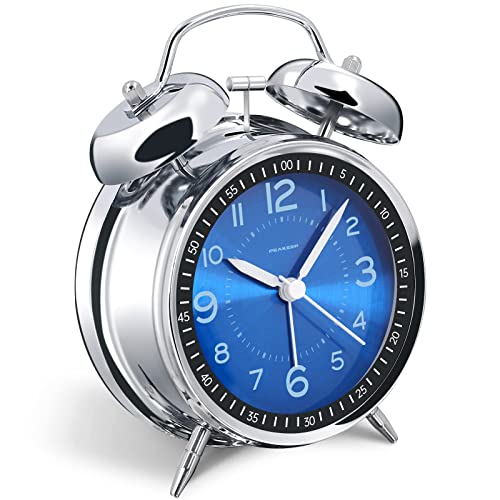
The Peakeep clock combines a robust twin-bell design with a strong alarm. It’s a traditional analog option that delivers a loud wake with a simple setup. The metal exterior plus a non-ticking movement provides a quiet nightstand companion while the audible alarm helps heavy sleepers wake on time. Best for: users who prefer a classic alarm with a high-volume ring. Limitation: analog mechanisms may be less precise than digital models and the ticking, if present, may bother very light sleepers.
Buying Guide: How to Pick the Right One
What type of wake-up works best for you?
Consider whether vibration, loud sound, or bright light is most effective. If you share a bed, dual alarms or a separate alarm zone for one sleeper can prevent disturbances. For sensitive rooms, brightness control and gradual wake options reduce jarring awakenings.
Is dual-alarm functionality important?
Dual alarms are ideal for couples with different schedules. Look for independent controls, distinct tones, and easy-to-access snooze to avoid fumbling in the dark.
How crucial is brightness and display readability?
Dimmer displays prevent light leakage that disturbs sleep. A readable display helps when waking up in the dark without straining your eyes in the morning.
Should you prioritize movement or sound?
Movement-based wakes, like the CLOCKY, suit people who respond to novelty or physical prompts. Sound-based clocks excel for those who respond quickly to auditory cues, including louder alarms and seasonal sounds.
What about accessibility and backups?
Devices with battery backups or low-maintenance controls are better for power outages and stress-free setups. For hearing-impaired users, a strong vibrating alarm is often more reliable than a loud sound alone.
How to compare long-term value?
Evaluate ease of use, durability, ease of replacement batteries, and the availability of replacement parts. A model with intuitive controls reduces the learning curve and improves everyday reliability.
Quick comparison table
- Best for heavy sleepers with partners: uscce and Peakeep offer strong wake methods without excessive complexity.
- Best for fear of oversleeping: CLOCKY’s moving alarm is distinctive and hard to ignore.
- Best for sleep aids: REACHER and Odokee provide white noise and gradual wake features.
- Best for minimalism and brightness control: Odokee and Odokee’s display offer straightforward dimming and time formats.
Frequently Asked Questions
- Can one alarm clock wake only one person in a shared room? Yes. Dual alarms, bed vibrations, and selective sound profiles help wake one person while minimizing disturbance for the other sleeper.
- Do these clocks require a lot of setup? Most are designed to be straightforward, with clearly labeled buttons and simple, intuitive controls.
- Are vibration-only alarms effective? For heavy sleepers and those with hearing challenges, vibration combined with sound can be more effective than sound alone.
- Can brightness be fully turned off? Many models offer dimming to 0% or very low brightness for dark bedrooms.
- What is the best alarm for a shared bed? Dual alarms with adjustable brightness and distinct wake tones are typically the best balance for partners with different schedules.
- Do these devices have backup power? Several models include battery backups to preserve alarm functionality during outages.