Best Main Electrical Panel Box Solutions for Safe Home Power Distribution
The best main electrical panel box choices depend on your space, panel capacity, and installation needs. This guide highlights five dependable options suited for residential and light commercial use, focusing on indoor and outdoor setups, lug configurations, and space for future circuits. Ideal buyers include homeowners upgrading a panel, contractors installing a new service, or property managers seeking organized circuit protection and easy access for maintenance.
Summary of selected products:
| Product | Space / Circuits | Main Rating | Enclosure Type | Best For |
|---|---|---|---|---|
| JINDOUZI THQL 8-Space 125A | 8 spaces / up to 8 circuits | 125A | NEMA 1 Steel Indoor | Compact homes or small garages needing reliable protection |
| JINDOUZI THQL 12-Space 125A | 12 spaces / up to 12 circuits | 125A | NEMA 1 Steel Indoor | More circuits with organized expansion indoors |
| Lovnewmax 12-Space 125A | 12 spaces / up to 12 circuits | 125A | Indoor Main Lug | Homes and light commercial spaces needing dependable distribution |
| Binwacool 8-Space 125A | 8 spaces / up to 8 circuits | 125A | Indoor Main Lug | Smaller projects with simple, accessible layout |
| Schneider Electric HOM612L100RBCP | 6 spaces / 12 circuits | 100A | NEMA 3R Outdoor | Outdoor installations with weatherproof protection |
JINDOUZI THQL 8-Space 125A Main Lug Panel
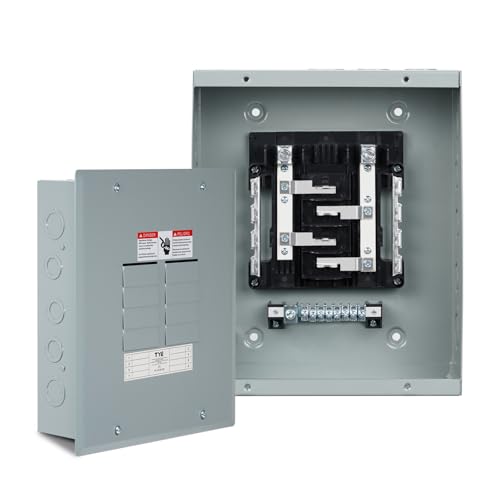
Overview: This 8-space main lug load center provides up to 125A for reliable distribution in indoor environments. The NEMA 1 steel enclosure protects against dust and other contaminants, making it suitable for homes and light commercial spaces requiring compact, secure power distribution. Best for small residences or basements where space is at a premium.
Who it’s best for: Homeowners upgrading a compact service or budget-conscious renovations where indoor protection and straightforward wiring matter. Why chosen: 8-space configuration matches smaller circuits with clear labeling and robust protection. Caution: Indoor use only; ensure adequate ventilation and clearance around the enclosure.
JINDOUZI THQL 12-Space 125A Main Lug Panel
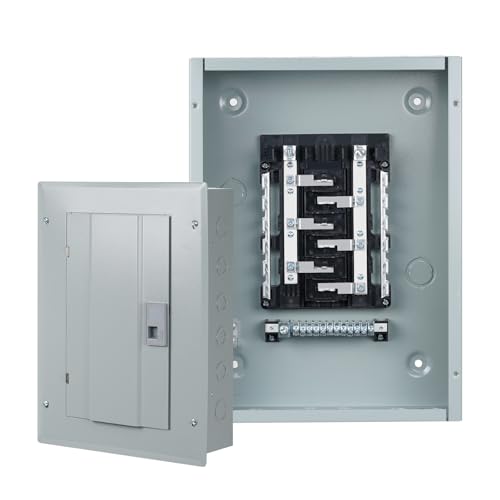
Overview: An expanded 12-space indoor main lug load center rated at 125A, delivering scalable protection for larger residential layouts or light commercial setups. The NEMA 1 steel enclosure provides solid indoor protection against dust while enabling straightforward wiring for multiple circuits. Best for: Homes with growing electrical needs or garages that require additional circuits without moving to a full service upgrade.
Who it’s best for: Households planning future expansions or adding outlets and dedicated circuits. Why chosen: More spaces reduce the need for early panel replacement. Caution: Still designed for indoor use; option to pair with a separate main breaker if required by local code.
Lovnewmax 12-Space 125A Indoor Main Lug

Overview: A 12-space, 125A distribution panel designed for reliable indoor use. It supports 120/240V single-phase systems and provides a main lug setup with 12 spaces for standard breakers. Best for: Basements, garages, or workshops where robust circuit protection and neat organization are priorities. Why chosen: Clear layout and sufficient capacity for mid-sized loads. Caution: Verify that your service panel location permits a lug-only main arrangement per local codes.
Binwacool 8-Space 125A Main Lug Indoor Panel

Overview: This 8-space indoor main lug panel provides 125A capacity with a galvanized carbon steel construction. Suitable for compact applications like small homes or workshops that require dependable distribution and straightforward circuit protection. Best for: Smaller projects where budget-conscious but solid protection is important. Why chosen: Lightweight yet sturdy enclosure, adequate for eight circuits. Caution: Limited to 8 spaces; plan for circuit expansion if needed.
Schneider Electric HOM612L100RBCP Outdoor Main Lug Box

Overview: This outdoor Homeline 100A main lug load center is designed for rugged outdoor environments with a NEMA 3R enclosure. It supports 6 spaces and up to 12 circuits, featuring a main lug configuration and a durable, weather-resistant finish. Best for: Outdoor installations where weatherproof protection is essential, such as patios, carports, or exterior installations near the home. Why chosen: Outdoor-rated enclosure reduces risk of weather damage while maintaining accessible wiring. Caution: Outdoor units may require additional space for conduit and weatherproof sealing around cable entries.
Buying Guide: Key Purchase Considerations
- Space and future growth: Choose a panel with enough spaces to accommodate current circuits plus anticipated expansion. An indoor 12-space model often provides more flexibility than an 8-space unit.
- Enclosure type and location: Indoor panels (NEMA 1) are cost-effective for dry indoor spaces; outdoor panels (NEMA 3R) withstand weather and moisture. Ensure correct enclosure rating for your installation location.
- Main lug vs. main breaker: Main lug panels require separate main protection or downstream devices. If you prefer a built-in main service disconnect, select a main breaker model or a panel designed to accommodate one.
- Voltage and phase: Most residential panels operate on 120/240V single-phase. Confirm the panel supports your service and subpanel needs, including any future multi-wire branch circuits.
- Neutral and grounding: Some panels provide fully distributed neutral bars or plug-on neutral capabilities. Verify compatibility with your grounding strategy and any AFCI/GFCI requirements in your area.
- Mounting and space planning: Surface-mount vs. flush-m mount options affect space use and access. Plan room for wiring, conduit fittings, and future breakers.
- Code compliance: Ensure selected panels conform to local electric code requirements and permit processes. Some panels are better suited for contractor installation while others are consumer-friendly for DIY work.
Frequently Asked Questions
- What is the difference between a main lug panel and a main breaker panel?
Answer: A main lug panel uses lugs to connect feeders and relies on a separate main breaker upstream, while a main breaker panel includes a built-in main disconnect for immediate service shutoff. - Can I use an outdoor panel indoors?
Answer: Outdoor panels are weatherproof and designed for exposed environments. Using an outdoor-rated panel indoors is unnecessary and may not meet indoor code requirements. - How many circuits should I plan for in a new panel?
Answer: Plan for your current circuits plus about 20-30% extra capacity for future expansion, especially if you anticipate additional outlets, EV charging, or equipment. - Is it okay to mix brands in a main panel?
Answer: It is generally not recommended to mix brands for a single main panel due to compatibility, torque specs, and warranty considerations. Use a single brand that meets local code and electrical requirements. - What safety features should I look for in a panel?
Answer: Look for sturdy enclosure construction, proper labeling, clear breaker spaces, and compatibility with AFCI/GFCI where required by code. Outdoor panels should have weatherproof seals and robust knockouts for conduit. - Do these panels support future smart home wiring?
Answer: Many mainstream panels support standard breaker configurations and can host tandem or space-saving breakers, which helps accommodate smart home features as circuits grow.