Best Pure Sine Wave Power Stations to Keep Devices Powered Anywhere
Answering the demand for reliable, clean power on the go, these pure sine wave power stations deliver steady, computer-friendly AC power for laptops, CPAP machines, cameras, and more. Each option suits different buyers—from campers and RV travelers to emergency prep fans and remote workers. The following five models stand out for stable output, multiple ports, and portability. Use the quick comparison table to spot the right fit at a glance.
Buying quick-glance table
| Model | Capacity (Wh) | Max Output (W) | Key Strength |
|---|---|---|---|
| MARBERO M823 | 237 | 300 | Versatile outputs; built-in camping lanterns |
| ALLWEI Portable Power Station | 256 | 300 | Long battery life; robust protection and pass-through charging |
| EnginStar 300W Power Station | 296 | 300 | Two pure sine wave AC outlets; compact design |
| GRECELL 1000W Power Station | 999 | 1000 | High power with multiple ports; strong for off-grid |
| ArkPax 300W Power Station | 192 | 300 | Quick recharge and travel-friendly |
MARBERO Portable Power Station 300W

The MARBERO M823 is a compact 237Wh power bank offering a 300W continuous output with a 375W peak. It features two AC outlets, multiple USB ports, a USB-C PD port, and a DC output. The device includes two LED camping lanterns with multiple brightness modes, making it suitable for nighttime use in outdoor settings. This model is best for travelers who value a lightweight, all-in-one solution for charging phones, tablets, laptops, and essential devices during camping or outages. A potential limitation is the handful of USB-A ports that may require prioritizing devices when charging multiple items simultaneously.
ALLWEI Portable Power Station 300W
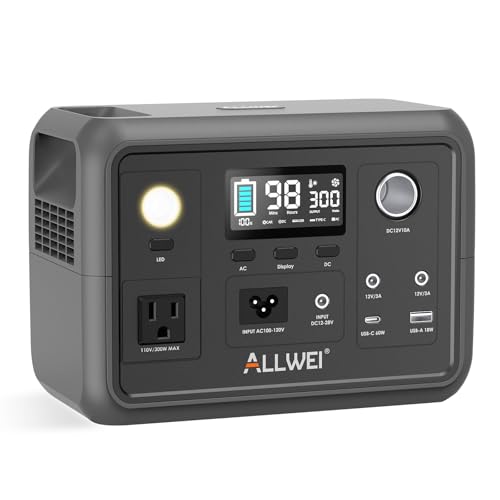
The ALLWEI power station provides 256Wh of capacity with a continuous 300W output and a 600W peak, all delivered through a pure sine wave inverter. It supports charging multiple devices at once and includes a robust Battery Management System for long life (up to thousands of cycles). It is well-suited for home backup, camping, and outdoor work setups that require safe power for laptops, CPAP machines, and small appliances. The draw is the slightly lower total energy capacity compared to the largest units, which may matter on longer trips or higher power needs.
EnginStar Portable Power Station 300W

EnginStar’s 296Wh unit emphasizes two pure sine wave AC outlets for smoother operation of sensitive electronics. It includes multiple output ports (including USB-C and USB-A) for charging several devices at once and features a comprehensive protection system. It’s light and portable, making it a practical choice for weekend trips, camping, or as a compact emergency power source. A minor note: charging speed and solar compatibility are not specified in the listed data, which could influence how quickly it recharges in off-grid use.
GRECELL 1000W Portable Power Station

The GRECELL unit packs a massive 999Wh capacity with 1000W continuous output and a 2000W peak, powered by pure sine wave AC outlets. It’s designed as a central energy hub for extended outdoor adventures, RV living, or home backup. Ten devices can be charged simultaneously across two AC outlets, USB-C PD, USB-A ports, a wireless pad, and DC car/outputs. The higher price and weight reflect its greater capacity and versatility. Best for advanced off-grid setups or scenarios needing sustained power for multiple devices. A potential limitation is size and weight, which may reduce portability for backpacking.
ArkPax Portable Power Station 300W

The Arkpax model provides 192Wh of capacity with a 300W continuous output and 600W peak. It supports rapid recharging with included adapters and can be charged via car or solar panel (panel not included). It’s well-suited for quick camping trips, emergencies, and daily use where compact size and quick recharge are priorities. A limitation is the lower energy reservoir compared to larger units, which may impact longer outages or high-wattage loads.
Buying Guide: Pure Sine Wave Power Stations
What is a pure sine wave inverter and why it matters
A pure sine wave inverter produces stable, clean AC power that closely mirrors a wall outlet. This is important for sensitive electronics like laptops, CPAP machines, and high-end audio equipment, reducing the risk of damage and providing smoother operation.
Key considerations for choosing
- Capacity and runtime: Match Wh to your typical load and trip duration. Higher capacity supports longer use without recharging.
- Output ports: Ensure you have enough AC outlets plus USB-C and USB-A ports for your devices.
- Weight and portability: If you’ll be backpacking or hiking, lighter models with compact form factors are preferable.
- Recharge options: Consider USB-C PD input, solar charging compatibility, and car charging if you’re off-grid.
- Battery chemistry and cycles: LiFePO4 cells offer longer life and better thermal stability for frequent use.
Portability vs. power: who should buy what
- Best for campers and RVers: Models with a balance of capacity, multiple outputs, and portable weight (e.g., MARBERO or ENGINSTAR units).
- Best for home backups: Higher capacity units like GRECELL offer longer runtimes and robust protection.
- Best for CPAP users: Look for stable pure sine wave output and reliable surge handling; prioritize units with dedicated outlets and clear runtime estimates.
Usage tips for maximizing reliability
- Charge fully before extended storage to maintain battery health.
- Use the appropriate port for each device to avoid overloading any single output.
- Keep the device out of extreme temperatures to protect battery longevity.
FAQ
- What is a pure sine wave power station good for?
It enables safe operation of sensitive electronics and devices that require consistent AC power, such as laptops and CPAP machines.
- How do I determine the right capacity?
Estimate total watt-hours by summing device runtime needs and load. If you plan longer outages or higher-wattage appliances, choose larger capacity models.
- Can these units be charged with solar panels?
Many offer MPPT charging and solar compatibility. Check each model’s listed charging options to confirm solar panel compatibility.
- Are LiFePO4 batteries better?
Yes, LiFePO4 cells typically offer longer cycle life and better thermal stability, which is advantageous for frequent use.
- Is it okay to run multiple devices at once?
Yes, most units support multi-port charging, but stay under the continuous power rating to avoid tripping or overheating.
- Which model is best for emergencies?
Consider high capacity, multiple outlets, reliable battery chemistry, and pass-through charging for simultaneous device charging during outages.