Best High-Performance Solar Panels for Off-Grid Power Needs
Answering the question: which high-performance solar panels offer the best balance of efficiency, durability, and shading tolerance for off-grid setups? This guide highlights five top options ideal for RVs, vans, boats, cabins, and other off-grid applications. Each pick targets a different use case — from compact Class B van roofs to larger off-grid homes — helping you choose based on space, climate, and energy goals. The buyer-friendly table below summarizes key strengths at a glance.
| Product | ||
|---|---|---|
| Callsun N-Type 16BB 200W (x2) | Compact RVs and vans | Dual-module anti-shade design with bifacial capability |
| EPOCH 800W (2 × 400W) | Mid-size RVs and boats | High durability with IP68 and strong weather tolerance |
| STAR 860W Bifacial Panel | Residential or larger off-grid roofs | High power density with rugged build for harsh environments |
| Renogy 200W N-Type 16BB | Class B vans and small cabins | Compact, efficient, and versatile for 12V/24V systems |
| SUNGOLDPOWER 590W Bifacial (6 × 590W) | Large roof systems and energy storage | Very high output with bifacial gains |
Callsun N-Type 16BB 400W Dual-Module Panels

The two 200W modules use N-Type 16BB cells for up to 25% efficiency and reduced hot spots. The dual-module parallel design helps maintain output when part of the panel is shaded, making this set well suited for RV rooftops or marine installations with variable sun exposure. Best for buyers seeking reliable high efficiency in limited space with shading tolerance.
Who it’s best for: compact off-grid setups where shade is a concern and space is at a premium, such as RVs or small boats. Why selected: bifacial capability and anti-shade design offer more usable energy without adding large surface area.
Caution: real-world gains from bifacial design depend on reflective surfaces and mounting height; performance varies with backsheet transparency conditions.
EPOCH 800W Bifacial Panels (Two 400W Modules)
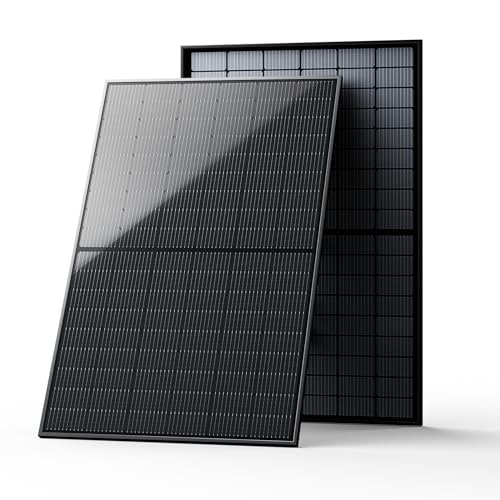
This pair uses Class A cells with PERC, half-cut design, and 16BB cells for durability and efficiency up to 25%. The bifacial design captures light on the rear, improving energy harvest, especially in open installations. They’re built to endure harsh outdoor conditions and provide strong performance in variable weather.
Who it’s best for: off-grid installations requiring robust waterproofing and long-term reliability, such as RVs, boats, or coastal cabins. Why selected: higher durability and better low-light performance help maintain energy output in challenging climates.
Caution: higher installation complexity may be needed for optimal rear-face illumination and weatherproofing at the mounting points.
STAR 860W Bifacial Solar Panels

This high-density 860W panel combines a rugged, weather-ready build with bifacial efficiency, delivering substantial output for larger off-grid projects. It’s UL61730 certified with a long service life (30 years in practical terms) and strong wind/snow resistance.
Who it’s best for: homeowners or RV families needing a single, powerful roof solution for limited roof area, with an eye toward long-term durability. Why selected: space efficiency and high power density reduce installation complexity on larger vehicles or cabins.
Caution: large dimensions require careful roof planning and structural support for safe mounting and wiring management.
Renogy 100W N-Type 16BB Panel

Renogy’s 100W N-Type module uses 16BB cells for improved efficiency up to 25%. It’s lighter and more compact than older 100W designs, making it a practical choice for small vans, cabins, or boat roofs that require flexible placement. Compatible with 12V and 24V systems for added versatility.
Who it’s best for: tiny-house or Class B vans where space savings matter but reliable output is still essential. Why selected: a balance of high efficiency and compact form factor, plus broad system compatibility.
Caution: lower total wattage means more units may be needed to reach high daily energy targets in sunny conditions.
ECO-WORTHY 200 Watt Kit with PWM Controller

This kit combines a 200W monocrystalline panel with a 30A PWM controller, suitable for a variety of off-grid applications including RVs, campers, and cabins. It’s designed for durability with corrosion-resistant framing and can withstand substantial wind and snow loads.
Who it’s best for: buyers who want a ready-to-install kit with a controller included, ideal for straightforward off-grid setups. Why selected: practical value for mid-range systems and easy integration into 12V or 24V networks.
Caution: PWM controllers are generally less efficient than MPPT controllers in optimized systems; plan for potential energy losses in low-light conditions.
SUNGOLDPOWER 590W Bifacial Panel (6 × 590W)

This six-module bifacial array offers high output with up to 22.8% efficiency per module and potential rear-side energy gains up to 30%. Its bifacial design is especially advantageous for larger installations where roof space is ample and shading is a concern.
Who it’s best for: large off-grid roofs, energy storage-focused projects, or solar farms on rustic properties. Why selected: exceptional total wattage and bifacial advantage for maximizing energy harvest in supportive conditions.
Caution: installation requires careful layout planning to optimize rear-side capture and wiring across multiple modules.
Buying Guide: Key Considerations for High-Performance Solar Panels
- System size and space: Match panel wattage and array size to roof area and energy targets. Large homes or storage-heavy setups benefit from higher-watt bifacial panels, while compact vans may prioritize 100–400W per module with shading tolerance.
- Cell type and efficiency: N-Type 16BB cells offer higher efficiency and longer lifespan with reduced hot spots. Bifacial designs capture energy from both sides, increasing daily yield in reflective environments.
- Shading tolerance: Dual-module parallel designs help one half continue producing when the other half is shaded. This matters for trees, buildings, or complex roof lines.
- Durability and weather resistance: Look for IP ratings, wind and snow load specs, and 30-year service life expectations for long-term off-grid use in varying climates.
- Installation fit: Consider size, mounting hardware, and compatibility with 12V vs 24V battery systems. Some panels are easier to install on RVs or boats with constrained space.
- Wiring and controllers: PWM controllers are simpler and cost-effective, but MPPT controllers improve efficiency under variable conditions. Plan controller choice to maximize energy capture.
- Maintenance and warranties: While product data should not imply warranties, verify materials, corrosion resistance, and design for easy cleaning and inspection in marine or desert environments.
Frequently Asked Questions
- What is the advantage of N-Type solar cells? N-Type cells reduce potential-induced degradation and hot spots, improving durability and efficiency over time.
- What does bifacial mean for panels? Bifacial panels collect light from both sides, increasing energy output especially when there are reflective surfaces nearby.
- Are larger wattage panels better for off-grid cabins? Higher wattage panels can reduce roof space needed, but require appropriate mounting and wiring considerations for safe operation.
- Do I need a special controller for bifacial panels? Bifacial panels work with standard controllers, but MPPT controllers can maximize gains by adjusting to the best operating voltage under changing conditions.
- How many panels should I install for an RV? It depends on daily energy needs and available roof area; start with a wattage target based on typical usage and scale with shading tolerance and storage.
- Can these panels withstand marine environments? Most listed panels feature durable framing and weatherproofing, but ensure proper sealing and mounting on boats and RVs to prevent corrosion.