Best 15kVA 480V to 240V Transformer: Top 5 Options for Industrial Power Conversion
Answering a common buyer need, these 15kVA devices reliably convert 480V three-phase power to 240V or other compatible outputs for industrial equipment, CNC machines, HVAC controls, and control panels. The best picks balance efficiency, isolation, and rugged build for demanding environments. This guide highlights five strong choices, explains who each suits best, and compares their core strengths and limitations so you can choose confidently.
Below is a quick summary table of the featured products to help you compare at a glance.
| Product | Best For | Key Benefit |
|---|---|---|
| GoHz 15kVA Isolation Transformer, 3 Phase | Industrial facilities needing robust isolation | High efficiency with copper winding |
| TR50VA008 Transformer 480/277/240/208V to 120V | Control panels and HVAC systems | Four-input voltage options with integrated circuit breaker |
| SolaHD HS1F1BS 1-Phase 240/480V to 120/240V | Smaller footprint automation setups | Encapsulated, non-ventilated design |
| DAYTON 15kVA 480V | Distribution environments | Reliable three-phase dry-type distribution |
| UJCTARKE 15kVA 480V to 380V/240V 3-Phase Auto/Isolation | Machine tools and CNCs | Autotransformer variants for multiple outputs |
GoHz 15kVA Three-Phase Isolation Transformer: 480V to 240V, Copper Winding

This 15 kVA, 3-phase isolation transformer converts 480V input to 240V output, suitable for heavy industrial equipment and control systems needing galvanic isolation. It uses copper windings to reduce electrical noise and improve efficiency, with an expected performance ceiling of about 95% under load. Best for facilities that require clean power delivery and robust isolation in demanding environments.
Who it is best for: factories and machining shops that run sensitive control gear on 480V feeders and require stable 240V secondary service. Why selected: strong isolation, copper windings, and three-phase compatibility support reliable operation. Caution: ensure proper ventilation and secure mounting to avoid overheating in tight spaces.
GUSUUI TR50VA008 Transformer: 480/277/240/208V to 120V, 50VA with Breaker

This 50 VA step-down transformer supports multiple input voltages (480V, 277V, 240V, 208V) and delivers a steady 120 VAC output. It includes an integrated primary thermal-magnetic circuit breaker for overload and short-circuit protection. Best for HVAC controls, thermostats, relays, and other low-power devices that still require robust isolation and surge suppression.
Who it is best for: control installations needing flexible input compatibility and built-in protection. Why selected: reliable four-voltage input range with integrated protection. Caution: limited output power means it’s not for high-load equipment; ensure the 50 VA rating meets your load needs.
SolaHD HS1F1BS Non-Ventilated Automation Transformer

This 1-phase, encapsulated automation transformer provides 240/480V to 120/240V conversion in a compact, non-ventilated design. Suitable for automated equipment and panel boards where space is at a premium. Features chopper lead terminations and side-entry conduit knockouts for flexible installation.
Who it is best for: automation panels and compact control rooms that require a seal-tight, low-profile transformer. Why selected: encapsulated construction reduces dust ingress and simplifies mounting. Caution: single-phase output may limit use with 3-phase equipment or dynamic multi-load systems.
DAYTON Three Phase Transformer, 15kVA, 480V
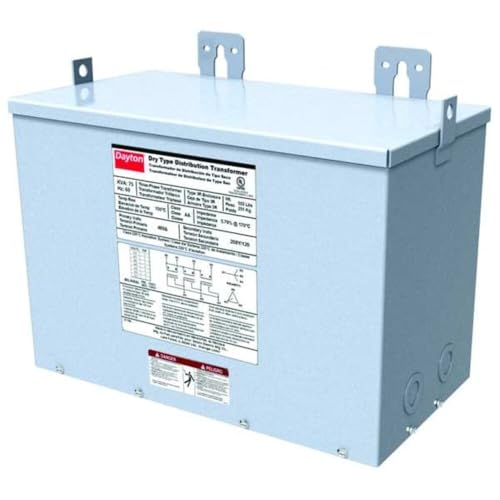
This 15 kVA three-phase dry-type transformer accepts 480V input and provides 120V output in a three-phase distribution setup. It is designed for general power distribution tasks in industrial environments, offering robust construction and steady performance for essential machinery and control panels.
Who it is best for: industrial facilities needing a dependable three-phase distribution transformer. Why selected: straightforward delta/wye style utility with clear VA rating. Caution: verify compatibility with your existing 480V delta system; ensure correct winding configuration to avoid miswiring.
UJCTARKE 15kVA 480V to 380V/240V 3-Phase Transformer

Qsg-15kva 3 Phase Toroidal Transformer and related UJCTARKE models offer isolation and autotransformer options for 380V to 440V ranges in a 15 kVA rating. These are suitable for CNC machines and tools requiring a stable, isolated supply with the ability to step between common industrial voltages.
Who it is best for: machine tools and CNC setups needing flexible voltage arrangements in a single, compact unit. Why selected: versatility with transformer types aimed at high-demand environments. Caution: toroidal and autotransformer variants can have different impedance and noise characteristics; confirm the exact model behavior for your load profile.
Buying Guide: Key Considerations for 15kVA 480V to 240V Transformers
When selecting a 15kVA transformer for 480V to 240V or related outputs, buyers should evaluate isolation versus autotransformer designs, phase compatibility, and cooling requirements. For industrial installations, three-phase models typically offer better efficiency and power handling than single-phase units, though space and cost may differ.
- Voltage compatibility: Confirm input and output voltages match your equipment needs (e.g., 480V input, 240V output, or 120/240V secondary).
- Isolation versus autotransformer: Isolation transformers provide galvanic separation, reducing noise and improving safety; autotransformers can be smaller and cheaper but offer less isolation.
- Phase configuration: Three-phase units support heavier loads and balanced distribution; single-phase units are common for controls and smaller panels.
- Cooling and enclosure: Dry-type, ventilated vs. non-ventilated designs affect ambient temperature and space. Enclosures with heat dissipation features extend life in hot environments.
- Protection features: Integrated circuit breakers, thermal protection, and surge suppression help protect downstream devices.
- Installation considerations: mounting, clearance, and wiring must align with electrical codes and safety standards; verify winding, grounding, and wiring mode (Dyn11, Wye, Delta) as applicable.
Frequently Asked Questions
- What is the difference between isolation and autotransformers?
Isolation transformers provide galvanic separation between input and output to reduce electrical noise and improve safety, while autotransformers share part of the winding and are typically smaller and cheaper but offer less isolation.
- When should I use a 3-phase transformer versus a single-phase unit?
Three-phase transformers handle higher, balanced loads common in industrial settings, improving efficiency and voltage stability; single-phase units are often used for controls or smaller equipment.
- How do I determine the right VA rating for my load?
Sum the wattage of all equipment you intend to power, add a margin for startup surges, and ensure the transformer rating exceeds this total by a comfortable safety factor (often 20–25%).
- What maintenance do these transformers require?
Keep vents and cooling paths clear, inspect for overheating signs, and verify insulation and connections during regular electrical checks.
- Can these transformers be used in control panels for CNC machines?
Yes, provided the input/output voltages and phase configuration match the CNC equipment requirements and the panel design accommodates isolation and protection features.
- Are there any safety precautions I should consider?
Follow electrical codes, de-energize circuits before wiring, and use appropriate enclosures and grounding to prevent shock or fire hazards.