Best Cycle Electric Voltage Regulator Options for Motorcycles and ATVs
The top choice depends on your bike’s needs: look for a regulator that reliably controls voltage, reduces heat, and fits your electrical system. This guide highlights five Cycle Electric regulators that suit common mid- to high-performance cycles and offers a quick buyer’s snapshot to help you decide.
Summary table of selected products:
| Product | Brand | Key Benefit | Best For |
|---|---|---|---|
| Cycle Electric CE-320 Electronic Voltage Regulator Black | Cycle Electric | Blocks current to control voltage | Riders needing simple voltage control |
| Cycle Electric Regulator CE-608 | Cycle Electric | Rectifying regulator for stable output | Applications needing consistent rectification |
| Cycle Electric CE-608 Rectifying Regulator | Cycle Electric | Blocks current, reduces stator current, lowers temperature | Heat-sensitive or high-drag setups |
| Cycle Electric Electronic Voltage Regulator Black CE-204 | Cycle Electric | Block current to control voltage | Budget-conscious replacements |
| Cycle Electric Electronic Voltage Regulator Low Voltage CE-320-L | Cycle Electric | New low-voltage regulator option | Newer systems needing low-voltage management |
Cycle Electric CE-320 Electronic Voltage Regulator Black
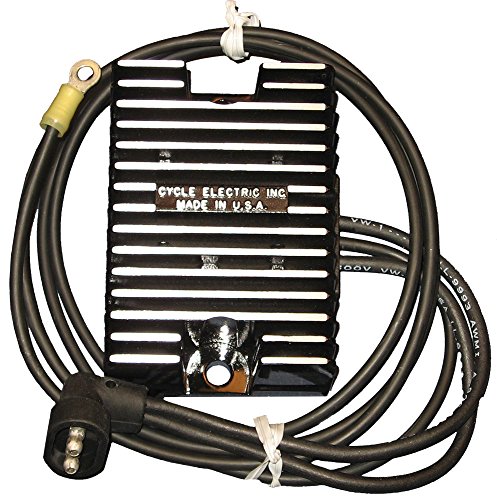
The CE-320 is designed to block current to manage voltage output. It is a straightforward option for riders who want a reliable, simple regulator without extra features. Best for riders seeking consistent voltage with minimal adjustment needs in standard electrical systems. A potential limitation is that it may not include advanced cooling or multiple output modes found in higher-end units.
Cycle Electric CE-608 Regulator

The CE-608 is a rectifying regulator designed to stabilize the electrical output. It is better for riders needing consistent rectification in varied riding conditions. Choose this if your system benefits from a steady DC feed. A consideration is that it focuses on rectification and voltage control rather than advanced cooling features.
Cycle Electric CE-608 Rectifying Regulator

This unit blocks current to control voltage and reduces stator current, which lowers temperature and drag on the motor. It is well-suited for riders who want better thermal performance and smoother operation under load. It may be less ideal for systems requiring multiple output configurations or adjustable presets.
Cycle Electric Electronic Voltage Regulator Black CE-204

The CE-204 is another electronic regulator that blocks current to control voltage. It is a reliable option for motorcycles and ATVs where a simple, durable regulator is desired. Best for riders needing straightforward replacement with predictable performance. A limitation can be fewer compatibility notes in some older electrical systems.
Cycle Electric Electronic Voltage Regulator Low Voltage CE-320-L
The CE-320-L is a low-voltage regulator option described as “New.” It is suitable for newer systems that require enhanced voltage management at lower input levels. Best for riders with modern electrical setups where standard regulators may not deliver optimal performance. A caution is that specific compatibility should be confirmed with your bike’s wiring.
Cycle Electric 3-Phase Rectifying Regulator CE-603
The CE-603 is a 3-phase rectifying regulator that blocks current to control voltage. It is best for riders with 3-phase charging needs and modern electrical systems seeking efficient rectification. A limitation is that installation complexity may be higher than single-phase options.
Buying Guide
What should I consider when choosing a regulator?
- Voltage range and compatibility: Ensure the regulator supports your bike’s charging system and battery voltage.
- Regulation type: Decide between blocking current, rectifying, or combined regulation based on system needs.
- Heat management: Some models reduce stator current and heat, which can extend component life under heavy use.
- Physical fit: Check mounting dimensions and connector types to match your wiring harness.
- Ease of replacement: Look for units with straightforward installation and clear polarity markings.
How do I determine the right regulator for my bike?
- Review the existing regulator’s behavior: voltage stability under idle and high-load conditions.
- Consider whether your system has a single- or multi-phase alternator and select accordingly.
- Assess heat exposure: bikes used in hot climates or with high electrical demand may benefit from heat-reducing designs.
What installation considerations are important?
- Avoid incorrect polarity connections to prevent regulator damage.
- Plan wire routing to minimize exposure to heat and moving parts.
- Verify the regulator’s mounting orientation adheres to the manufacturer’s guidance.
Compatibility and replacements
Many regulators list compatible OEM numbers and vehicle applications. When replacing, match the voltage set points and connector layout to avoid mismatches. In some cases, external regulators can replace aging units with similar electrical characteristics.
Frequently Asked Questions
- Q: Do I need a regulator if my battery maintains voltage well? A: Regulators help prevent overcharging and reduce alternator strain, extending system life under varied riding conditions.
- Q: Can I install a regulator myself? A: Yes, with basic wiring knowledge and proper safety precautions. Follow the product’s installation instructions closely.
- Q: Are regulator failures common? A: Failures can occur due to heat, water exposure, or improper connections; choose a regulator with good heat management and protected wiring.
- Q: Is a 3-phase regulator necessary for typical motorcycles? A: Most standard bikes use single-phase regulators; 3-phase options are for systems with three-phase alternators or higher electrical demands.
- Q: How do I know if my regulator is failing? A: Symptoms include fluctuating voltage, dim lights, or battery discharge under ride conditions.
- Q: Should I replace the regulator and rectifier at the same time? A: If both components show signs of wear or are older than the bike, replacing both can improve overall electrical reliability.