Best Lithium Ion Solar Battery Bank for Off-Grid Power on the Go
For reliable off-grid charging, a lithium ion solar battery bank combines portable power with solar recharging. This guide highlights top options that balance capacity, durability, and charging speed. Each product below supports multiple devices, features built-in cables or panels, and is suitable for camping, travel, or emergency preparedness. Compare specs, assess portability, and choose the right solar power bank to keep phones, tablets, and small electronics powered anywhere the sun shines.
| Product | Brand | Capacity | Key Strength |
|---|---|---|---|
| Durecopow Solar Charger Power Bank | Durecopow | 20,000 mAh | All-in-one outdoor features; multiple cables; rugged build |
| Kepswin Solar Charger Power Bank 49800mAh (4 Cables) | Kepswin | 49,800 mAh | High capacity with multiple ports; built-in safety protections |
| Kepswin Solar Charger Power Bank 49800mAh (4 Cables + 4 Panels) | Kepswin | 49,800 mAh | Four solar panels for faster recharge; robust for outdoors |
| BLAVOR Solar Charger Power Bank 10,000mAh | BLAVOR | 10,000 mAh | Wireless charging and USB-C fast charging in compact form |
| SOXONO Solar Charger Power Bank 40,000mAh | SOXONO | 40,000 mAh | IP67 rating with four cables and dual flashlights |
Durecopow Solar Charger Power Bank

The Durecopow 20,000 mAh solar power bank combines portability with practical outdoor features. Its rugged construction is described as water-resistant, shock-resistant, and dustproof, making it suitable for camping, hiking, and emergency use. A carabiner, compass, and dual LED flashlights expand its utility beyond standard charging. The device supports charging six devices simultaneously via three built-in output cables (Type-C, Lightning, Micro USB) plus USB-A input, enabling flexible compatibility across iOS and Android devices. LED indicators show solar versus USB charging status for quick battery health checks.
Kepswin Solar Charger Power Bank 49800mAh

The Kepswin 49,800 mAh solar power bank emphasizes safety and versatility. It features a built-in high-quality lithium polymer battery with certifications (UL, CE, FCC, RoHS, UN38.3) and a robust protection system—temperature, over-voltage, over-current, and short-circuit protection—to safeguard both the power bank and connected devices. A USB-C port supports input/output, and USB-A outputs enable simultaneous charging of up to three devices. Its three-mode LED flashlight (Steady-SOS-Strobe) adds emergency visibility for outdoor activities or power outages.
Kepswin Solar Charger Power Bank 49800mAh With 4 Cables & 3 Panels
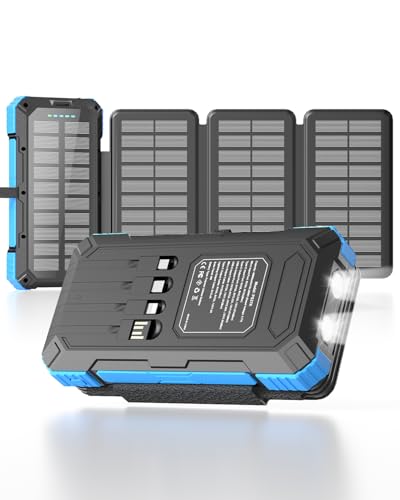
This Kepswin model enhances user freedom with four built-in cables (iOS, Type-C, USB-A, Micro) and three charging ports (Type-C, Micro, USB-A), enabling simultaneous charging of up to five devices. Its 49,800 mAh capacity supports extended use between charges, and the battery is backed by safety certifications and protections. A key feature is the four solar panels designed to boost solar recharge efficiency, making it a solid option for outdoor enthusiasts who prioritize rapid field recharging along with gadget reliability.
BLAVOR Solar Charger Power Bank 10,000mAh
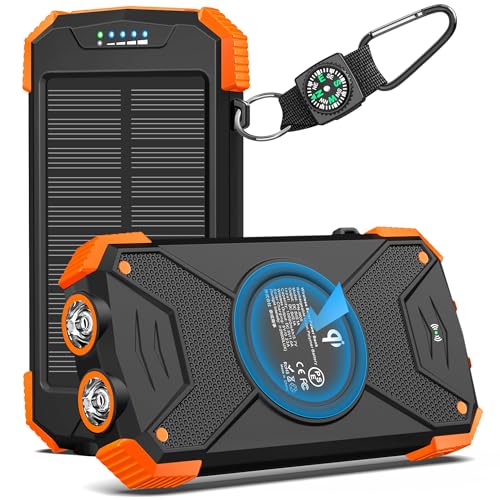
The BLAVOR 10,000 mAh model blends portability with modern charging features. It supports USB-C input/output and includes Qi wireless charging, enabling convenient power delivery to compatible devices without cables. The battery chemistry is described as Lithium-cobalt, offering more cycling durability than average Li-polymer. The compact form factor makes it a practical everyday carry option for travelers, with the ability to charge multiple devices in parallel and an array of output/input modes for flexible use in diverse scenarios.
GOODaaa Portable Charger 42800mAh

The GOODaaa 42,800 mAh solar charger emphasizes hosting a broad range of outputs with five outputs and three inputs. It includes built-in cables (iOS and USB-C) plus an extended USB-A input cable to minimize cable clutter. The large capacity supports extended power for multiple devices, and the device adds practical tools like a laser pointer and thermometer, which can be beneficial in outdoor settings. The solar charging capability ensures recharging in sun exposure, making it a reasonable option for camping and long trips where grid power is scarce.
Jackery Portable Power Station Explorer 300
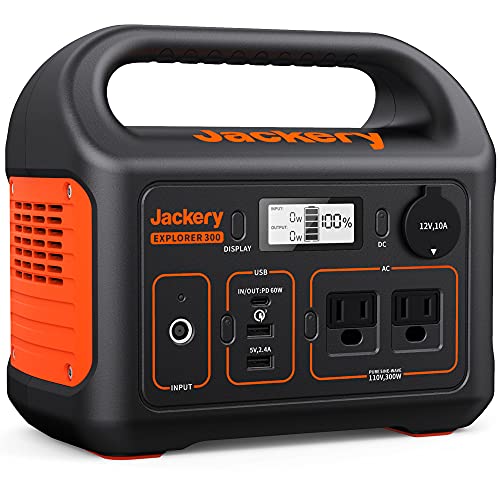
The Jackery Explorer 300 provides a robust lithium battery platform suitable as a solar generator solution for off-grid adventures. With 293Wh capacity and two pure sine wave AC outlets, it offers stable power for cameras, drones, laptops, and other essential devices. The unit weighs just over 7 pounds, improving portability for backpacking or travel. Its design supports rapid recharging via a 60W USB-C PD port and compatibility with Jackery SolarSaga panels, enabling flexible pairing with solar setups for continuous use during longer trips.
BLAVOR Solar Charger Power Bank 10,000mAh (Wireless)

The BLAVOR 10,000 mAh wireless-enabled model mirrors the earlier BLAVOR entry with emphasis on wireless charging plus USB-C fast charging. The device accommodates multiple devices simultaneously and emphasizes safety with established battery chemistry and protection measures. Its practical footprint makes it a popular pick for travelers who want a compact, cable-light charging experience without sacrificing performance.
SOXONO Solar Charger Power Bank 40,000mAh

The SOXONO 40,000 mAh model focuses on high-capacity outdoor reliability. It features IP67 waterproof and dust-proof protection, making it well-suited for harsh environments. The device comes with four built-in cables and dual bright flashlights—handy for night use and emergencies. A built-in solar panel system supports solar recharging, and the multiple ports facilitate simultaneous charging of several devices. Its rugged build makes it a strong choice for campers, hikers, and anyone facing extended outages or remote locations.
Buying Guide: Key Purchase Considerations
- Capacity and usage pattern: Higher mAh means longer between charges, but it also adds weight. For daily carry, 10,000–20,000 mAh covers most smartphones; for multi-device camping, 40,000–50,000 mAh is often preferred.
- Charging speed and ports: Look for PD USB-C and multiple USB-A outputs for faster charging. Built-in cables reduce clutter but ensure compatibility with your devices.
- Solar recharge efficiency: Panels and panel count influence how quickly the bank recharges under sun. Multi-panel designs offer better performance in outdoor settings, but check real-world solar recharge rates.
- Durability and weather resistance: IP ratings (such as IP67) and rugged materials matter for outdoor use. Water, dust, and shock resistance extend device life in rough environments.
- Safety certifications and protections: UL, CE, FCC, RoHS, and UN38.3 certifications, plus protections against temperature, overvoltage, and short circuits, help protect both the power bank and connected devices.
- Portability vs. capacity: A larger battery bank delivers more power but adds weight. Choose a model that balances capacity with your mobility needs.
- Additional features: Built-in flashlights, thermometers, wireless charging, and compass can add practical value for emergencies and outdoor activities.
- Brand and warranty: Trusted brands with clear warranty policies provide added assurance for long-term usage and reliability.
Overall, choosing a lithium ion solar battery bank involves evaluating capacity, charging options, durability, and the intended use case. For frequent outdoor use with the need to charge multiple devices rapidly, models with higher capacities, multiple cables, and solar panel support offer the best balance of reliability and flexibility. For casual travel, compact models with wireless charging and lightweight design may be preferable. Always compare the combination of capacity, solar recharge capability, and safety features to find the right fit for your adventures.