Best Solar Gable Vent Fans for Attic Cooling and Air Circulation
Choosing a solar gable vent fan helps reduce attic heat, improve indoor comfort, and lower cooling costs. This guide reviews five solid options, highlighting airflow, energy savings, durability, and ease of installation. Each product is evaluated for suitability in homes, workshops, garages, or greenhouses, with a straightforward buying guide to help you compare features and benefits at a glance.
| Product | Brand | CFM | Power | Key Benefit |
|---|---|---|---|---|
| VEVOR Gable Mount Fan, 14 Inch | VEVOR | 1300 CFM | Solar, Thermostat | Strong airflow for large spaces |
| QuietCool AFG SLR-40 | QuietCool | 40W panel | AC/DC inverter included | Thermostat controlled, 24/7 runtime |
| Solar Attic Fan 32W 1600CFM | DC HOUSE | 1600 CFM | Solar | High airflow, weatherproof |
| OmniPV Solar Attic Fan | OmniPV | 1600 CFM | Solar w/ 110V adapter | Low noise, built-in thermostat |
| ECO-WORTHY 50W Solar Kit | ECO-WORTHY | Up to 1200-? CFM | 50W panel | All-in-one kit, plug & play |
VEVOR Gable Mount Fan, 14 Inch Solar Power Attic Exhaust Fan

Designed for attics, garages, and workshops, this VEVOR gable mount fan delivers up to 1300 CFM to quickly move hot air out of roof spaces. The 14-inch unit is housed in a corrosion-resistant steel shell, with aluminum alloy blades to maintain performance over time. An adjustable thermostat helps automate cooling, turning the fan on or off based on ambient temperature. The outer mesh adds protective screening, keeping debris out of the fan while maintaining airflow efficiency.
Key features include a high-velocity ventilation rate, energy-saving operation through thermostat control, and robust construction for long-term use. Its 1850 square feet cooling capacity makes it a practical choice for larger residential attics and commercial spaces with sun exposure. Installers should verify rafter alignment and ensure proper vent clearance for optimal results.
QuietCool AFG SLR-40 Solar Attic Fan for Gable Vents

This QuietCool model emphasizes energy efficiency with a dedicated DC motor and a built-in inverter that allows 24/7 operation when connected. It features a preset thermostat that triggers cooling at 88ºF, enabling automated climate control without ongoing adjustments. The compact design suits gable vents and attic openings where space is at a premium. For homes seeking steady airflow with minimal electrical infrastructure, this unit offers a balanced solution.
Performance benefits center on quiet operation, reliable cooling for attic spaces, and compatibility with varying sunlight conditions due to its inverter-assisted runtime. The system is well-suited for homeowners who want consistent attic ventilation with predictable thermostat behavior, reducing interior heat loads during peak sun hours.
Solar Attic Fan 32W 1600CFM by DC HOUSE
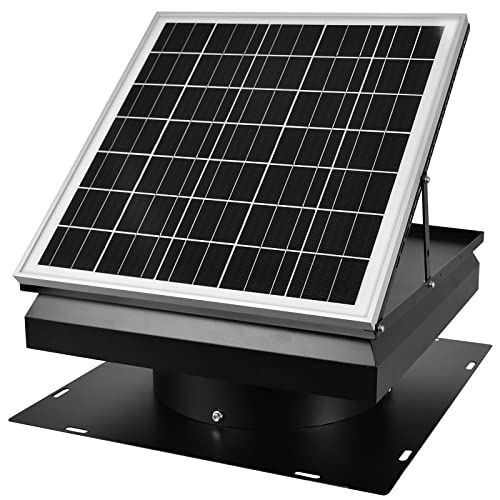
DC HOUSE offers a high-airflow solar attic fan designed for home and garage cooling. The 1600 CFM output helps reduce attic temperatures effectively, especially when paired with existing vents for broader airflow. The weatherproof construction withstands outdoor conditions, with a solar panel providing off-grid operation during daylight hours. A practical choice for those prioritizing strong, solar-powered cooling without wiring complications.
The product emphasizes 32W solar intake with durable components and a focus on reducing attic heat. Pairing with supplemental passive vents can magnify overall cooling performance for medium-to-large spaces.
OmniPV Solar Attic Fan, 40 W, 1600 CFM

OmniPV combines a 40W solar panel with a brushless DC motor to deliver up to 1600 CFM, supporting large attic or greenhouse spaces. The unit includes a 110V smart adapter for optional continuous operation, expanding usability beyond pure solar dependence. A built-in thermostat automates fan activity based on ambient temperature, helping maintain cooler attic temperatures during hot days while conserving energy on milder days.
Users benefit from low-noise operation and weatherproof construction, making this option suitable for roof installations where weather exposure is constant. The combination of solar efficiency and optional grid-powered mode supports different usage scenarios and climates.
ECO-WORTHY 50W Solar Attic Fan Kit

This all-in-one ECO-WORTHY kit includes a 50W foldable solar panel and a 14″ DC fan, presenting a plug-and-play solution for roof vents, greenhouses, and chicken coops. The panel folds for easy storage and mounting, while the fan automatically starts when sunlight is available and stops when temperatures drop. IP54-rated protection provides basic weather resistance, suitable for outdoor installation with minimal maintenance.
As a complete solar cooling package, the ECO-WORTHY kit emphasizes straightforward setup and portability. It’s ideal for users who want a ready-to-use system without separate components, though some climate conditions may require additional passive ventilation for maximum effectiveness.
Buying Guide: Key Purchase Considerations
When selecting a solar gable vent fan, consider airflow needs, roof space, and installation constraints. Higher CFM is beneficial in larger attics or spaces with minimal natural ventilation, but it may come at the cost of higher initial investment. Look for units with thermostat control to automate operation and reduce energy use.
Durability matters in outdoor installations. Aluminum blades, steel housings, and IP-rated housings help resist corrosion, wind, and rain. If your climate experiences heavy winds or hail, a rugged housing and protective mesh are important.
Solar panel quality and placement influence performance. Larger panels with efficient cells yield better daytime cooling, while foldable or lightweight panels improve portability and maintenance. Consider whether a unit includes a built-in inverter or requires a separate power source for continuous operation.
Compatibility with existing venting is another factor. Some fans pair well with multiple roof vents or gables, while others are designed for single-vent installations. Ensure mounting hardware fits your roof structure and complies with local building codes.
Noise levels may be a concern for living spaces near the attic. Many models are designed for low noise operation; verify decibel ratings if this matters for bedrooms or study areas below the attic.
Maintenance and warranty are worth reviewing. Look for components that are corrosion-resistant and covered under a reasonable warranty period. A system with simple, tool-free maintenance can save time and prevent downtime during peak cooling seasons.
Cost considerations include initial hardware price, panel efficiency, and potential energy savings over time. While solar fans primarily reduce electricity use, the total value also depends on climate, sun exposure, and how effectively you integrate additional ventilation strategies such as ridge vents or soffit vents.
In summary, the best choice depends on attic size, climate, and whether you prefer a fully solar system, solar with optional inverter, or a complete kit. For larger spaces, higher CFM models with thermostat control are advantageous. For smaller installations, compact, energy-efficient options with reliable weather resistance may be ideal.