Best Water Heater Options for Reliable Hot Water
Finding the right water heater means balancing capacity, energy efficiency, and ease of use. This guide highlights five reliable options that cover tank, tankless, and point-of-use needs, helping American households secure steady hot water without waste. Each selection below aligns with common household demands—from single bathrooms to multi-use kitchens and laundry rooms—while emphasizing safety, efficiency, and simple installation.
| Product | Brand | Type | Notable Feature |
|---|---|---|---|
| Sediment Buster | Sediment Buster | Water Heater Tool | UL Verified, easy sediment flush |
| VEVOR Electric Water Heater | VEVOR | 10 Gallon Tank | Fast heat, LED display |
| xwdzswgs Tankless Electric | xwdzswgs | Under-Sink Tankless | Compact, 3000W power |
| Rheem 18kW Tankless | Rheem | Electric Tankless | Self-modulating, high flow |
| EcoSmart ECO 11 | EcoSmart | Tankless | Self-modulating, space-saving |
Sediment Buster Water Heater Tool UL Verified

Designed to extend the life of electric or gas water heaters, the Sediment Buster tool helps flush, clean, and drain sediment clogs. It is UL Verified (V699054) and ships with clear instructions and videos to guide users through a safe, simple maintenance process. Regular use can reduce mineral buildup, improve efficiency, and prevent early system failure. This tool is suitable for homeowners who perform routine maintenance or service professionals seeking a reliable sediment-clearing method.
Key considerations include compatibility with common water heater models, ease of use, and the availability of instructional resources. Homeowners should follow manufacturer guidelines to avoid scalding or pressure hazards during flushing. The Sediment Buster supports ongoing system health by addressing sediment accumulation that can impede heat transfer and shorten appliance life.
VEVOR Electric Water Heater, 10 Gallon Tank

The VEVOR 10-gallon electric water heater provides compact, on-demand hot water with a 1600W heating element and a durable enamel coating. The unit includes an LED display for temperature monitoring and a rotary control for easy adjustments, with a safety-focused design that reduces burn risks and leaks. A 24-hour continuous delivery capability supports daily use for kitchens, baths, and small households.
Considerations include storage capacity, recovery time, and safety features such as overheating protection and IPX4 weather sealing. This heater is ideal where space is limited and a small-volume solution is sufficient for consistent hot water needs without a full-size tank.
xwdzswgs Tankless Electric Under-Sink Water Heater

This 110V tankless unit delivers on-demand hot water with a 3000W input, suitable for under-sink installations. It features an LED display and an adjustable temperature range, letting users tailor output from roughly 86°F to 167°F. The unit prioritizes safety with water-electric isolation and IPX4 waterproofing, while its compact design supports space-conscious kitchens or bathrooms.
Key suitability factors include minimum flow requirements for hot water at fixtures, installation feasibility under sinks, and electrical supply considerations. It is not designed for shower use, so planning must align with expected hot-water points of use in the home.
Rheem 18kW 240V Tankless Electric Water Heater
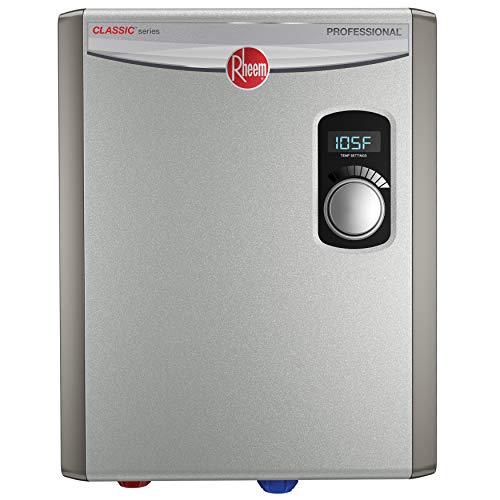
This Rheem electric tankless model uses self-modulating technology to adjust power and deliver hot water on demand. It features durable copper immersion heating elements and a field-serviceable design, with a flow rate capability of up to 4.4 GPM. An external digital thermostat with LED display provides precise temperature control, enabling efficient operation for homes with moderate hot-water requirements.
Considerations include peak electrical demand, venting or clearance requirements, and whether the home’s electrical panel can support a high-amperage install. This option suits households seeking space-saving, on-demand hot water with straightforward maintenance and clear temperature readouts.
EcoSmart ECO 11 Electric Tankless Water Heater

EcoSmart ECO 11 is a compact, self-modulating tankless water heater rated at 13 kW at 240 volts. It’s designed for point-of-use or small spaces, delivering endless hot water with continuous temperature control within one degree of the selected setting. The unit’s small footprint makes it easy to install in kitchens, bathrooms, or utility areas while delivering notable energy efficiency since it only heats water on demand.
Important factors include the required electrical capacity (high amperage), installation location, and compatibility with existing plumbing. This model excels in situations where space savings and energy efficiency are prioritized, and where hot water flow needs align with lower-demand fixtures or point-of-use setups.
Buying Guide
- Hot-water needs: Assess daily usage, number of fixtures, and peak-demand periods to choose between larger storage tanks, smaller tanks, or tankless models.
- Energy efficiency: Look for Energy Star criteria where available and self-modulating technology in tankless models to minimize wasted energy.
- Installation space: Measure available room and consider under-sink, cabinet, or wall-mounted configurations for compact units.
- Electrical and plumbing compatibility: Tankless heaters require adequate amperage and circuit protection; verify panel capacity and wire types before purchasing. Tank models should match existing plumbing connections and venting if needed.
- Safety features: Overheat protection, leakage safeguards, dry-run prevention, and IP ratings (for moisture exposure) enhance long-term reliability.
- Maintenance needs: Sediment control tools and accessible service ports help extend life, particularly for homes with hard water.
- Replacement vs. retrofit: Consider whether you’re upgrading an existing system or installing a new unit; this affects space requirements and electrical load.
- Warranty and support: Check manufacturer warranties, installation guides, and availability of spare parts or service networks.
- Cost vs. performance: Compare upfront costs against potential energy savings and expected service life to determine total value.