Best Variable Speed Switches for Ceiling Fans: Find the Right Control for Your Home
Choosing the right variable speed switch for your ceiling fan can improve comfort and energy efficiency. This guide highlights five top options, covering different styles, amperage ranges, and installation needs. Each product is chosen for reliability, ease of use, and compatibility with common ceiling fan motor types. Whether you’re updating an older fan or installing a new one, these controls offer smooth, quiet operation and straightforward wiring.
Summary of selected products:
| Product | Brand | Key Feature |
|---|---|---|
| Trimatron Rotary Fan Speed Control | Leviton | Full-range control; slim profile fits shallow boxes |
| Full Range Variable Fan Speed Control | Leviton | Rotary, fits single-gang boxes; built-in EMI filter |
| 3-Speed In-Wall Ceiling Fan Control | ENERLITES | Three speeds; no neutral required; quiet operation |
| Westinghouse Ceiling Fan Wall Control | Westinghouse | Four speeds; two-wire installation; simple replacement |
| ZE-268S6 Pull Chain 3-Speed Replacement | DAYONE | Three speeds; UL and CSA certified; versatile use |
Each section below presents the product with a brief overview, wiring notes, and practical considerations to help you compare options quickly and confidently.
Leviton Trimatron Rotary Fan Speed Control

The Leviton Trimatron 6616-W is a full-range rotary control designed for ceiling fans with split-capacitor or shaded-pole motors. It installs in shallow wallboxes and works with existing wiring that does not require a neutral conductor. The unit supports full-range speed adjustment, enabling precise fan control from a comfortable breeze to a higher airflow. It is suitable for single-pole setups and can handle multiple fans as long as the total current remains within the switch’s amperage rating. For best results, confirm compatibility with your fan manufacturer’s motor type and amperage ratings.
Wiring considerations emphasize simplicity: you’ll wire the line, load, and ground as typical single-pole fan controls. The slim profile helps preserve space in compact walls. If you plan to run more than one fan from a single control, verify total amperage does not exceed the switch rating. As with any electrical upgrade, follow local electrical codes and ensure the power is off during installation.
KB Electronics 8811007 Variable Speed Control

KB Electronics’ 8811007 is a solid-state variable speed control rated for up to 6.0 amps at 115 volts. It is designed for standard 2″ x 4″ electrical wall boxes and carries UL and CSA approvals. Note that this model is not intended for capacitor start or capacitor run motors, which means it’s best matched to compatible fan types as specified by the motor manufacturer. This option is suitable for users who require a compact, in-wall control with robust electrical approvals and dependable pricing.
When wiring, ensure the device is placed within the appropriate box size, and respect the motor type limitations. Because it’s a solid-state control, you’ll experience smooth speed transitions without audible buzzing typical of some older controllers. Verify that your ceiling fan’s motor is compatible to prevent heat buildup and ensure safe operation.
ENERLITES 3-Speed In-Wall Fan Control
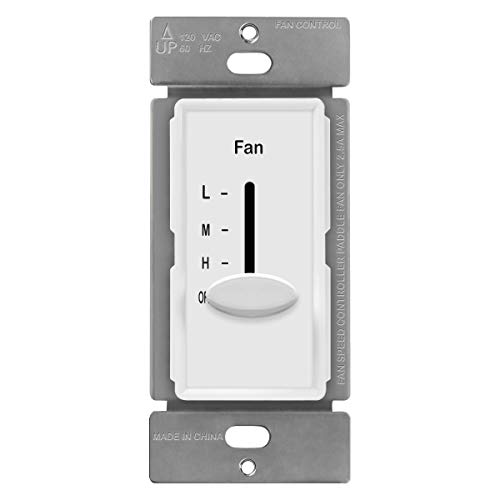
The ENERLITES 17000-F3-W-F is a three-speed in-wall fan control with a simple slide operation. It provides low, medium, and high settings with an OFF position, making it ideal for residential and light commercial applications. No neutral wire is required for installation, which can simplify retrofits in existing homes. The physical dimensions of roughly 2.27 inches by 1.72 inches ensure compatibility with many single-gang wall boxes.
In addition to straightforward installation, the control’s quiet operation is a notable advantage for bedrooms and living areas. It is compatible with three-speed ceiling fans, so if your fan deck includes high, medium, and low settings, this switch can map directly to those levels. If replacing a prior dimmer or control, ensure the wiring configuration matches a standard single-pole fan switch and that the fan motor type is supported by the device.
Leviton Full Range Variable Fan Speed Control
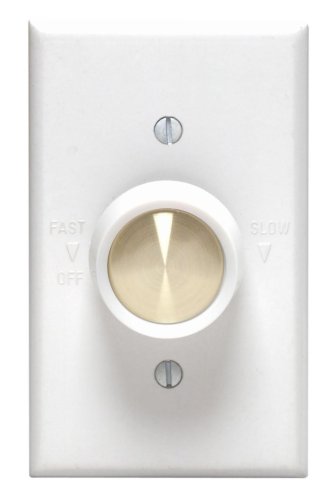
Leviton’s 612-6616-W continues the Trimatron’s legacy with a full-range rotary control designed to fit tight single-gang boxes. The device emphasizes a compact footprint along with a built-in EMI filter to minimize interference with other electronics in the home. This controller is well-suited for upgrading older installations where space is at a premium or when a clean, unobtrusive look is desired in the wall plate area.
Operational notes focus on compatibility and installation: verify the fan’s motor type and the total amperage if using more than one fan on the same circuit. The rotary design provides a smooth, intuitive interface for dialing in the preferred airflow, from a gentle breeze to a strong gust. As always, turn off power during installation and follow manufacturer guidelines for continued safe operation.
Westinghouse 7787200 Ceiling Fan Wall Control

Westinghouse offers a four-speed wall control that is designed for two-wire installation and acts as a straightforward replacement for a toggle switch. This option is especially suitable for users seeking a simple upgrade without adding extra wiring or a neutral conductor. It provides clear, discrete speed steps and reliable performance, making it a practical choice for many existing ceiling fan setups.
For installation, ensure the wall box can accommodate the device’s form factor and that the wiring is compatible with a two-wire configuration. The four-speed range can accommodate most typical room cooling needs, from a light breeze to a stronger airflow suitable for larger spaces. As with other wall controls, verify motor compatibility with your fan’s design and any manufacturer recommendations regarding speed ranges and amperage.
DAYONE Ceiling Fan Switch 3-Speed (ZE-268S6)
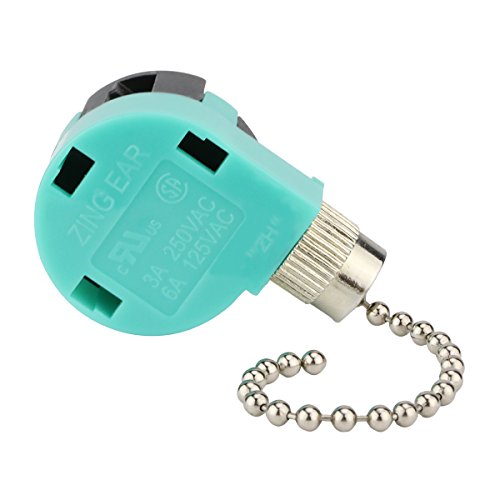
DAYONE’s ZE-268S6 pull-chain switch offers a versatile 3-speed control with a 4-wire configuration and UL/cCSA certification. While typically associated with pull-chain operations, this model is presented here for environments where a wall control is unavailable or where a fan is controlled via a pull-chain mechanism alongside ceiling fixtures. It provides high, medium, and low settings with a direct on/off function, making it suitable for spaces where multiple control methods coexist.
When considering installation, ensure your ceiling fan wiring can accommodate a pull-chain replacement or a hybrid setup. The 4-wire configuration allows for robust control options, but you’ll need to follow safety practices for fan and lighting circuits if a combined control is used. Check for compatibility with your fan motor type and consult the manufacturer guidance for optimal speed ranges and safe operation.
Buying Guide: How To Choose The Right Variable Speed Switch
Selecting the best variable speed switch involves weighing motor compatibility, installation constraints, and user experience. This guide covers key considerations to help you compare options objectively.
- Motor type compatibility: Ceiling fans use different motor technologies (split-capacitor vs shaded-pole). Verify the switch is rated for your fan’s motor type and does not violate the manufacturer’s recommendations regarding speed control.
- Amperage and voltage: Most residential ceiling fans operate around 115V with amperages from 2 to 6 A. Choose a control that matches or exceeds your fan’s current draw to avoid overheating or dimming under load.
- Installation space: Some slim-profile models fit tight single-gang boxes, while others may require larger enclosures. Measure your wall box space before purchasing.
- Neutral wire requirements: Several switches do not require a neutral conductor. If your wiring lacks a neutral, select an option explicitly designed for no-neutral installation.
- Number of speeds: Decide whether you want three speeds, four speeds, or a full-range variable control. For fans with a wide speed spread, a full-range rotary control may offer finer adjustment.
- Interference and performance: Some models include EMI/RFI filters to reduce interference with radios and TVs. This can be important in rooms with sensitive electronics.
- Aesthetic and compatibility: Consider the switch’s appearance (white, ivory, etc.) and whether it matches existing wall plates. Some units fit flush and have screwless mounting for a cleaner look.
- Safety and compliance: Look for UL or CSA certifications and ensure proper installation according to local electrical codes. If unsure, hiring a licensed electrician is prudent.
In summary, choose a control that aligns with your fan’s motor type, fits your wall box, and provides the desired balance of ease of use and electrical safety. If you plan to run multiple fans from a single control or require advanced EMI protection, prefer models with higher amperage ratings and built-in filtering. Always ensure proper labeling and compliance with local wiring regulations during installation.