Best Uva and Uvb Grow Lights for Reptiles: Comprehensive Guide and Top Picks
For reptile enclosures, UVB lighting is essential to support calcium absorption, bone health, and overall wellbeing. The following article reviews a selection of UVB grow lights designed to mimic natural sunlight, featuring models with UVA output, varying wattages, and built-in fixtures or test cards. Read on to compare performance, design, and applicability to popular pets like bearded dragons, turtles, geckos, and snakes. A quick product summary table is provided to help you scan options at a glance.
| Product | Brand | UVB / UVA Output | Wattage / Size | Link |
|---|---|---|---|---|
| REPTITRIP 16-Inch LED UVB Light | REPTITRIP | UVB + UVA, 6500K | 14W | Amazon |
| Hygger zoo UVB Light for Reptiles | Hygger zoo | High UVB Output, UVA | Adjustable fixture (designed for 12″+ setups) | Amazon |
| Haceryc UVB Light for Reptile 8W | Haceryc | UVB 10.0, UVA 30% | 8W, 12″ bar | Amazon |
| LUCKY HERP UVA UVB Reptile Light 10.0 | LUCKY HERP | UVB 10.0, UVA | 23W | Amazon |
| REPTITRIP 27-Inch LED UVB Light | REPTITRIP | UVB + UVA, 6500K | 22W | Amazon |
These products span compact 16-inch to longer 27-inch configurations, with features such as dimming options, UVB/UVA balance for vitamin D3 synthesis, and aluminum construction for heat management. The following sections highlight five top picks and their key attributes to help you choose the right light for your reptiles.
REPTITRIP 16-Inch LED UVB Light

The REPTITRIP 16-Inch LED UVB Light provides a compact yet capable solution for mid-sized terrariums. It combines UVB and UVA output to support calcium absorption and vitamin D3 synthesis in reptiles while emitting a neutral 6500K white light that helps maintain appetence and activity. The fixture emphasizes energy efficiency through LED tech and UV beads, with a focus on low power draw and long-lasting performance. Users benefit from a controlled, sun-like spectrum that aids daily activity and basking behavior without excessive heat emission.
Key considerations include the separate function: dimming capability for precise light levels, and multiple UVI modes that can be tuned to the animal’s stage of life or habitat requirements. While professional UV measurement is advised for exact dosing, this model offers a practical balance of performance and energy savings suitable for bearded dragons, turtles, and desert-dwelling species in many home setups.
Hygger zoo UVB Light for Reptiles
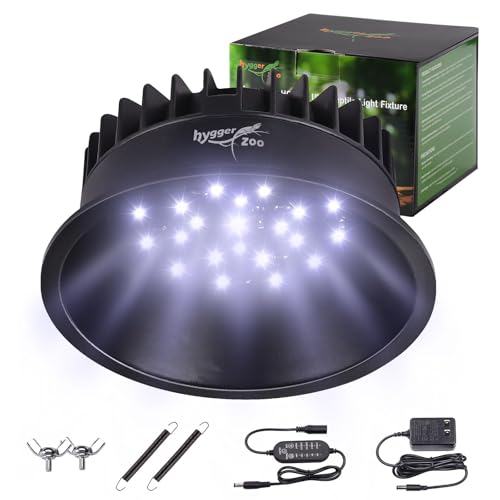
The Hygger zoo UVB light is designed for higher UVB output to support vitamin D3 synthesis and calcium absorption. Its curved reflector design concentrates UVB rays and enhances brightness for desert reptiles and amphibians. The aluminum construction aids heat dissipation, helping maintain a stable temperature within the enclosure and extending the light’s service life. This fixture promises robust performance for mid- to large-sized terrariums and can contribute to better feeding, growth, and immune health when paired with appropriate basking distances.
Pros include stronger UVB delivery, durable heat-sinking, and an emphasis on energy efficiency. Considerations involve ensuring the fixture’s mounting fits your enclosure and that basking distances are adjusted to avoid overstimulation or overheating. This model is well-suited for bearded dragons, leopard geckos, and similar settings that require sustained UVB exposure without excessive heat.
Haceryc UVB Light for Reptile 8W
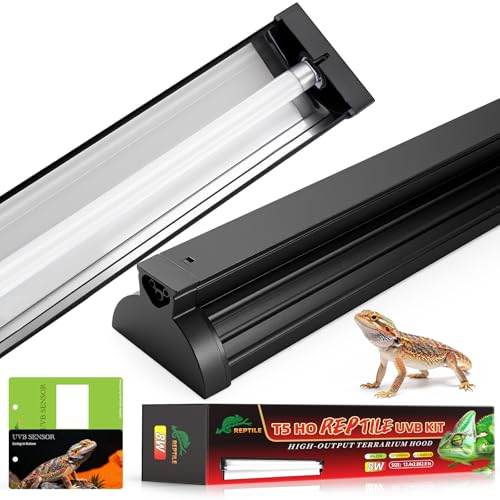
The Haceryc 8W UVB light offers a compact T5 design with a built-in test sensor card and a 12″ high-output UVB/ UVA distribution. It provides a practical 10% UVB and 30% UVA balance, designed to support vitamin D3 synthesis and calcium absorption while enabling natural behaviors such as sunbathing, feeding, and exploration. The included test card helps verify UV exposure in the enclosure, though results should be read with calibrated equipment for accuracy.
Other strengths include a polished curved reflector to maximize UVB output and a heat-conscious design that minimizes excess heat production. Its compact footprint makes it suitable for smaller terrariums or as a supplemental light in larger setups. Users should monitor bulb lifespan and heat load to ensure long-term health benefits for the reptile species in care.
LUCKY HERP UVA UVB Reptile Light 10.0

The LUCKY HERP 23W UVB 10.0 bulb is designed to simulate natural sunlight with long-lasting UVB output and stable UVA exposure. It emphasizes a higher color rendering index—up to 90%—which yields more vivid and accurate colors in reptiles, aiding both observation and enrichment. The bulb is marketed for longer UVB life, with a claimed endurance up to about a year under typical conditions, reducing the frequency of replacements and maintenance tasks in busy terrarium setups.
Considerations for use include ensuring compatible fixtures with 23W bulbs, managing heat within the enclosure, and aligning UVB exposure with the species’ natural habitat. This bulb is particularly suitable for bearded dragons, tortoises, lizards, and snakes that benefit from a balanced UV spectrum and natural-looking daylight simulation for day-night cycles and appetite stimulation.
REPTITRIP 27-Inch LED UVB Light

The longer REPTITRIP 27-Inch LED UVB Light provides a 22W output with four UVI modes and dimming capability, designed for larger enclosures and species requiring higher UVB exposure. The fixture emphasizes a sun-like spectrum with 6500K cool white illumination to maintain appetite and energy. The built-in dimming and multiple UVI settings allow caretakers to tailor exposure during growth, breeding, or recovery periods, while maintaining energy efficiency and reducing heat load.
Key considerations for this model include ensuring enclosure length matches the fixture and that UV exposure is appropriately spaced from basking zones. The 22W output supports bearded dragons, turtles, and similar reptiles, offering robust UVB delivery without overheating. Routine checks with UV meters are recommended to confirm target UVI levels for your specific habitat and species.
Buying Guide: Key Purchase Considerations And Comparisons
- Species and habitat requirements: Different reptiles have distinct UVB needs. Desert species may require higher UVB outputs and closer basking zones, while tropical species might need broader UVA exposure for daily activity and feeding behavior. Choose a light with adjustable UVB output or multiple UVI modes when possible.
- Fixture size and enclosure compatibility: Measure tank length and width to select lights that evenly cover the basking area. Longer fixtures are suitable for larger enclosures, while compact models fit smaller tanks. Be mindful of heat generation and ensure adequate ventilation.
- UV measurement accuracy: UV card tests can indicate relative brightness but are not always precise. Use a calibrated UV meter for accurate dosing, especially for species with specific UVB requirements or in multi-tank setups.
- Energy efficiency and heat management: LED-based UVB lights typically consume less energy and generate less heat than traditional fluorescent lamps. Aluminum or heat-dissipating fixtures help extend bulb life and maintain enclosure temperatures at safe levels.
- Durability and maintenance: Look for fixtures with replaceable UVB bulbs or modules, protective covers, and reliable ballast or electronic components. Consider ease of cleaning and enclosure access when selecting a model for wet or humid habitats.
- Color rendering and behavior observation: A higher CRI (color rendering index) helps you observe natural coloration and health indicators in reptiles. While not a health metric itself, better color accuracy can aid in monitoring skin, eyes, and overall condition.
- Installation and safety: Ensure the light is securely mounted and wired according to local electrical codes. Keep lights away from water sources and use fixtures designed for terrarium environments to minimize risk of overheating or damage.
- Long-term cost: Compare initial cost, replacement bulb frequency, and energy usage. A higher upfront investment may pay off with better health outcomes for your reptiles and lower ongoing maintenance costs.
In summary, the best choice depends on enclosure size, species, and how you want to balance UVB intensity with energy efficiency. The featured options span compact to extended lengths, offering a range of UVB/UVA outputs, dimming, and reflective designs to optimize exposure. Always pair lighting with proper basking distances and calcium supplementation to support bone health and overall vitality in reptiles.