Best UL Listed Heat Tape for Winter Pipe Protection and Roof De-Icing
Answering the need for reliable, UL-listed heat tape, this guide highlights top options designed to keep water flowing and pipes safe in freezing temperatures. The selections here are best for homeowners, small businesses, and property managers who require durable, safe, and easy-to-install frost protection. Each product is evaluated for safety certifications, suitability for different pipe types, and practical limits. Below is a quick buying summary to help you compare options at a glance.
| Product | Best For | Key Benefit |
|---|---|---|
| Toujreo Heat Tape | Residential and light commercial | Self-regulating with built-in GFCI on longer models |
| Frost King HC12A | Standard homes and metal/plastic pipes | Automatic heating down to -40°F |
| SZFY Heat Tape | Outdoor roofs, gutters, and farm settings | High heat output and rugged construction |
| JDZKOMKE Pipe Heating Cable | Buried or exposed pipes in harsh climates | Industrial-grade insulation and copper core |
| Radiant Solutions Hardwire Kit | Custom installations in junction boxes | Universal hardwire connections for multiple brands |
Toujreo Heat Tape For Water Pipes
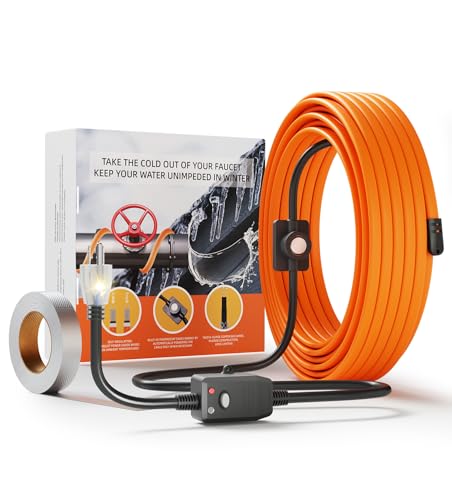
Product: Heat Tape for Water Pipes – 40FT with Thermostat Self-Regulating Heat Tape. Features a built-in thermostat that maintains safe temperatures and prevents overheating. It is ETL and UL listed for safety and is designed to keep water flowing in sub-zero conditions. The 18ft+ models include a GFCI power plug for added protection in damp locations. Best for residential water lines in crawl spaces or outdoor settings. Caution: Shorter models under 15ft may be designed without GFCI, so select length based on installation area.
Frost King HC12A Automatic Heat Kit
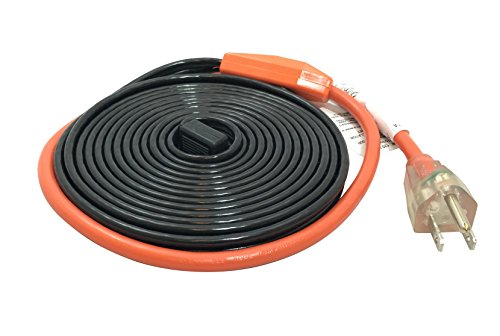
Product: Frost King HC12A Automatic Electric Heat Kit. This 12-foot heat cable operates at 120V and 7 watts per foot, providing reliable frost protection for both metal and plastic water pipes. It maintains water flow down to -40°F. Best for standard residential piping where automatic temperature control and straightforward installation are desired. Caution: The kit length is fixed; ensure you have enough cable to cover the entire vulnerable run.
3M Aluminum Foil Tape 3340

Product: 3M Aluminum Foil Tape 3340; not a heat tape but a high-temperature, vapor-sealing tape used to seal ducts, patches, and insulation. Best for accessorizing heat-tape installations where sealing and vapor management are needed. Caution: Not a substitute for heating elements or thermostatic control; use as a supplemental sealing solution only.
SZFY 3FT~200FT Heat Tape For Water Pipes
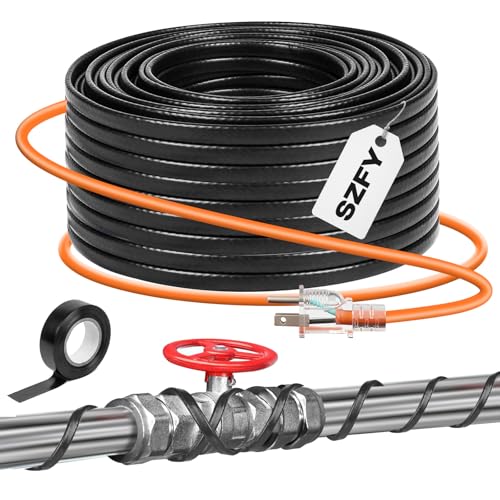
Product: 3FT–200FT Heat Tape for Water Pipes, -40°F Deicing Cable. This model supports a wide length range and is designed for roofs and gutters as well as plumbing. It offers high heat output (5W/FT in some variants) and a robust copper core for efficient heating. Best for multi-scenario use (roof, gutter, exterior pipes). Caution: Some models use higher wattage; verify total run heat load to prevent overconsumption.
JDZKOMKE Pipe Heating Cable

Product: JDZKOMKE 50FT Pipe Heating Cable for Pipe Freeze Protection. It covers 3FT-200FT coverage with -40°F protection at 5W/FT. It uses a pure copper core, aluminum shielding, and a weather-resistant outer jacket. Best for metal and plastic pipes, including exposed or buried runs in challenging climates. Caution: Not suitable for use on fuel lines or gutters where water flow is not present.
Radiant Solutions Company Universal Hardwire Kit

Product: UL Listed Universal Hardwire Power Connection Kit for 10-13mm self-regulating heat cable or heat tape, designed for gutter and roofing protection. Best for custom installations where a direct hardwired connection into a junction box is needed. Caution: Installation requires electrical knowledge; improper wiring could pose hazards. This kit works best with compatible heat cables and brand spools.
Buying Guide: Key Considerations For Selecting UL Listed Heat Tape
- Certifications: Prioritize UL and ETL listed products for safety and compliance with electrical standards in the United States.
- Pipe Type Compatibility: Ensure the heat tape is suitable for both metal and plastic pipes if you have mixed runs.
- Length And Wattage: Match the length to the exposure area (pipes, roofs, gutters) and verify wattage per foot to avoid overheating or high energy use.
- Self-Regulation vs. Thermostat: Self-regulating tapes adjust heat automatically; thermostats offer fixed temperatures. Choose based on climate extremes and installation location.
- Safety Features: Look for built-in GFCI on longer models or additional safety accessories to protect damp or outdoor installations.
- Exterior Conditions: For outdoor or UV-exposed areas, select tapes with UV resistance and weatherproof outer jackets.
- Installation Simplicity: Consider kits that include necessary connectors, plugs, or hardwire kits to fit your preferred setup.
- Gaps and Overheat Risk: Plan coverage to avoid bare spots that may freeze; ensure sufficient overlap at joints and terminations.
Frequently Asked Questions
- What is UL-listed heat tape used for?
– It is used to prevent freezing of water pipes and protect roofs or gutters from ice buildup in freezing climates, with safety certifications to meet electrical standards. - Should I use self-regulating tape or a thermostatically controlled one?
– Self-regulating tape helps avoid overheating automatically; thermostatic options offer consistent temperature control, which can be preferable in very cold or sensitive installations. - Can heat tape be used on both metal and plastic pipes?
– Yes, many models are designed for both; verify the product specs to confirm compatibility with copper, PVC, PEX, or other pipe materials. - Is a GFCI outlet necessary for outdoor installations?
– A GFCI feature or outlet is strongly recommended in damp or outdoor locations to reduce shock risk. - Do I need a hardwire kit for heat tape installations?
– A hardwire kit is useful for in-wall or junction-box installations and can provide a neater, safer connection if you have electrical training. - How do I determine the correct length of heat tape?
– Measure the vulnerable pipe run and add extra length for connections and protection at ends; longer runs may require multiple sections with thermostat control.