Best Twin Arc Fault Breaker Guides: Top Picks for Residential Safety
Looking for the right twin arc fault breaker to protect your home’s electrical system? This guide highlights five compact, dual-function and tandem arc fault breakers that balance space savings with reliable protection. Suitable for homeowners upgrading panels or electricians optimizing installations, these options emphasize parallel and series arc detection, plug-in or tandem designs, and easy installation. The following selections are best for different setups: space-conscious multi-circuit panels, standard 120V residential panels, and installations requiring AFCI/GFCI or tandem configurations.
Summary of selected products:
- Siemens 15A 120V 1-Pole Tandem CAFCI Type QTAN — best for tight spaces with two circuits in one slot.
- Siemens 20A 120V 1-Pole Tandem CAFCI Type QTA — better for two 20A circuits in limited panel space.
- GE (ABB) Combination Arc Fault Interrupter THQL1120AF2S — best for NEC-aligned parallel and series arc protection in modern panels.
- Siemens Q215AFC 2-Pole 120V AFCI — best for two-pole protection in standard 240V-ready setups.
- ABB Q-Line THQL1120DFP — best for units requiring dual AFCI + GFCI in single-pole 20A applications.
Siemens 15A 120V 1-Pole Tandem CAFCI QTAN

Best for two circuits in a single space. The QTAN tandem design feeds two circuits from one breaker body, helping maximize panel capacity. Features Insta-wire connectors for quick setup and LED trip indicators for troubleshooting. Choose this if your panel has tandem slots and you need compact AFCI protection for two separate circuits in one position. Caution: tandem breakers must be compatible with your panel’s listed configurations to avoid improper fit or tripping anomalies.
Siemens 20A 120V 1-Pole Tandem CAFCI QTA

Best for two 20A circuits in a tight panel. This tandem CAFCI includes two 1-Pole 20 Amp breakers that share a single body, saving space while delivering arc-fault protection. The LED trip indicators support quick fault location. Best for panels with tandem-capable slots and when you need dual 20A AFCI protection in a compact form. Caution: ensure your panel accepts tandem 1-Pole units of this type to prevent installation issues.
GE (ABB) THQL1120AF2S Combination AFCI

Best for advanced arc fault protection in NEC-compliant residential systems. This 20A AFCI single-pole unit detects both parallel and series arcs, enhancing fire-prevention coverage. It fits Q-Line-style load centers with a compact 1-inch width per pole and simple plug-in mounting. Choose this if you want robust arc protection in a compact, plug-in format that aligns with contemporary ABB/GE panel ecosystems. Caution: compatibility with your specific panel model should be verified before purchase.
Siemens Q215AFC 2-Pole 120V AFCI

Best for two-pole protection in standard 120/240V layouts. The Q215AFC is a 2-Pole AFCI with plug-in type installation, providing arc fault detection across both poles. This is a solid choice when a 2-Pole AFCI device is required for shared circuits or multi-wire branch circuits. Limitation: as a 2-Pole design, it occupies a full two adjacent slots, which may affect panel spacing in highly dense installations.
Siemens 15 Amp 1-Pole AFCI Plug-On Neutral

Best for easier AFCI installation without pigtails. This 15A 1-Pole AFCI uses a plug-on neutral design; it is suitable for standard circuits where a single-pole AFCI is required and a simplified neutral connection is preferred. It supports 10,000 AIC and HACR/SWD ratings. Choose this if you want straightforward wiring and a compact 15A option, but verify that your panel supports plug-on neutral configurations.
Siemens 20 Amp 2-Pole AFCI Plug-On Neutral

Best for two-pole AFCI protection with plug-on neutral design. This 20A, 2-Pole unit fits standard two-slot placements in many panels and supports clean installation without pigtails. It is HACR and SWD rated for modern safety requirements. Caution: confirm that your panel accepts plug-on neutral AFCI devices in a two-pole configuration before purchasing.
ABB Q-Line THQL1120AFP2 AFCI/DFP
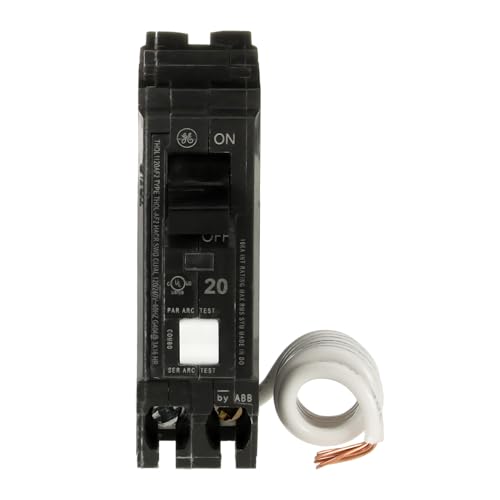
Best for combined AFCI protection with a single-pole, 20A setup. The AFP2 variant emphasizes advanced arc fault protection and dual-function reliability. It features a plug-in mount and robust construction to guard residential circuits against arc faults. Limitation: check your panel’s compatibility with ABB Q-Line single-pole AFCI units to ensure proper fit and operation.
Buying Guide: Key Factors for Choosing a Twin Arc Fault Breaker
- Panel compatibility: Confirm that your electrical panel accepts tandem, plug-on neutral, or Q-Line style breakers. Some panels require specific models or prohibit tandem devices.
- AFCI vs. AFCI/GFCI: Decide whether you need only arc fault protection or combined arc fault and ground fault protection. GFCI functionality adds protection against ground faults but may limit compatibility in some panels.
- Circuit requirements: Match amp rating (15A, 20A) to the circuit loads. Tandem units are useful for saving space but must be applied to appropriate circuits as allowed by the panel’s labeling.
- Installation design: Consider plug-on neutral versus pigtail configurations. Plug-on neutral designs simplify wiring but require compatible neutrals in the panel.
- Space and layout: Two-pole AFCIs occupy two slots. If panel space is tight, tandem or compact designs can help but verify slot availability and listing.
- Safety and standards: Look for devices that meet NEC requirements for arc fault protection and that fit modern residential installations.
Frequently Asked Questions
- What is an AFCI breaker? – An arc fault circuit interrupter detects dangerous arcing conditions in electrical circuits and disconnects power to prevent fires.
- Do tandem AFCIs require a special panel? – Some panels allow tandem AFCIs in specific slots; check your panel’s labeling and compatibility chart.
- What is the difference between AFCI and AFCI/GFCI? – AFCI provides arc fault protection; AFCI/GFCI adds ground fault protection as well.
- Is a two-pole AFCI necessary for multi-wire branch circuits? – Yes, two-pole AFCIs protect both conductors in shared circuits and are commonly used for MWBC setups.
- Can I replace a standard breaker with an AFCI in an existing panel? – In many cases, yes, but you must verify panel compatibility, wiring requirements, and local electrical codes.
- Do plug-on neutral AFCIs require a different installation approach? – They simplify wiring by eliminating pigtails in some configurations, but ensure the neutral connection is properly routed in the panel.