Best Mobile Camper Lithium Batteries for Off‑Grid RV Power
Answering the needs of campers and RV owners, these lithium batteries deliver safer, lighter, and longer-lasting power for mobile living. They are best for different buyers: compact systems for small rigs, mid‑size packs for upgraded campers, and larger banks for full‑time off‑grid use. The following five picks balance capacity, safety, and expandability to help you choose the right setup for your mobile lifestyle.
Summary of selected products:
| Product | Capacity | Best For | Key Benefit |
|---|---|---|---|
| SEFEPODER 12V 20Ah (2 Pack) | 40Ah total (2x20Ah) | Lightweight, small rigs, backup power | Low weight, built‑in BMS, 4000+ cycles |
| ECO-WORTHY 12V 280Ah | 280Ah | Mid‑size RVs, off‑grid cabins | Robust metal case, 4 mounting feet |
| GoKwh 12V 320Ah | 320Ah | Extended off‑grid RV systems | Bluetooth monitoring, expandable 4P4S |
| VEMDIA 12V 100Ah | 100Ah | Compact upgrades, trolling motors | Smart 100A BMS, low temp cut‑off |
| LiTime 12V 100Ah | 100Ah | Group 24/27/31 fit, mobile monitoring | Bluetooth monitoring, all‑weather protection |
Sefepoder 12V 20Ah Dual Pack — Lightweight Power

Features and what it means for you: These LiFePO4 cells offer high energy density with a long cycle life and no memory effect. The built‑in BMS protects against overcharge, overdischarge, overcurrent, and short circuits. The pack is about 1/3 the weight of a comparable lead‑acid setup, making it a strong choice for small campers or as a lightweight secondary bank.
Who it’s best for: Ideal for tiny campers, toy conversions, or as a portable secondary power unit. If you need a compact, safe pack with easy wiring and robust cycle life, this is a practical choice. Caution: Limited single‑unit capacity means you’ll likely need multiple packs for higher power loads.
Why selected: It demonstrates the core advantages of lithium for mobile use: safety, longevity, and easy integration in cramped spaces. The ability to connect in series or parallel (up to four in series) supports modular upgrades as you expand your system.
Eco‑Worthy 280Ah Metal‑Case LiFePO4 Battery

Features and what it means for you: This 280Ah battery comes in a rugged metal enclosure, offering enhanced heat resistance and fire protection. It includes a low‑voltage, one‑touch output switch for safer installation and maintenance. The design minimizes the need for separate battery boxes and includes mounting feet for straightforward RV or camper installation.
Who it’s best for: Suitable for mid‑size RVs or campers needing a substantial, space‑savvy energy store with solid safety features. Caution: The exterior is shipped with random label styles; internal performance remains the same regardless of the label.
Why selected: It provides higher capacity in a compact footprint with built‑in protection and easy mounting—perfect for upgrading standard lead‑acid setups in a space‑constrained camper.
GoKwh 320Ah LiFePO4 With Bluetooth Monitoring
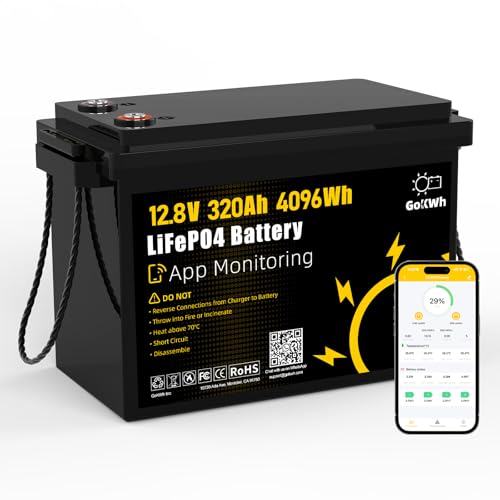
Features and what it means for you: Real‑time Bluetooth monitoring lets you track battery level, voltage, current, and temperature from your phone. A 4096Wh capacity supports RV lights, portable refrigerators, fans, and laptops. The system is expandable to larger configurations with a 4P4S setup, offering scalable energy storage for longer off‑grid stays.
Who it’s best for: Best for families or adventurers planning longer off‑grid trips who want remote monitoring and scalable expansion. Caution: Bluetooth setup requires a compatible app and smartphone; ensure it aligns with your management preferences.
Why selected: Its strong monitoring features and expandability make it a solid middle‑to‑large system choice for RV enthusiasts looking for reliability and future growth.
VEMDIA 12V 100Ah LiFePO4 With Smart BMS

Features and what it means for you: This 100Ah pack includes an upgraded 100A Smart BMS and low‑temperature cut‑off to minimize charging at freezing temperatures. It is 12V and weighs about 24 lbs, meaning easy handling and mounting for boat, RV, or home backup use. It’s designed for reliability in all seasons.
Who it’s best for: Great for compact upgrades in RVs or marine setups where weight and space savings matter. Caution: While feature‑rich, it is not intended for engine starting or heavy high‑current loads beyond its BMS ratings.
Why selected: It balances safety features with a lighter footprint, making it a flexible option for upgrading existing power banks without a full system overhaul.
LiTime 100Ah Group 24 LiFePO4 Battery

Features and what it means for you: This 12V battery supports Group 24/27/31 fits and includes Bluetooth 5.0 monitoring. It’s designed for all‑weather operation with a 0°F low‑temperature cutoff to protect the cells in cold conditions. It provides 1280Wh of usable energy, sufficient for essential RV appliances and off‑grid gear.
Who it’s best for: Ideal for RVs upgrading to lithium in smaller configurations or for practical trolling motor augmentations. Caution: Bluetooth monitoring is app‑dependent; ensure compatibility with your device ecosystem before purchase.
Why selected: It combines a versatile fit with smart monitoring and weather protection, making it a convenient, scalable option for many mobile setups.
Buying Guide
What capacity do I actually need for a mobile camper?
Capacity depends on your load profile. For weekend trips with essential loads, smaller packs (50–120Ah) can suffice. For full‑time off‑grid or heavier loads (air conditioner, fridge, water heater), consider 200–320Ah or more, with plans for future expansion.
Should I prioritize safety features or high energy density?
Safety features like BMS protection, low‑temperature cut‑off, and proper enclosure are essential for mobile use. Higher energy density saves space but may require careful thermal management. Balance both for reliable performance in variable conditions.
What about monitoring and expandability?
Bluetooth or app monitoring helps manage SOC, voltage, and temperature remotely. Expandability (4P4S or more) enables growth as your power needs rise or as you add solar and other energy sources.
How important is weight and installation ease?
Weight affects towing efficiency and mounting options. Lighter units make handling easier during installation and replacement. Look for batteries with mounting feet or modular, stackable designs for simple installation in RVs or campers.
Are metal enclosures worth it for safety?
Metal enclosures improve heat resistance and fire protection, especially in enclosed vehicle bays. If you frequently operate in high‑heat environments or pack batteries in tight spaces, metal‑case designs add a safety margin.
What should I know about charging and compatibility?
Use lithium‑specific chargers and follow recommended voltage profiles (often 14.4–14.6V for LiFePO4). Some models support solar controllers or DC‑DC chargers; ensure your charging setup matches the battery’s requirements and temperature protections.
Practical buyer tips
- Match capacity to your expected daily consumption and desired autonomy.
- Verify space, weight, and mounting options in your RV or camper.
- Prefer batteries with built‑in BMS and clear low‑temperature protections.
- Plan for expansion with modules that allow parallel/series configurations.
FAQ
- Q: Can I mix different lithium brands in one system? A: Mixing brands is generally discouraged due to differences in BMS logic, charging profiles, and cycle life. If mixing, do so only with compatible chemistries and after consulting the manufacturer.
- Q: Do these batteries require annual maintenance? A: LiFePO4 batteries are typically maintenance‑free beyond ensuring proper charging and safe storage temperatures. No electrolyte checks or watering required.
- Q: Can I use a standard lead‑acid charger? A: It’s better to use a charger specifically designed for LiFePO4 chemistries to avoid undercharging or overcharging, which can shorten life.
- Q: How do I know if a battery is expandable? A: Look for explicit 4P4S (or higher) compatibility and a documented wiring method for series/parallel expansion with compatible packs.
- Q: What’s the advantage of Bluetooth monitoring? A: It lets you monitor critical parameters from your phone, reducing the risk of unexpected shutdowns while camping or traveling off‑grid.