Best Tankless Electric Water Heaters for Home Use
Answering the search for reliable, space-saving hot water solutions, this guide highlights top-rated electric tankless water heaters. These models are best for homeowners seeking on-demand hot water, compact installation, and energy efficiency. Choose based on flow needs, electrical capacity, and the number of fixtures you want to serve. The table below provides quick comparisons to help you decide which unit fits your home.
| Product | Max GPM | Best For | Key Benefit | Limitations |
|---|---|---|---|---|
| Rheem 18kW 240V | Up to 4.4 | Medium homes with higher hot water demand | Self-modulating power for efficient use | Requires sufficient electrical service |
| EcoSmart ECO 11 | Up to 1-2? (depends on climate) | Small apartments or point-of-use | Very compact, excellent energy efficiency | Lower flow for larger homes |
| Rheem RTEX-24 24kW | Up to ~5-6 | Homes needing higher simultaneous supply | Strong performance with 1-degree temp control | Higher electrical load |
| Orbek 14kW | Up to 3.38 | 2 fixtures in moderate homes | Clear installation guidance and efficiency | Requires proper breaker capacity |
| WINTEMP 27kW | Up to 6.3 | 2-3 bathrooms in mild climates | WiFi-ready control and adjustable flow | High amperage and panel space needed |
Note: GPM estimates depend on incoming water temperature and climate. Always verify electrical service capacity and panel space before installation. The right model balances your hot-water demand with your home’s electrical capability.
Rheem 18kW 240V Tankless Electric Water Heater
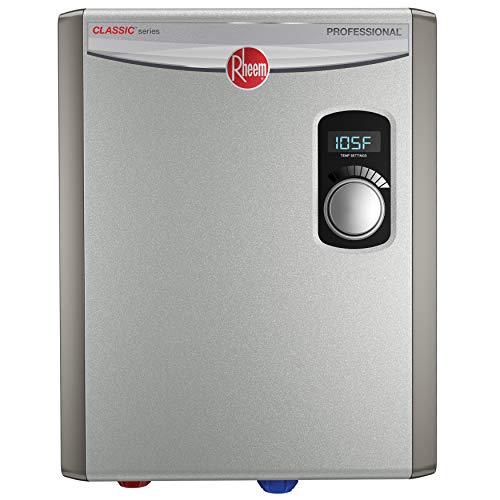
Best for: Medium homes with higher hot water demand. This unit uses external digital thermostatic control with LED display and self-modulating power to meet varying hot water needs. It features durable copper immersion heating elements and field serviceability. Expected flow rate is up to 4.4 GPM. It’s well-suited for households where multiple fixtures may draw hot water simultaneously.
Why selected: Balanced power and control provide consistent temperatures, plus modular repairability keeps maintenance straightforward. The self-modulation helps prevent oversizing and saves energy when demand is low.
Caution: Ensure your electrical panel can accommodate a 18kW load (typical 240V, high-amp circuit required). In homes with limited service, this unit may require panel upgrades.
EcoSmart ECO 11 Electric Tankless Water Heater

Best for: Small apartments or point-of-use applications with modest hot-water needs. This model is renowned for its patented self-modulating technology, ensuring continuous hot water within 1 degree of the setpoint and minimal energy waste. It is a compact unit, about 11.5 x 8 x 3.75 inches, and claims to be 99% energy efficient by heating water only when called.
Why selected: Its size and efficiency make it ideal where space is at a premium and fewer simultaneous fixtures are used. It excels in single-family apartments or guest bathrooms where space is limited.
Caution: Its maximum flow is best for one or two fixtures in moderate climates; performance drops as incoming water temperature falls or when multiple outlets are drawn simultaneously.
Rheem RTEX-24 24kW Tankless Water Heater
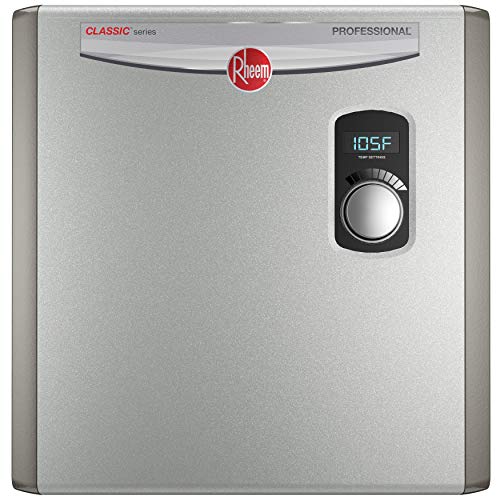
Best for: Homes that require higher simultaneous hot-water supply. With 24kW, this model provides robust performance and offers a 1-degree adjustable digital temperature display. It requires a substantial electrical service and space in the breaker panel, typically with 3 x 40-amp breakers and a 200-amp service as a recommendation.
Why selected: Strong performance for whole-home use, especially in cooler climates where more energy is needed to achieve a desired temperature rise. The on/off dial and precise temperature control aid in maintaining steady warmth.
Caution: Installation demands careful electrical planning; ensure your home can accommodate the electrical load and space for panel wiring. Improper sizing may lead to tripping or inadequate hot water at peak times.
Orbek 14kW Tankless Water Heater

Best for: Homes needing efficient hot water for two to three fixtures in milder climates. This 14kW unit provides up to 3.38 GPM and includes guidance on electrical panel requirements, including a 240V/60A two-pole breaker and proper wiring. It emphasizes reduced energy use with advanced water-electricity separation technology.
Why selected: It offers a practical balance between power, space, and cost, making it suitable for mid-sized homes where a full-house system isn’t necessary.
Caution: Verify that your circuit capacity and breakers match the unit’s requirements. Under-sizing can cause inadequate performance and nuisance trips.
CAMPLUX Tankless Water Heater Electric 6kW

Best for: Under-sink installations in small spaces or single fixtures, such as a bathroom sink or kitchen. The CAMPLUX unit is a compact, CSA-approved heater with temperature display and self-modulating technology for energy efficiency. It is particularly suitable for apartments or offices where only a single hot-water point is needed.
Why selected: Space-saving design and self-modulating operation help lower energy use while reliably delivering hot water to a single outlet. It’s easy to install in tight areas.
Caution: Lower maximum flow means limiting use to one fixture at a time; not ideal for simultaneous multiple outlets in a larger home.
WINTEMP 27kW Tankless Electric Heater

Best for: Whole-house hot water for 2–3 bathrooms in moderate climates, with WiFi-enabled control and a high max load. The unit requires a robust electrical service and specific breaker wiring (three 40-amp double-pole breakers). It aims to deliver up to 6.5 GPM with automatic energy management for efficiency.
Why selected: Its high capacity makes it suitable for larger homes where multiple fixtures draw hot water simultaneously. The smart features support modern home automation and monitoring.
Caution: This unit demands substantial electrical infrastructure; verify panel space and service rating before purchasing.
Buying Guide
What to consider before choosing a tankless electric heater:
- Hot water demand: Count the number of fixtures you want to serve at once and the peak GPM you’ll need. Higher GPM requires more power and larger electrical service.
- Electrical service: Check your main service amperage and the available space in the breaker panel. Many high-capacity models need 200 amps or more and multiple large breakers.
- Space and installation location: Tankless units vary in size. Consider where you’ll mount the unit—wall, closet, or under-sink—and whether you need a point-of-use setup.
- Energy efficiency: Self-modulating models adjust power to real-time demand, reducing energy waste. Look for units that heat water only when needed.
- Water temperature and climate: Incoming water temperature affects temperature rise and flow at your location. Colder climates may require higher-capacity units for the same flow.
- Maintenance and accessibility: Field serviceability and ease of component replacement can influence long-term costs and downtime.
- Installation considerations: Some models require professional electrical work, drainage considerations, and proper venting or exhaust planning where applicable.
Frequently Asked Questions
- Do I need an electrician to install a tankless electric water heater?
– Yes. Installation often involves high-current circuits, proper grounding, and adherence to code requirements. A licensed electrician is typically required. - What is the typical life expectancy of these heaters?
– Tankless electric units generally offer many years of service when properly installed and maintained, though exact lifespans vary by model and usage. - Can a tankless heater supply hot water to multiple fixtures at once?
– It depends on the unit’s GPM rating and your climate. High-demand homes may need larger units or multiple units to serve several fixtures simultaneously. - Will upgrading to a tankless unit save energy?
– Most models are more energy-efficient than traditional tanks because they heat water only on demand, avoiding standby heat loss. - How do I determine the right size for my home?
– Calculate peak demand by listing all fixtures likely to run at the same time and compare against the unit’s maximum GPM and climate-adjusted performance. - Is there a recommended sequence for installation?
– Plan electrical service upgrades first if needed, then determine the best placement for the unit and any point-of-use locations to minimize piping and heat losses.