Best T12 High Output Ballast Options for Efficient Fluorescent Lighting
When upgrading or maintaining T12 high-output fluorescent lighting, selecting a reliable ballast is essential for consistent performance and energy efficiency. The following products are designed to operate high-output T12 lamps, provide robust protection features, and support commercial and industrial lighting needs. This guide highlights five well-regarded options from reputable brands, helping facility managers and electricians compare compatibility, efficiency, and installation considerations.
| Product | Brand | Lamps Supported | Voltage Range | |
|---|---|---|---|---|
| Robertson PSB296T12HOMV Ballast | Robertson Worldwide | 1-2 F96T12/HO | 120–277V | Programmed Start |
| REL B-2S40-N | Philips | T12 Lamps | 120V | Electronic |
| Advance ISB-043214-E | Advance Ballast | 4-Lamp T12/HO | 120–277V | Instant Start |
| OHLECTRIC Replacement for Keystone KTEB-220-1-TP-EMI | OHLECTRIC | 2 Lamp T12 | 120V | Instant Start |
| GE 74472 – GE-240-RS-MV-N | GE | T12 Fluorescent | Not Specified | Electronic / Replacement |
Note: The table provides quick reference for lamp compatibility, voltage and ballast type. Always verify compatibility with your existing fixtures and local electrical codes before ordering.
Robertson PSB296T12HOMV Ballast—1 or 2 Lamp Electronic Ballast

The Robertson PSB296T12HOMV ballast is designed for High Output T12 lamps, supporting 1 or 2 F96T12/HO lamps (including F96T12HO/ES, F72T12/HO, F60T12/HO, and F48T12/HO). It is suitable for large facilities requiring durable, high-output lighting. Key protections include internal surge protection, end-of-lamp-life safeguards, and intrinsic thermal protection for reliable operation across temperatures. With a sound rating of A, it remains quiet in occupied spaces. The unit meets safety and efficiency standards (UL, CSA) and supports high power factor and low THD for energy-conscious installations. Programming Start reduces lamp wear by preheating, which can extend lamp life in sensor-driven environments. This ballast is positioned for 8-foot commercial and industrial applications where dependability matters.
Features cited in product notes emphasize energy efficiency, compliance with ANSI standards, and EMI/RFI suitability under FCC Part 18 Class B limits. Robertson emphasizes in-house design and manufacturing, providing direct technical support and eliminating branding ambiguities. The programming start feature is particularly beneficial for frequent on/off cycling, helping to reduce lamp wear and optimize lifecycle costs.
Philips Advance RELB-2S40-N Electronic Ballast

The RELB-2S40-N is a Philips Advance electronic ballast designed for T12 lamps, offered in a compact package suitable for a range of commercial lighting retrofits. While product notes in the listing reference broader Philips Advance branding, essential considerations include compatibility with T12 lamp configurations, 120V operation, and efficiency characteristics typical of electronic ballasts. The product listing also mentions integration with standard electrical infrastructures and the Siemens-style reliability typical of Philips products. This ballast is positioned for noise-free operation, with emphasis on consistent light output and reduced energy consumption compared to older magnetic ballast systems.
Key points to evaluate include installation compatibility with existing fixtures, ballast factor, and potential dimming or sensor integration. Philips Advance products are known for robust technical support, long-term supply, and adherence to industry standards, making them a common choice for refurbishments in offices, schools, and other commercial settings.
Advance ISB-043214-E Electronic Sign Ballast

The Advance ISB-043214-E is a four-lamp electronic ballast designed for F96T12HO and related 120–277V configurations. This model emphasizes instant start operation and compact electronic design, suitable for sign and display lighting applications where reliable startup and quiet operation are essential. Its broad voltage range supports varied installation environments, while its four-lamp capacity helps achieve higher light output from a single ballast unit. The product notes highlight its relevance for signage applications, but it can also serve general T12 HO lighting needs where instant start and energy efficiency matter.
Considerations include ensuring compatible wiring, mounting options, and the ability to sustain energy savings through modern lighting controls. Electronic ballasts like the ISB-043214-E often offer improved energy efficiency, reduced heat, and quieter operation compared to older magnetic ballasts, making them a favorable choice for retrofit projects and new installations alike.
OHLECTRIC Replacement for Keystone KTEB-220-1-TP-EMI

OHLECTRIC offers a T12 electronic ballast replacement designed for two-lamp configurations, input at 120V with instant start operation, and a reported ballast factor of 0.88. The UL-Approved designation supports safety compliance for installation in commercial environments. The product emphasizes efficient operation, flicker-free power regulation, and durable performance across typical office or industrial settings where T12 fixtures are still in use. Compatibility with Keystone fixtures points to a straightforward retrofit option for facilities upgrading legacy lighting without replacing entire fixtures.
Practical considerations include verifying lamp compatibility (T12 HO), balancing ballast factor with desired light output, and ensuring the EMI/EMC compliance meets local electrical codes. For facilities seeking a cost-effective upgrade path, OHLECTRIC’s model offers a straightforward path to energy efficiency with a familiar two-lamp configuration.
GE 74472 – GE-240-RS-MV-N T12 Fluorescent Ballast
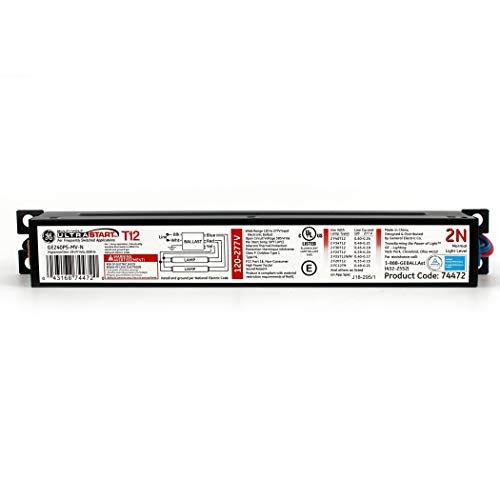
The GE 74472 ballast is positioned as a replacement option for magnetic T12 ballasts with modern electronic performance. It emphasizes quieter operation compared to older magnetic units and offers energy-saving potential by providing compatible wiring and mounting similar to standard T12 ballast setups. This GE MVP line is designed for replacement during maintenance or retrofits and supports energy efficiency improvements, with compatibility for standard and energy-saving lamp configurations. The product notes highlight its dual compatibility and the ability to sustain reliable light output in a range of settings.
From a purchasing perspective, GE ballasts are commonly chosen for broad compatibility with existing fixtures and straightforward replacements. Important factors include ballast factor, lamp compatibility, and the ability to deliver consistent performance while reducing noise and energy usage. This makes the GE 74472 a practical option for schools, healthcare facilities, and retail environments updating older fluorescent lighting.
Buying Guide: Key Considerations For T12 High Output Ballasts
- Compatibility with lamps: Ensure the ballast supports your T12 high-output lamps (e.g., F96T12/HO, F48T12/HO) and the number of lamps per ballast (1–4 lamps depending on model).
- Ballast type: Decide between electronic and magnetic ballasts. Electronic ballasts typically offer higher efficiency, quieter operation, and better energy management, while magnetic ballasts can be more robust for certain retrofits and simpler wiring.
- Voltage and frequency: Verify the ballast voltage range (e.g., 120–277V) and standard 50/60 Hz operation to match your location and fixture.
- Start method: Consider programmed or instant start options. Programmed Start reduces lamp wear in frequent on/off situations; Instant Start enables quick ignition but may affect lamp life in some cycling scenarios.
- Energy efficiency and power factor: Look for high power factor and low total harmonic distortion (THD) for better efficiency and reduced electrical stress on the grid.
- Safety certifications: UL, CSA, and EMI/RFI compliance indicate suitability for commercial use and adherence to industry standards.
- Wiring and mounting: Check mounting compatibility, wiring diagrams, and fixture compatibility to streamline installation and retrofit projects.
- Noise and heat management: Electronic ballasts generally run cooler and quieter, which is advantageous for occupied spaces and extended lamp life.
- Lifecycle and support: Consider brands with robust technical support, local availability of replacement parts, and documented warranty coverage for ongoing maintenance.
- Future-proofing: If planning renovations, assess whether the ballast supports higher-efficiency lamp types or control integrations (dimmable, occupancy sensors, or smart lighting controls).
In summary, selecting a T12 high-output ballast involves balancing lamp compatibility, ballast type, efficiency, and installation requirements. Each option above offers distinct advantages for different settings—from office and storefront retrofits to industrial facilities—while aligning with safety standards and energy goals.