Best Solar Panels for Off-Grid Power and Outdoor Use
Answering the common search: you’re looking for reliable solar panels that perform well in RVs, boats, cabins, and outdoor gear setups. This guide highlights five top options suited for different buyers—from high-efficiency roof installs to portable, rugged panels for travel. Each pick comes with a clear best-use case, along with practical considerations to help you compare performance, durability, and installation flexibility.
| Product | Best For | Key Benefit |
|---|---|---|
| Callsun N-Type 16BB 400W | Off-grid RVs and Boats | High efficiency and bifacial design for more energy |
| Callsun 200W Flexible Kit | Curved Surfaces and Stealth Install | Ultra-flexible, low-profile installation |
| Renogy 200W N-Type | Vans and Cabins | Compact footprint with strong 25% cell efficiency |
| SunJack Foldable 25W | Camping and Travel | Portable and weatherproof for quick setups |
| GRECELL 100W Portable Panel | Power Stations and Emergency Use | Broad compatibility and high efficiency |
Callsun N-Type 16BB 400W Dual-Module Panel

Best for high-output off-grid systems. This Callsun setup uses N-Type 16BB cells and a bifacial design, boosting efficiency and total energy harvest. The dual-module parallel design helps maintain output if one section is shaded, improving reliability in variable environments. Suitable for RV, van, marine, or home rooftop installations where space is available and shade is a concern. Caution: heavier and wider than compact panels, requiring adequate mounting surface and wind load considerations.
KOSIMI Solar Panel Powered Hat With Fan

Best for hands-free cooling during outdoor activities. This is a wearable solar solution rather than a traditional panel, designed to keep you cooler while camping, fishing, or hiking. The solar-powered fan provides a refreshing breeze and is best for individual use where a compact, portable cooling option is valued over peak charging capability. Limitations include lower energy output and the need for direct sun for optimal performance.
XSGJ Solar Hat With Dual Fans

Best for long outdoor sessions where cooling is a priority. The hat combines solar-powered or USB-charged fans with sun protection. It’s well-suited for hikers, gardeners, and festival-goers who want hands-free cooling and shade. Caution: cooling performance depends on sunlight; for charging devices, use USB charging as a supplemental option.
Callsun 200W Flexible Solar Panel Kit

Best for curved surfaces and stealth installations. This all-black, ultra-thin kit offers up to 240° flexibility, making it suitable for RVs, boats, or vans with curved roofs. The ETFE-coated modules provide durability and a lower-profile look. Limitation: flexible panels can be more sensitive to abrasion and require careful mounting to avoid damage over time.
Renogy 200W N-Type Solar Panel

Best for compact vans and cabins needing reliable 12V/24V power. Renogy’s 200W N-Type panel features 25% efficiency and a smaller, lighter design. The 24V system efficiency helps minimize current losses and can pair with a range of batteries. Choose this for strong performance in tight spaces. Caution: ensure mounting area is wind-sufficient and protected from heavy hail or debris.
GRECELL 100W Portable Panel
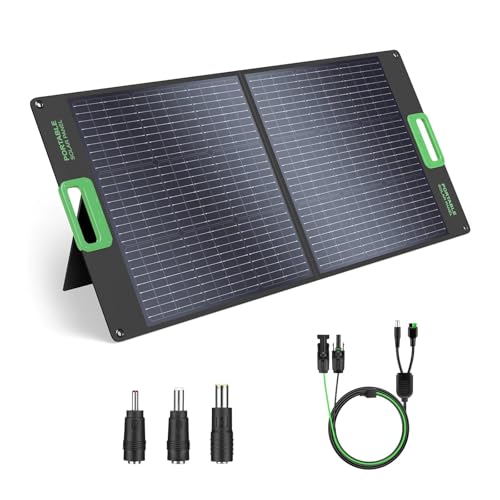
Best for emergency power stations and small generators. This 100W foldable panel offers up to 23.5% efficiency and comes with multiple connectors for compatibility with various portable power stations. It’s ideal for camping, vans, and emergency kits. Limitation: lower wattage means slower charging of larger power banks or high-demand devices.
Buying Guide
- Power needs: Match panel wattage to your typical daily energy use and available installation space.
- Type and efficiency: N-Type cells with 16BB busbars deliver higher efficiency and reliability, especially in hot climates.
- Form factor: Do you need a rigid roof panel or a flexible/portable option for curved surfaces and travel?
- Shading resilience: Dual-module or bifacial designs reduce power loss in partial shade.
- Durability and weather: ETFE coatings and IP ratings improve longevity in outdoor conditions.
- Compatibility: Ensure connectors and voltage (12V/24V) align with your battery and power system.
- Portability vs. permanence: Weigh foldable or wearable options against permanent roof mounts based on usage patterns.
FAQ
- Q: What is the advantage of N-Type solar panels? A: N-Type cells offer higher efficiency and better reliability, with fewer microcracks and improved performance in high temperatures.
- Q: Is a bifacial panel worth it for RV use? A: It can be, especially in locations with reflective surfaces, as rear-side light adds extra energy output.
- Q: Should I choose flexible panels for a van? A: Yes if you need a low-profile, curved-surface install, but plan for potentially higher cost and careful mounting.
- Q: Can portable panels charge a power station? A: Yes, portable panels with the appropriate connectors are designed to charge portable power stations and batteries.
- Q: How do shading-tolerant designs help? A: Designs like dual-module or anti-shade configurations maintain output when parts of the panel are blocked.
- Q: What maintenance is needed for outdoor panels? A: Regular cleaning to remove dirt, debris, and bird droppings; inspect mounts for loose hardware after storms.