Best in Line Bathroom Extractor Fans for Quiet, Effective Ventilation
Answering the common buyer question: which inline bathroom extractor fan delivers strong airflow with minimal noise for bathrooms, kitchens, garages, or attics? This guide highlights five well-rounded options, explaining who each one is best for and why. It’s ideal for homeowners, small business operators, and DIY installers seeking reliable, low-noise ventilation.
Quick comparison at a glance:
| Product | Best For | Airflow (CFM) | Noise Level | Remote/Controls |
|---|---|---|---|---|
| MIDCVFRUN 2 Speed Inline Fan | Small to medium baths, garages | 130–200 | Low to moderate | Bottom switch |
| Voltset 4 Inch Duct Fan (with remote) | Quiet setups, offices, labs | 280 | Quiet (30dB) | Remote control |
| Amico 8 Inch Kitchen Exhaust | High-traffic kitchens | 686 | Low noise for size | Remote, 9 speeds |
| Voltset 4″ Inline Exhaust Fan (remote) | Versatile, grow tents | 280 | Quiet (30dB) | Remote control |
| ALORAIR 6 Inch 300CFM | Attics, large bathrooms | 300 | Quiet operation | Flexible mounting |
MIDCVFRUN 2 Speed Inline Fan Review
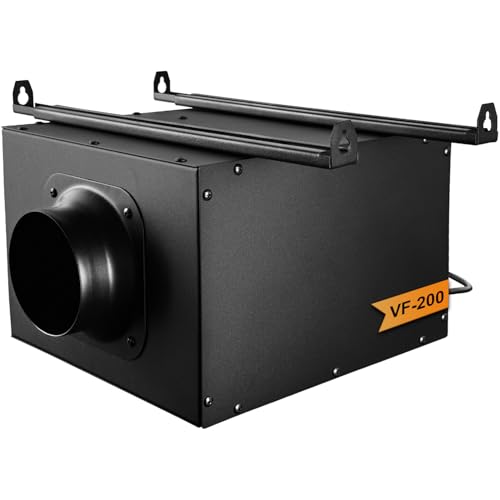
Best for mid-size bathrooms and small utility spaces. This inline fan offers 2 speed settings: 200 CFM at 1.5 Sones (high) and 130 CFM at 1.2 Sones (low). The bottom-mounted control switch makes quick adjustment simple without removing ducting. It includes a damper to minimize backflow, supporting steady airflow with reduced cross-contamination of odors. The centrifugal blower design aims for lower noise and energy use.
- 2 speed operation balances air volume and noise.
- Low-maintenance, with a damper to prevent backdrafts.
- Versatile mounting for bathrooms, garages, attics, or kitchens.
Best for buyers who want straightforward control and dependable performance in smaller spaces. Caution: check available duct length and mounting clearance, as installation can affect noise and airflow slightly.
Voltset 4 Inch Duct Fan With Remote (280 CFM)

Best for compact yet powerful needs where remote control helps manage ventilation without reaching the switch. This 4-inch inline fan delivers 280 CFM with a robust 2200 RPM motor and uses advanced noise-reduction to keep operation quiet in a workspace, kitchen, or small grow tent. Its copper motor technology supports heat dissipation and long-term durability.
- High airflow for modest to mid-sized spaces.
- Remote control with speed options simplifies installation in hard-to-reach areas.
- Quiet operation suitable for office-like environments.
Limitation: despite low noise, higher airflow may still require sound-dampening measures in particularly noisy settings.
Amico 8 Inch Kitchen Exhaust With Remote

Best for heavy kitchen ventilation. This 686 CFM unit uses a high-speed motor to rapidly expel heat, moisture, and strong cooking odors. It features a 29W EC motor for energy efficiency and a wireless remote with 9 speed settings plus an 8-hour timer for automatic shutoff. It’s designed for large spaces like kitchens, garages, or greenhouses where quick air exchange matters.
- Very high airflow to manage intense cooking conditions.
- Energy-efficient EC motor with remote control and multiple speeds.
- Timer feature adds automatic shutoff convenience.
Better for homes needing robust exhaust without sacrificing control flexibility. Caution: high airflow can require more substantial ducting and mounting considerations to minimize noise transmission to living spaces.
Voltset 4″ Inline Exhaust Fan With Remote

Best for versatile setups like bathrooms, kitchens, grow tents, or hobbyist spaces. This 4-inch inline fan provides 280 CFM with a remote for on-the-fly speed control and simple ON/OFF operation. It emphasizes quiet operation at around 30 dB while delivering stronger airflow than many compact models.
- Remote control adds convenience in tight installations.
- 30 dB operation balances power and quietness.
- Suitable for a range of spaces requiring steady ventilation.
Limitation: not all installations will achieve the same quietness, depending on ducting and mounting conditions.
ONVEAN 4-Inch Inline Duct Fan With Sensor

Best for automatic control in grow tents and bathrooms. This 4-inch unit features six speed settings and a temperature/humidity sensor with a timer remote. The smart auto-ventilation mode activates the fan when environmental conditions exceed preset levels, then reduces activity as conditions normalize. It supports energy-conscious operation with intelligent regulation.
- Smart humidity/temperature sensor with autoVent.
- Six speeds plus remote control for flexible setups.
- Optimized for grow tents, bathrooms, and attics where conditions vary.
Limitation: automatic mode depends on accurate sensor calibration and setup; miscalibration may affect performance.
LEOKV 6-Inch Exhaust Fan, 420 CFM
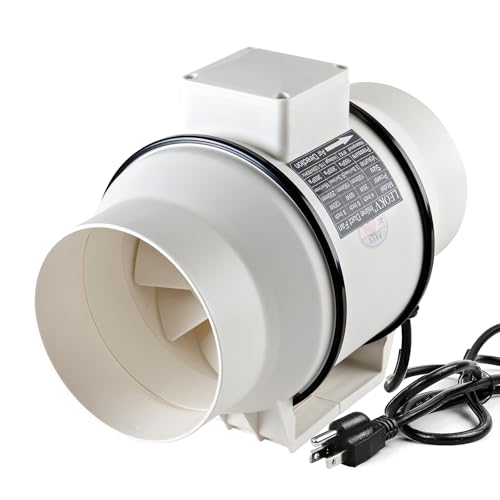
Best for large bathrooms, kitchens, or grow rooms that require robust airflow. This 6-inch mixed-flow inline fan delivers strong ventilation and is described as having durable all-copper wiring for longevity. It is designed to operate with reduced vibration and noise, making it suitable for spaces where background sound matters.
- Mixed-flow design for efficient air movement with lower noise.
- All-copper motor construction promotes durability.
- Strong airflow suitable for larger spaces.
Caution: larger diameter ducts require appropriate mounting and support to maintain stable performance and minimize sound transmission.
Buying Guide: Key Considerations For In Line Bathroom Extractor Fans
- Space and duct size: Choose a model that matches your duct diameter (4″, 6″, or larger) and the ceiling height or attic space where it will be installed.
- Airflow needs: Calculate the required CFM based on room size and moisture level. Bathrooms typically need 50 CFM per person or higher in small kitchens or garages.
- Noise tolerance: Look for dB ratings or “sones” to prioritize quieter models for living areas; EC motors often offer quieter operation and energy efficiency.
- Control options: Remote control, timers, or smart sensors can simplify use in hard-to-reach locations or spaces with automatic moisture management.
- Energy efficiency: EC brushless motors and modern designs reduce energy use, which helps long-term operating costs.
- Installation and maintenance: Consider damper quality, ease of mounting, and ease of cleaning to prevent backflow and maintain efficiency.
- Sensor features: If you need automatic ventilation, sensors for humidity and temperature can adapt to changing conditions.
- Durability and materials: Copper motors and robust housings tend to offer longer service life in demanding spaces like kitchens and garages.
Frequently Asked Questions
- What is inline bathroom extractor fan and where can I use it? Answer: An inline bathroom extractor fan is a ducted fan mounted somewhere along a ventilation duct, used to move air through a building—common in bathrooms, kitchens, attics, and garages.
- How do I choose the right CFM for a bathroom? Answer: A rough rule is 1 CFM per square foot of room area, with higher moisture areas needing more, plus consideration of user occupancy and odor sources.
- Are remote controls worth it for these fans? Answer: Yes for hard-to-reach installations, ceiling-mounted fans, or when you want convenient on-off and speed changes without accessing a switch.
- Do inline fans require professional installation? Answer: It depends on your ductwork and electrical setup; many DIYers install 4″ or 6″ models with step-by-step guides, but professional help ensures code compliance.
- What maintenance is needed? Answer: Periodic cleaning of grills and ducts, checking for backdraft dampers, and ensuring electrical connections remain secure.
- Can quieter fans still move a lot of air? Answer: Yes, many models combine efficient motors with aerodynamic blades to balance airflow and sound; matching the right size to your space is key.