Best Solar Powered Roof Vent Fans for Efficient Attic Cooling
Looking for a solar powered roof vent fan to cut attic heat without increasing your electricity bill? This guide highlights top-performing solar attic fans, comparing airflow, durability, and control features. Each selection uses off-grid solar power to vent hot air, reduce humidity, and protect roof structures. Below you’ll find concise product highlights, a quick buyer’s table, and a practical buying guide to help you choose the best option for homes, garages, or sheds.
- DC HOUSE Solar Attic Fan 32W — 1600 CFM
- iLiving Hybrid Solar Roof Attic Exhaust Fan — 1150 CFM
- DC HOUSE Solar Attic Fan — 2400–3000 CFM
- OmniPV Solar Attic Fan — 1600 CFM
- Hon&Guan Solar Attic Fan — 2000 CFM
| Product | Airflow | Key Benefit |
|---|---|---|
| DC HOUSE 32W 1600 CFM | 1600 CFM | High airflow with off-grid solar power |
| iLiving Hybrid 1150 CFM | 1150 CFM | Smart thermostat and adjustable solar panel |
| DC HOUSE 32W 2400–3000 CFM | Up to 2400–3000 CFM | Weather resistant with larger coverage |
| OmniPV 1600 CFM | 1600 CFM | Integrated thermostat and 40 W solar |
| Hon&Guan 2000 CFM | 2000 CFM | Thermostat control and multi-mode operation |
DC HOUSE Solar Attic Fan 32W 1600 CFM
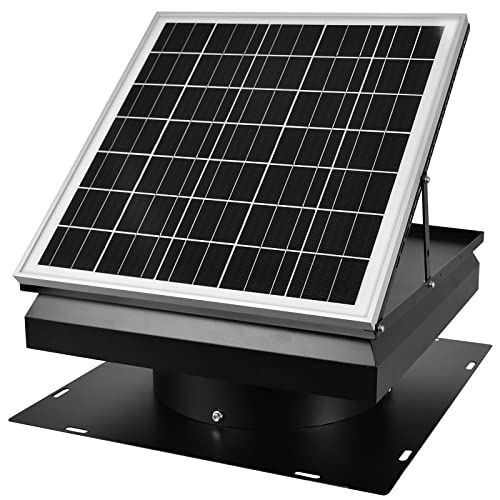
This solar attic fan uses premium monocrystalline panels to operate 100% off-grid, activating at sunrise and shutting down at dusk. It produces 1600 CFM to reduce attic temperatures and help lower the load on your cooling system. The design withstands strong winds (up to 130 mph) and extreme temperatures, making it suitable for homes, garages, and sheds. A recommended pairing with existing vents can optimize overall airflow through the building envelope.
iLiving Hybrid Ready Smart Thermostat Solar Roof Attic Exhaust Fan

Equipped with a smart thermostat and 14″ solar panel, this unit delivers 1150 CFM with coverage up to 2900 sq. ft. It features an IP68 waterproof motor and adjustable solar panel angles (0°, 15°, 30°, 45°) for optimized sun exposure. The product includes a 15-year warranty and supports up to full daylight operation with a reliable cooling effect for larger homes or workshops.
DC HOUSE 32W Solar Attic Fan Up To 3000 Sq Ft
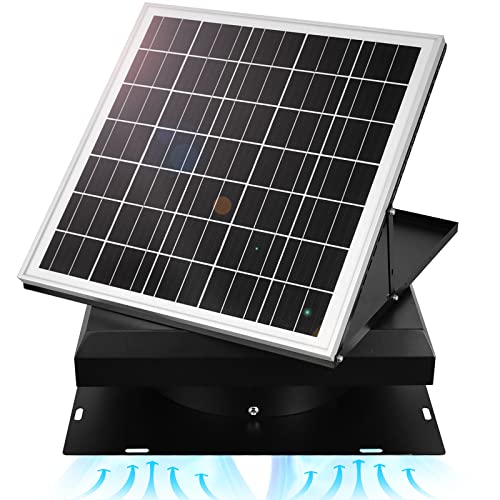
This model emphasizes daytime solar operation with a robust 9″ aluminum blade system and a fully copper IP68 motor. It can move up to 2500 CFM and cool spaces up to 3000 sq ft, making it a strong option for larger attics, barns, or RV rooftops. Durable hull construction defends against hail and weather, ensuring long service life in varied climates.
OmniPV Solar Attic Fan — 1600 CFM

OmniPV combines a 40 W solar panel with a low-noise, weatherproof DC motor to deliver 1600 CFM. It includes a built-in thermostat that turns the fan on over 77°F (25°C) and off when cooled. The unit is designed for home, greenhouse, garage, or workshop use, with waterproofing and a convenient 110V smart adapter option for non-solar nights or heavy cloud days.
Hon&Guan Solar Attic Fan With Thermostat
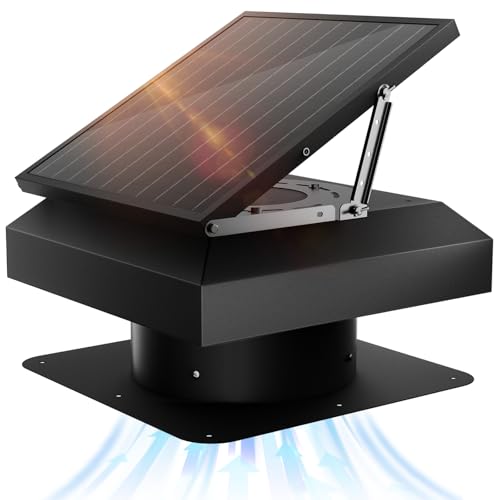
This 40 W solar roof vent delivers up to 2000 CFM and is suitable for attics up to 2500 sq ft. It supports multi-angle adjustment (0-70°) for optimal sun capture and provides AC or DC adapter operation for continuous use. A thermostat-enabled auto-start feature helps regulate attic temperatures with energy efficiency in mind, making it a versatile option for varied climates.
GROWNEER 40W Solar Attic Fan With Thermostat
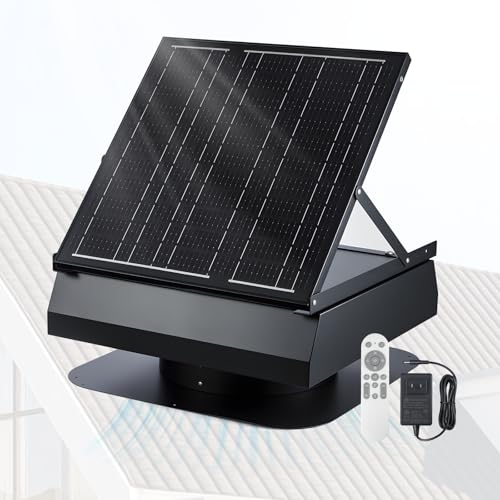
This 40W unit provides 2000 CFM with a smart thermostat for 24/7 operation. It can cool up to 2000 sq ft and features a remote for adjusting settings from up to 30 meters away. The brushless DC motor runs quietly, and its weatherproof housing withstands wind and hail, making it suitable for homes, greenhouses, or warehouses requiring reliable solar-powered ventilation.
Buying Guide: Key Purchase Considerations And Comparisons
- Airflow needs: Assess attic size and insulation. Higher CFM helps move air quickly in larger spaces but may be more energy-intensive; solar units balance this with sun exposure.
- Solar panel quality and orientation: Look for monocrystalline cells and adjustable mounting to maximize sun capture across seasons and roof angles.
- Thermostat and controls: Built-in thermostats improve efficiency by auto-starting at a set temperature. Consider remote or smart controls for convenience in hard-to-reach installations.
- Durability and weather resistance: IP ratings, weatherproof housings, and hail resistance extend life in harsh climates. Aluminum or galvanized housings offer corrosion resistance.
- Noise and vibration: Brushless DC motors tend to run quieter. Check decibel ratings if the unit will be installed near living spaces.
- Wiring and power options: Off-grid solar operation is ideal for saving on electricity, but some models offer AC/DC adapters for night use or low-sun days.
- Coverage area: Match the fan’s CFM to attic square footage and occupancy or usage in the space (e.g., greenhouses or barns may require higher airflow).
- Installation considerations: Roof penetration, mounting hardware, and vent compatibility with existing roof vents influence ease of installation and performance.
- Warranty and support: Long warranties indicate durability and manufacturer confidence. Check what’s covered (motor, housing, thermostat).
- Energy savings: Solar-powered fans reduce grid electricity usage, but consider climate (sunlight availability) and maintenance needs to estimate long-term savings.
Overall, the best solar attic fan combines strong airflow with reliable solar power, durable construction, and flexible controls. When selecting, prioritize attic size, climate, and whether you need continuous operation with an AC backup option. Each model above provides a balance of efficiency, weather resistance, and ease of use, helping maintain cooler spaces without adding to monthly utility costs.