Best Solar Powered Generators for Homes
Power outages, camping, or off-grid living demand reliable solar generators for homes. This guide highlights top picks from major brands, focusing on capacity, recharge speed, safety features, and expandability. Each product includes a quick reference to help you compare at a glance and choose a model that fits your home backup needs.
| Product | Battery Capacity | Rated Output | Expandable / Extras | Notes |
|---|---|---|---|---|
| Jackery HomePower 3000 | 3072Wh | 3600W (7200W surge) | UPS with ≤20ms switch | Solid home backup with strong surge handling |
| EF ECOFLOW Delta 2 Max | 2048Wh | 2400W | Expandable with extra batteries | Ultra-fast recharge options |
| BROWEY 1600W | 1024Wh | 1600W (3200W peak) | Built-in solar; expandable? (via MPPT) | Award-winning design with wide outputs |
| Anker SOLIX C1000 Gen 2 | 1024Wh | 2000W (3000W peak) | Compact and portable for quick moves | Fast recharge; multiple ports |
| DABBSSON 2048Wh 3300W | 2048Wh | 2200W (3300W P-Boot) | Multiple AC/USB outputs | Lightweight with strong multi-device support |
Jackery HomePower 3000 Portable Power Station

The Jackery HomePower 3000 combines a large 3072Wh LiFePO4 battery with strong output capabilities, delivering 3600W of continuous power and 7200W surge. Its built-in UL-certified UPS can switch within ≤20 milliseconds to keep critical devices running during outages. This model is suitable for essentials such as refrigerators, routers, lights, and security cameras, reducing downtime during emergencies. The system is designed for home backup, with enough capacity to run multiple devices for extended periods and keep a refrigerator stable for days under certain conditions.
Features include a high-capacity battery, fast seamless switching, and robust support for essential home equipment. Customers may also leverage a residential clean energy credit by consulting local utility programs for eligibility. The unit is compatible with solar panel inputs to help sustain outdoor and home energy independence.
EF ECOFLOW Delta 2 Max

The Delta 2 Max offers rapid charging, capable of reaching 80% in about 43 minutes when using up to 1000W solar input combined with AC charging. Its 2048Wh LiFePO4 battery is rated for thousands of cycles, delivering long-term reliability. The system is expandable from 2kWh to 6kWh with additional solar-powered batteries, enabling greater home-energy resilience. This model suits households seeking fast recharges and scalable capacity to power essential devices during outages and for extended off-grid use.
BROWEY 1600W Portable Power Station

The BROWEY model delivers 1600W continuous output with a 3200W peak, powered by a 1024Wh LiFePO4 battery. It includes built-in solar charging compatibility with a robust MPPT controller, enabling faster solar recharging and stable power for devices like refrigerators, CPAP machines, and tools. With multiple ports (AC/DC/USB-C PD 100W), it supports charging several devices simultaneously. Its LiFePO4 chemistry provides long life, with a focus on safety and durable performance for home backup and outdoor use.
Anker SOLIX C1000 Gen 2

The Anker SOLIX C1000 Gen 2 is a compact, portable unit delivering 2000W continuous power (3000W peak) from a 1024Wh LiFePO4 battery. Recharge is fast, with HyperFlash technology enabling a 1,600W input for ultra-fast recharges in under an hour. Its 10-port array includes USB-C, USB-A, and AC outlets, making it suitable for remote work setups, tiny homes, and emergency backup. The design emphasizes portability while maintaining ample output for essential devices during outages or outdoor activities.
DABBSSON 2048Wh Portable Power Station
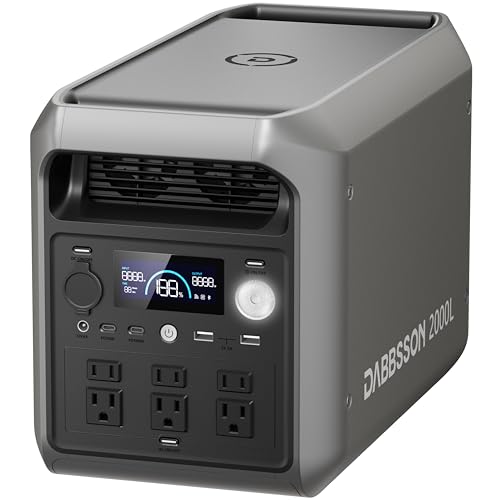
The Dabbsson 2048Wh unit uses a semi-solid LiFePO4 battery to deliver strong runtime and extended life. With a 2200W rated output and P-Boost up to 3300W, it can power multiple devices simultaneously across six AC outlets and various USB and DC ports. Its compact design and lightweight frame enhance portability for home use and outdoor activities, while a protective BMS and thermal controls contribute to safe operation over many charge cycles.
Buying Guide
Key considerations when selecting a solar generator for home use include capacity, peak vs continuous power, and how quickly the unit can recharge. For homes with large refrigerators or multiple essential devices, a higher capacity (2000Wh or more) with a strong surge rating helps ensure reliable operation during outages. Consider whether you need UPS or seamless transfer to maintain critical devices during power loss, and confirm if the model supports expansion with additional solar panels or portable batteries to scale your system over time.
Charge speed is another important factor. Some models offer ultra-fast recharging with high solar input and wall AC charging, reducing downtime between outages. If you plan to use solar as the primary source, verify the number and type of ports, the availability of MPPT controllers for efficient solar charging, and compatibility with your existing solar array. Battery chemistry matters too; LiFePO4 cells offer longer life and better thermal stability, though they can add upfront cost.
Portability vs. home backup: Smaller units excel for RVs, camping, and remote workspaces, while larger systems are better suited for whole-home backup scenarios. Expandability features—extra batteries or multi-unit configurations—can dramatically increase capacity for extended outages. Finally, ensure any purchase aligns with local tax credits or utility incentives, and review warranty terms for long-term protection.