Best Small Portable Electric Generators for Outdoor Power
Whether you’re camping, RVing, or facing a short-term outage, choosing a compact generator that fits your needs is essential. This guide compares five small to mid-size options to help you pick the right power source for outdoor adventures or home backup. Best for hikers and weekend campers are lightweight power stations; best for campers and remote travelers are versatile dual-fuel or solar-ready units; best for emergency home use are higher-output inverter generators with portability.
| Product | Best For | Key Benefit |
|---|---|---|
| HOWEASY Portable Power Station | Lightweight travelers | 88Wh capacity, multiple outputs, solar charging ready |
| MARBERO Portable Power Station | Compact outdoor trips | 88Wh with multiple ports, slim and light |
| EnginStar Portable Power Station | Weekend camping | 296Wh, dual AC outlets, solid LED display |
| Oxseryn Power Equipment 4400W | RV and home backup | High output, multiple outlets, ECO mode |
| WEN DF5600X Dual Fuel Portable Generator | Emergency backup | Dual fuel, electric start, CO watchdog |
The selections cover a range from ultra-portable power stations to higher-output dual-fuel generators. Each entry notes the intended user so you can quickly compare how well they fit your use case. The following sections present a concise, decision-oriented view of each product, with practical cautions when relevant.
Note: All information is based on listed features and typical use scenarios. No external testing data is included.
HOWEASY Portable Power Station 88Wh

Best for: light outdoor use, quick access to power on the go. This 88Wh portable station offers eight output ports, including two AC sockets (110V 120W, 240W peak), multiple USB ports, and two DC outlets. An LED display shows power status and remaining capacity, helping you manage energy on camping trips or emergencies. It weighs about 2.3 pounds and includes a hidden handle for easy transport. Three charging modes let you recharge from AC, solar (panel not included), or a car socket, enabling flexible use in various environments.
Why selected: It’s compact and easy to carry, making it a strong choice for hikers or campers who need a small power buffer for lights, fans, and small devices. The multiple output options increase compatibility with common gadgets.
Caution: Limited battery capacity means longer-running devices or high-wattage appliances can quickly exhaust the pack.
MARBERO Portable Power Station 88Wh

Best for: ultralight backpacks, short outdoor excursions. This MARBERO unit matches similar 88Wh capacity with multiple outputs and a slim profile. It emphasizes portability and ease of use with USB, USB-C, and AC options, suitable for phones, tablets, and small electronics. The design prioritizes travel-friendly dimensions and a lightweight frame, making it a practical add-on for low-wattage needs on the trail or at a campsite.
Why selected: Its compact design and versatile ports make it easy to top up devices during day trips without carrying bulky gear. It complements other outdoor gear for quiet, low-noise power needs.
Caution: Solar panel compatibility is optional and not included, so charging off-grid requires compatible equipment.
EnginStar Portable Power Station 300W
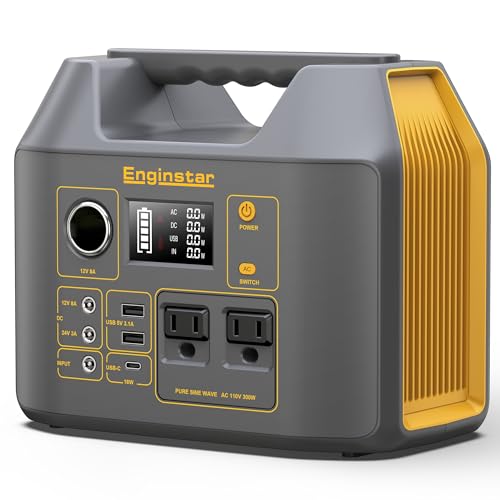
Best for: weekend camping and small device charging on the move. The EnginStar 300W unit provides two 110V pure sine wave AC outlets, plus DC and USB outputs. It weighs about 6.5 pounds and includes an LED display for monitoring, making it user-friendly for travelers who need reliable power for lights, laptops, or cameras. It supports three charging methods: wall charger, solar (panel sold separately), and car charger.
Why selected: The dual AC outlets and higher energy capacity offer flexibility for a larger range of devices while staying portable. Suitable for CPAP machines, laptops, and other essential devices on short trips.
Caution: Solar charging efficiency depends on panel performance and sunlight; solar charging is optional and requires an appropriate panel.
Oxseryn Power Equipment 4400W Inverter Generator

Best for: RVs and home backup where higher power is needed. This inverter generator delivers up to 4400 peak watts and 3400 running watts with multiple outputs, including AC and DC ports. The ECO mode supports efficiency, and the unit is designed for longer runtime with a viewable fuel gauge. It’s suitable for powering essential appliances and devices during outdoor events or emergencies.
Why selected: It provides a strong balance of portability and power, making it a practical choice for those who need more capability than ultra-compact units offer. It can support larger devices while remaining reasonably portable for an open-frame design.
Caution: Heavier than compact units; handling and storage require space and care to avoid fuel spills.
WEN DF5600X 5,600-Watt Dual Fuel Portable Generator

Best for: reliable home backup and larger outdoor setups. This dual-fuel generator supports gasoline and propane, offering 5,600 surge watts and 4,500 running watts. It includes electric start and a CO Watchdog sensor, which automatically shuts down when dangerous carbon monoxide levels are detected, enhancing safety for extended use in outdoor environments or emergencies.
Why selected: The dual-fuel capability and electric start provide flexibility for varying fuel access and convenience during outages. The CO watchdog adds a crucial safety layer for prolonged operation.
Caution: Higher wattage means greater weight and footprint; ensure adequate space for storage and ventilation.
Buying Guide: Key Purchase Considerations
What size do I actually need? Consider running watts vs surge watts. Choose a unit with enough running watts for your essential devices plus a safety margin for startup surges.
Power source type: Do you prefer battery-powered power stations or gas/propane generators? Battery units are quieter and cleaner but have limited runtime, while gas units provide longer endurance but require fuel and noise considerations.
Portability and weight: If you hike or backpack, favor compact stations with handles. For RVs or home backup, weight is less critical but space and fuel logistics matter.
Outlets and compatibility: Ensure the unit offers the necessary outlets (AC, USB-C, USB-A, DC) for your devices. Consider pure sine wave outputs for sensitive electronics like laptops.
Charging options: Solar compatibility is helpful for off-grid use. Check whether solar panels are included or sold separately and the charging speeds in various conditions.
Safety features: Look for CO sensors, automatic shutoff, and low-oil indicators for gasoline-powered models. A built-in display helps monitor performance and fuel status.
Frequently Asked Questions
- What is the difference between peak watts and running watts? Peak watts indicate startup power, while running watts represent continuous use. Choose a unit with running watts at or above your device’s continuous load.
- Are dual-fuel generators safer for emergencies? They offer flexibility in fuel choice, which can be advantageous if one fuel source is scarce, but always follow safe fuel handling.
- Can I run a laptop on a small power station? Yes, if the power station provides at least a few watts above your laptop’s running wattage and uses a pure sine wave output.
- Is solar charging worth it for these units? For off-grid use, solar charging can extend runtime, but charging speed depends on panel quality and sunlight exposure.
- Do power stations work well for camping? Power stations are ideal for lights, phones, fans, and small appliances, but check capacity to avoid early depletion on multi-day trips.
- What should I consider for safety around water or rain? Keep generators in dry, ventilated areas away from direct water exposure and never operate indoors without proper ventilation.