Best Solar Panel Solutions for Your Inverter Setup in 2026
Choosing the right solar panel and inverter combination can dramatically improve off-grid power reliability. This guide highlights five well-regarded options that pair effectively with inverters, whether you’re powering an RV, cabin, or home backup system. Each section covers core features, durability, and suitability for varying daylight conditions, helping you compare performance, longevity, and value in one place.
| Product | Brand | Type | Key Benefit |
|---|---|---|---|
| ECO-WORTHY 200W Complete Solar Panel Starter Kit | ECO-WORTHY | All-in-one kit | Beginners friendly with battery and inverter included |
| ECO-WORTHY 200W 12V/24V Kit | ECO-WORTHY | Panel + PWM controller | High efficiency panel with versatile voltage options |
| ECO-WORTHY 200W Kit with 2x 100W Panels | ECO-WORTHY | Split-panel kit | Extended output and modular setup for space |
| Jackery HomePower 3000 | Jackery | Portable power station | Integrated UPS-ready backup with included solar panels |
| SUMRY Hybrid Solar Inverter | SRGFTS | Hybrid inverter with MPPT | Battery-less or Li-ion support with robust MPPT |
ECO-WORTHY 200 Watt 12V Starter Kit For RV Off Grid
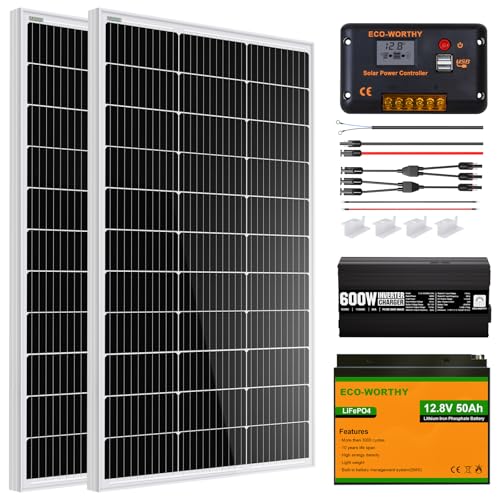
The ECO-WORTHY Starter Kit bundles a 200W solar panel array with a 30A charge controller, a 50Ah lithium battery, and a 600W inverter for off-grid RV or cabin use. It targets 800Wh daily output under optimal sun (4 hours). The setup emphasizes beginner friendliness, easier installation, and reliable outdoor performance with IP65-rated panels and robust mounting.
Durability and efficiency are central: monocrystalline cells in a weatherproof frame provide solid performance across a range of conditions, while the LiFePO4 battery offers many cycles for longer life. This kit is well-suited for RVs, boats, and off-grid cabins where straightforward power is a priority.
ECO-WORTHY 200 Watts 12V/24V Solar Panel Kit With 30A PWM Controller

This kit features high-efficiency monocrystalline panels coupled with a 30A PWM charge controller, designed for off-grid RVs, campers, and small cabins. It supports up to 800Wh per day under 4 hours of sun and has a corrosion-resistant aluminum frame built to withstand wind and snow loads. The IP65-rated junction box offers dependable weather protection, while the modular design allows future expansion.
Its dual-voltage flexibility (12V/24V) makes it compatible with a range of storage systems, including LiFePO4 and lead-acid batteries. While simple, the kit emphasizes longevity and steady performance in variable climates, making it a reliable choice for entry-level solar builds.
ECO-WORTHY 200 Watt 12V Complete Solar Panel Starter Kit (2x100W)
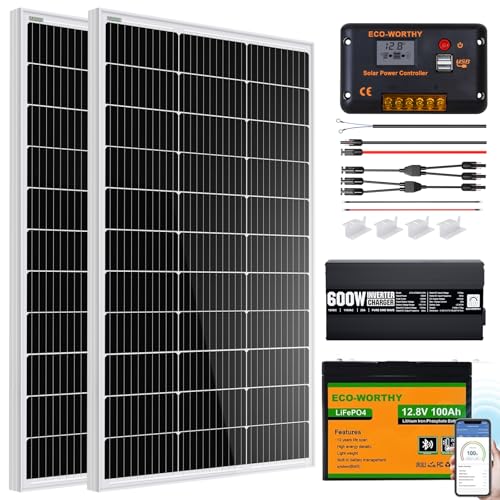
This kit provides two 100W solar panels, a 12.8V 100Ah lithium battery, a 12V system design, and a premium solar inverter. It targets 800Wh of daily output under ideal sun, with a long-life LiFePO4 battery and a smart BMS to guard against overcharge and short circuits. It’s a strong option for RVs, small homes, and cabins needing a scalable energy solution.
Durability features include a corrosion-resistant aluminum frame, high wind and snow load tolerance, and a design that supports long-term outdoor use. The integrated battery management system helps optimize performance across different weather patterns and loads.
SUMRY Hybrid Solar Inverter, 3600W With 120A MPPT

SUMRY’s hybrid inverter combines a 3600W DC to AC inverter, a 120A MPPT solar charger, and a 100A AC charger in one unit. It supports PV input up to 5600W and 350VDC, delivering a pure sine wave output ideal for general home loads and sensitive devices. It works with a variety of 24V batteries (AGM, LiFePO4) and can function without a battery in PV-first mode, giving versatile off-grid options.
The unit emphasizes high efficiency, scalable power, and flexibility for battery-less or battery-backed configurations. Tempered-glass top design, LCD indicators, and robust protection features aim to reduce maintenance while expanding compatibility with solar arrays and storage systems.
Buying Guide
Key considerations when selecting a solar panel and inverter setup for off-grid or backup power:
- Power needs: Assess daily energy consumption (Wh/day) and peak load. Choose a kit or inverter that comfortably exceeds the daily requirement with headroom for peak usage.
- System voltage: 12V, 24V, or 48V systems affect efficiency, wire sizing, and battery compatibility. Ensure compatibility across panels, controllers, and storage.
- Controller type: PWM controllers are affordable and simple; MPPT controllers optimize energy harvest in varying light, especially with higher voltage arrays.
- Battery choice: LiFePO4 offers longer life and better safety than lead-acid, but at higher upfront cost. Consider cycle life, depth of discharge, and maintenance.
- Inverter features: Pure sine wave inverters protect sensitive electronics. Look for appropriate continuous and surge ratings for your loads, and UPS capabilities if backup power is essential.
- Durability and weather resistance: For outdoor installs, panels with IP ratings, corrosion resistance, and robust frames extend service life in wind, snow, and sun.
- Expandability: If power needs may grow, choose modular kits or systems that support additional panels, battery banks, or larger inverters in the future.
- Warranty and support: Favor manufacturers offering comprehensive warranties on panels, inverters, and storage, plus accessible customer support.
- System footprint: Consider mounting space, weight, and mounting hardware compatibility with your vehicle, cabin, or home environment.
These options collectively cover a range of use cases—from beginner-friendly RV setups to more robust hybrid inverters for mid-size homes. When evaluating, align product specs with your daily energy profile, climate, and expansion plans to ensure reliable solar-inverter performance over time.