Best Compressor for Oxygen Concentrator: Top Picks for Home and Travel
Choosing the right compressor-powered oxygen concentrator can improve reliability, portability, and ease of use for home and on‑the‑go needs. Below are five highly relevant models with solid feature sets, including adjustable flow, battery options, and quiet operation. This guide helps compare capabilities to fit daily routines, travel plans, and health considerations.
| Product | Brand | Key Feature | Estimated Use |
|---|---|---|---|
| Oxygen Concentrator, 1-8L Adjustable | BeeFLY | 1–8 L/min, continuous output, LED touch panel | Home use with timer options |
| Oxygen Generator 3L Portable | MANITAN | 3 LPM, 33% oxygen, auto-shutdown timer | Travel and car use |
| Portable Oxygen Concentrator 1-5L | BeeFLY | 1–7 L/min, 93% concentr. | Travel and home, compact design |
| Riddost Portable Oxygen Concentrator | Riddost | 1–6 L continuous, 3-hour timer | Travel with multiple power options |
| BSMOON Portable Oxygen Concentrator | BSMOON | 3 L concentr., 30–35% output, 45 dB | Outdoor use and mobility |
BeeFLY 1-8L Adjustable Oxygen Concentrator

The BeeFLY 1-8L adjustable model provides flexible flow from 1 to 8 liters per minute, suitable for varying breathing needs. It offers a stable continuous output and a 93% concentration at lower settings, making it useful for both mild and more demanding oxygen requirements. A timer supports 0.5–4 hours of operation, with automatic shut-off after 12 hours if no timer is set. The user‑friendly LED display and touch controls are designed to be accessible for seniors and caregivers, while the compact form supports home use and limited-space setups.
Features include a simple operation panel, continuous flow capability, and a range that accommodates family members with different needs. Noise levels are kept relatively low for a home environment. When choosing this model, consider the availability of compatible accessories, service options, and replacement parts in your region. Its versatility makes it a strong option for households seeking one unit that can serve multiple users or activities.
MANITAN 3L Portable Oxygen Concentrator

The MANITAN 3L portable unit focuses on travel readiness, offering a compact design with a 3 LPM flow and a fixed 33% oxygen concentration. It includes a built‑in timer with auto‑shutdown options, enabling predictable use during outdoor activities, car journeys, or short trips. The device is suitable for users who want a straightforward, travel-ready concentrator without complex settings.
Consider this model if you prioritize portability and a dedicated travel companion. Battery performance is a key factor for outdoor use, so assess the included battery life versus your typical outing duration. As with all portable concentrators, the availability of charging options (AC, DC, and battery) and the weight relative to your carry plans will influence convenience and adherence to oxygen routines during travel.
BeeFLY Portable Oxygen Concentrator 1-5L

This BeeFLY model covers a wide 1–7 L/min range with 93% oxygen concentration, addressing daily needs and travel requirements. Its light weight and compact dimensions (roughly 6.5 pounds) make it highly portable, and the one‑button operation simplifies use for all ages. A battery provides around 1.5–3.5 hours of operation, depending on flow rate, and a complete accessory kit supports immediate use out of the box.
With a focus on portability, this unit is suitable for family members who require intermittent oxygen during daytime activities or short trips. Battery life, recharge options, and the availability of replacement parts will influence long‑term satisfaction. The device’s balance of performance and transportability makes it a common pick for mixed home‑and‑on‑the‑go use cases.
Riddost Portable Oxygen Concentrator

The Riddost concentrator offers an adjustable 1–6 L/min continuous oxygen supply with a 93% concentration at 1 L/min. A 3‑hour timer supports controlled sessions, and the device provides three charging options: AC for indoor use, car power for in‑car travel, and a battery for outdoor use. This flexibility makes it suitable for travelers who need reliable oxygen access in varied environments.
The device’s design emphasizes travel readiness, with a compact footprint and straightforward controls. When evaluating, consider the balance between its weight, battery life at your preferred flow, and the reliability of in‑car charging options—important for longer trips or daily commuting. The presence of a timer helps manage oxygen delivery without constant manual input.
BSMOON Portable Oxygen Concentrator 3L
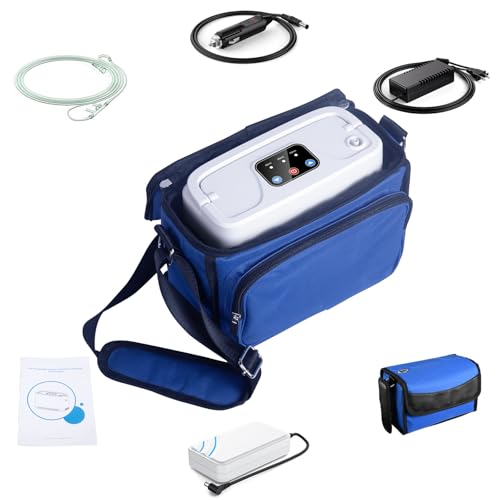
The BSMOON model delivers a 3 LPM concentrator output with a stable 30–35% oxygen concentration. Notably quiet at about 45 dB, it is suited for both home use and mobility during outdoor activities. The built‑in 2500mAh battery supports up to 2.5 hours of continuous use, making it a practical option for brief outings or hands‑free sleep aids during travel.
Consider this unit if you prioritize low noise and a compact travel profile without sacrificing a reasonable oxygen output. Battery life, charging speed, and the durability of accessories such as cannula tubing will influence daily convenience. This model adds a balance of performance and portability to a traveler’s oxygen therapy toolkit.
Buying Guide: Key Considerations for Oxygen Concentrators
- Flow rate and concentration: Assess whether you need lower or higher LPM ranges and the target oxygen concentration. Models with 1–8 L/min ranges cover a wider spectrum of needs.
- Portability and weight: For travel, lighter units with compact dimensions and solid battery life are preferable. Consider whether you will rely on AC, DC, or battery power.
- Power options: Look for devices with multiple charging modes (AC, car, and battery) to support home use and on‑the‑go scenarios.
- Battery life and replacement: Battery duration at your typical flow rate matters. Check battery type, recharge time, and the availability of spare packs.
- Noise and comfort: Quieter operation improves sleep quality and daily comfort. Noise is particularly important for home use and overnight therapy.
- Timer and safety features: Built‑in timers help manage usage. Auto shut‑off and battery protection features can extend device life and user safety.
- Maintenance and parts: Availability of accessories, cannulas, filters, and replacement parts affects long‑term usability.
- Durability and warranty: Choose models with solid build quality and reliable customer support.
- Intended use: Distinguish between home use and travel emphasis. Some units offer stronger continuous flow, while others prioritize ultra‑portability.