Best Solar Panels for Gate Opener Solutions and Kits
Choosing a reliable solar panel kit for gate openers ensures smooth, autonomous operation even in remote locations. This guide highlights five top-rated options, focusing on efficiency, durability, and compatibility with common gate opener systems. Each product section includes a quick link, image, and key features to help you compare at a glance.
| Product | Brand | Key Feature |
|---|---|---|
| Voltset 10W 12V Solar Battery Charger | Voltset | Intelligent MPPT controller; IP67; up to 24% efficiency |
| Ghost Controls AX30 Solar Panel Kit | Ghost Controls | 30W panel; simple control box integration |
| FM123 Solar Panel Kit | nipponAsia | Compatibility with Mighty Mule and commercial systems |
| JUJIANG C026 Gate Opener Kit | JUJIANG | 2x12V8Ah batteries; 20W solar panels; medium duty |
| Voltset 20W 12V Solar Charger | Voltset | Higher power MPPT; IP67; robust build |
Note: All product details derive from listed features and typical gate-opener applications. This article avoids prices to keep the focus on performance and suitability for various gate configurations.
Voltset 10W Solar Charger For Gate Opener
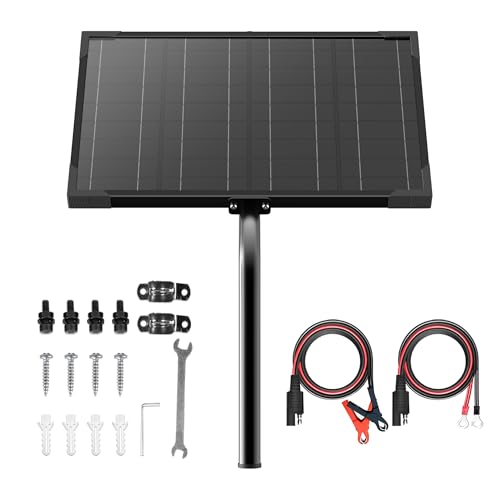
The Voltset 10W 12V Solar Battery Charger combines a built‑in MPPT charge controller with a compact, weather‑sealed design suitable for gate-openers. The intelligent MPPT controller claims 25%-30% higher charging efficiency than standard controllers, helping batteries reach and maintain a healthy state of charge. Its protection features guard against overcharging, over-discharging, over-voltage, and short circuits, which is essential for remote installations. An IP67 waterproof rating and LED indicators provide quick status checks in varied conditions. The panel uses Grade A+ cells with tempered glass for durability, and the aluminum frame withstands wind, hail, and corrosion. This makes it a solid, low-maintenance option for flat or semi‑exposed gate locations where minimal maintenance is preferred.
Ghost Controls AX30 Solar Panel Kit

The Ghost Controls AX30 kit provides a straightforward solar charging solution for automatic gate systems. The 30-watt monocrystalline solar panel is designed to connect into the control box and recharge main system batteries efficiently. Its mounting is suitable for common gate setups, with panel dimensions listed for practical planning. This kit is well-suited for medium-duty residential gates where an easy, plug-and-play solar solution is preferred. The design emphasizes reliable power delivery to support routine gate operations in daylight and low-light conditions, while maintaining battery health for long-term use.
FM123 Solar Panel Kit For Mighty Mule

The FM123 kit from NipponAsia is designed for Mighty Mule openers and similar systems, offering a 10W panel and compatibility with multiple gate models. Compatibility notes indicate it works with a broad range of Mighty Mule models and some commercial sliders, expanding versatility for homeowners with older or mixed gate systems. This kit prioritizes straightforward integration and reliable charging for smaller gating setups, supporting steady operation in typical residential environments. Potential users should verify compatibility with their specific control boxes before installation.
JUJIANG C026 Solar Gate Opener Kit

The JUJIANG C026 kit targets single swing gates up to 770 pounds and 16 feet in length per leaf. It pairs a 60W motor with the included 20W solar panels and two 12V 8Ah batteries, providing a robust power solution for medium-duty setups. The kit emphasizes reliability in remote or off-grid locations, with two remote controls and a back-up manual release. Its installation flexibility and higher motor power are suited to gates that require stronger performance while relying on solar energy for everyday operation.
Voltset 20W 12V Solar Charger Kit

The Voltset 20W kit increases charging capacity compared with smaller panels, suitable for gate openers requiring more consistent power. Its intelligent MPPT controller offers 25%-30% higher charging efficiency, and the IP67 rating ensures protection against moisture ingress in adverse weather. The panel is built with Grade A+ cells, tempered glass, and a corrosion-resistant aluminum frame designed to withstand wind and snow loads. This option is well-suited for larger residential gates or locations with variable sunlight, where a higher solar input yields faster battery replenishment and improved reliability.
Buying Guide: Key Purchase Considerations
When selecting a solar panel kit for gate openers, consider the following factors to ensure optimal performance and long-term reliability.
- Power output and needs: Assess gate motor wattage and typical daily runtime. A higher wattage panel or MPPT controller can improve performance during shorter daylight periods or shady conditions.
- Charge controller type: MPPT controllers convert available solar energy more efficiently, especially in variable light. They’re often worth the extra upfront cost for larger or more frequent use.
- Battery compatibility: Ensure the kit provides appropriate battery capacity and chemistry for your gate opener. Deep-cycle marine or AGM batteries are common choices for reliability.
- Weather resistance: Gate installations face sun, rain, wind, and temperature changes. Look for IP ratings (IP67 preferred), tempered glass, and rugged frames to extend life.
- Mounting and cabling: Durable brackets, corrosion-resistant hardware, and weatherproof connections minimize maintenance. Confirm mounting options suit your gate’s post type and location.
- System compatibility: Check compatibility with your existing gate opener model, control box, and remote range. Some kits target specific brands (Mighty Mule, etc.), while others are more universal.
- Maintenance and indicators: LED status indicators help monitor charging status and fault conditions without specialized tools.
- Expansion potential: If you foresee upgrading your gate or adding a second gate, choose a kit that allows easy power scaling or additional solar panels.
To optimize performance, place panels where they receive maximum sun exposure during the day, ideally with minimal shading. Regularly inspect mounting hardware and cabling for wear, corrosion, or loose connections. Always follow the manufacturer’s installation instructions to maintain warranty coverage and safe operation.