Best Solar Kits for Cabins: Practical Off-Grid Power Solutions for Remote Living
For cabins off the grid, reliable solar power can be a game changer. The following solar kits are chosen for durability, efficiency, and ease of use in remote settings. Each option includes built-in charging, batteries, and inverters to cover essential loads like lighting, fridge, and small appliances. The list emphasizes kits suited for cabins, sheds, and other remote buildings, providing clear pathways from setup to steady off-grid energy.
| Product | Key Benefit | Ideal For |
|---|---|---|
| ECO-WORTHY 200W Starter Kit (Battery + Inverter) | Beginner-friendly with integrated battery and inverter | Small to mid-size cabin setups |
| ECO-WORTHY 200W Kit (100Ah Li Battery) | Higher storage with LiFePO4 chemistry | Off-grid cabins needing extra reserve |
| ECO-WORTHY 1.6KWh Complete Kit | Higher daily output and MPPT efficiency | Comfortable cabin power for longer timeframes |
| Renogy 400W Premium Kit | Robust components and strong warranty | Reliable cabin power with scalable options |
| ECO-WORTHY 1600W Tracker System | Solar tracking for maximum sun exposure | Limited space cabins with high energy needs |
ECO-WORTHY 200 Watt Starter Kit With Battery and Inverter
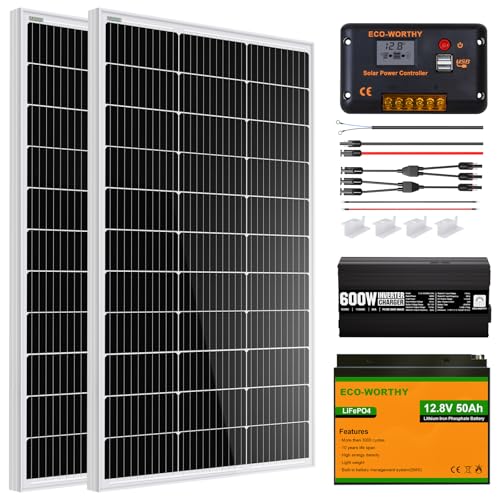
- Complete starter: 200W panels, 30A controller, 50Ah Li battery, 600W inverter
- Beginner-friendly with all required accessories included
- Ideal daily output around 800Wh under 4 hours of sunlight
- Durable panel with IP65 rating and robust mounting options
The kit targets cabin users seeking an all-in-one entry point into solar power, pairing a compact panel array with a LiFePO4 battery and a capable inverter. The 800Wh-per-day expectation depends on sunlight windows, making it suitable for basic cabin needs like lighting and small devices. Its rugged build supports outdoor deployment, and the LiFePO4 battery enhances cycle life and safety for unpredictable weather.
ECO-WORTHY 200W Kit With 100Ah Lithium Battery
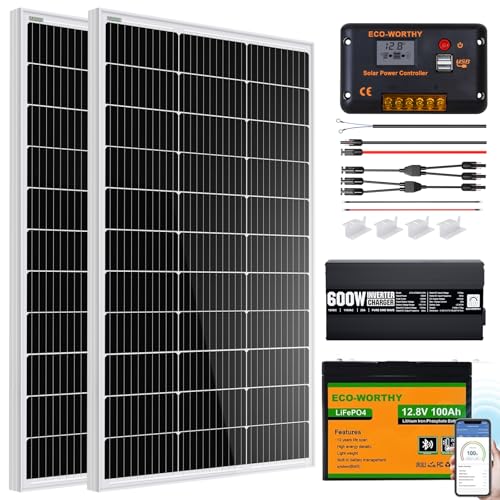
- Two 100W panels with 100Ah Li battery included
- High-efficiency panels with corrosion-resistant frame
- Built-in BMS to prevent overcharge and protect battery health
- Suitable for cabins needing reliable stored energy for multiple cycles
The kit emphasizes longer storage life and efficient energy capture, making it a solid choice for cabins where weather may limit daily sun. The integrated battery management system helps protect the assets while the higher energy capacity supports more devices during outages or extended cloudy periods.
ECO-WORTHY 1.6KWh Complete Kit For More Power

- Expansive output: 4x100W panels, MPPT controller, and two 100Ah Li batteries
- Upgraded 2000W inverter supports common 110V devices
- Bluetooth module for monitoring and system updates
- Ideal for cabins with higher energy needs like refrigeration or small AC
With a generous daily target of around 1.6kWh under optimal sun, this kit supports more appliances. The dual-battery setup and high-capacity inverter help sustain 110V loads, making it suitable for a cabin that aims to run several essential comforts without grid access.
Renogy 400W Premium Kit

- High-quality 400W of solar panels plus a 40A MPPT controller
- Includes mounting brackets, Z brackets, and pre-wired components
- Efficient MPPT optimization with temperature sensing
- 10-year panel warranty and 3-year controller warranty
Renogy’s kit is built for durability and straightforward installation, offering a robust solar backbone for cabins. The MPPT controller improves charging efficiency, particularly in varying weather, and the included hardware reduces the need to source separate mounting components. The extended warranty supports long-term cabin use.
ECO-WORTHY 1600W Solar Tracker System

- Eight 195W panels on a dual-axis tracker for 39% more energy
- Compact footprint with high energy density for cabins with space constraints
- Power box and controller included for integrated operation
- Ideal for cabins requiring substantial daily energy or extended outages
The tracker system maximizes sun exposure by actively tracking across the sky, which can substantially boost daily output in limited spaces. This approach suits cabins where ground or roof space is at a premium but a higher energy footprint is still desired, such as for climate control, lights, and multiple appliances through the day.
Buying Guide: Key Purchase Considerations For Cabin Solar Kits
- Power needs and daily usage: Estimate your essential loads (lighting, fridge, water pump, charging devices) and target a daily energy budget in watt-hours. Kits with higher daily output can support more devices consistently.
- Battery chemistry and lifecycle: LiFePO4 batteries provide longer cycle life and safer operation than traditional lead-acid, though at higher upfront cost. Consider storage capacity (Ah) and total usable energy (Wh).
- Charge controller type: MPPT controllers generally recover more energy in variable conditions than PWM and are worth the extra cost for cabins with irregular sunlight.
- System scalability: If you plan to expand, choose kits with modular components and accessible wiring, plus compatible mounting hardware for future panels or batteries.
- Durability and weather resistance: For outdoor cabins, select panels with robust frames, IP ratings, and proven resistance to wind and snow loads.
- Installation considerations: Roof or ground mounting options, weight limits, and ventilation around inverters matter. Some kits include mounting hardware to simplify setup.
- Monitoring and maintenance: Bluetooth or app-based monitoring helps track performance and battery health, aiding long-term maintenance.
- Budget and total cost of ownership: Evaluate initial costs against expected lifespan, warranty terms, and potential replacement parts over time.
When choosing a solar kit for a cabin, balance daily energy needs with available sunlight, space, and long-term reliability. Kits with larger battery banks and efficient inverters tend to deliver steadier performance during shorter days, while tracker systems maximize production in limited footprints. Consider starting with a smaller, upgradeable setup if you are new to off-grid power, then scale as comfort and demand grow.